
[因素名称]及基因生物标志物KRAS对结直肠癌发病机制的影响 。 注:原文中“the Impact of and”这里“of”后面似乎缺失内容。
The Impact of and the Genotypic Biomarker KRAS on Colorectal Cancer Pathogenesis.
作者信息
Dewan Ahmed, Tattoli Ivan, Mascellino Maria Teresa
机构信息
College of Life Sciences, Anhui Agriculture University, Hefei 230036, China.
Department of Translational and Precision Medicine, Sapienza University of Rome, 00185 Rome, Italy.
出版信息
Int J Mol Sci. 2025 Jul 20;26(14):6958. doi: 10.3390/ijms26146958.
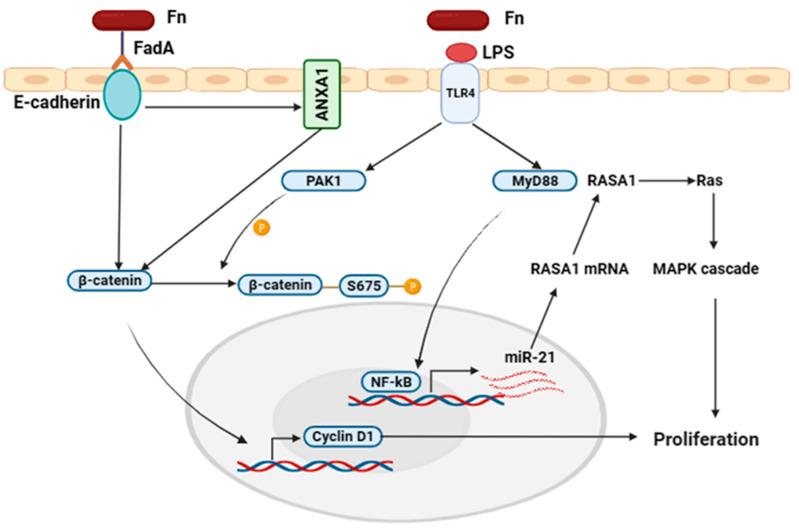
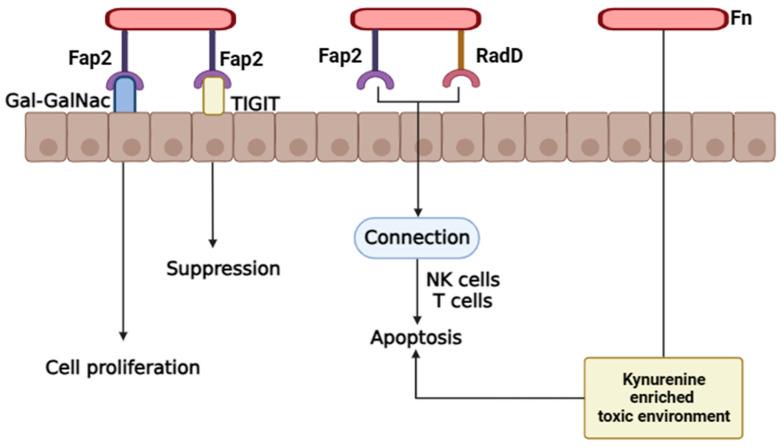
and activating mutations in the Kirsten rat sarcoma virus oncogene homolog (KRAS) are increasingly recognized as cooperative drivers of colorectal cancer (CRC). promotes tumorigenesis via adhesion to epithelial cells, modulation of the immune microenvironment, and delivery of virulence factors, while KRAS mutations-present in 60% of CRC cases-amplify proliferative signaling and inflammatory pathways. Here, we review the molecular interplay by which enhances KRAS-driven oncogenic cascades and, conversely, how KRAS mutations reshape the tumor niche to favor bacterial colonization. We further discuss the use of KRAS as a prognostic biomarker and explore promising non-antibiotic interventions-such as phage therapy, antimicrobial peptides, and targeted small-molecule inhibitors-aimed at selectively disrupting colonization and virulence. This integrated perspective on microbial-genetic crosstalk offers novel insights for precision prevention and therapy in CRC.
Kirsten大鼠肉瘤病毒癌基因同源物(KRAS)中的激活突变越来越被认为是结直肠癌(CRC)的协同驱动因素。 通过与上皮细胞粘附、调节免疫微环境和传递毒力因子促进肿瘤发生,而60%的CRC病例中存在的KRAS突变会放大增殖信号和炎症途径。在这里,我们回顾了 增强KRAS驱动的致癌级联反应的分子相互作用,反之,KRAS突变如何重塑肿瘤微环境以利于细菌定植。我们进一步讨论了将KRAS用作预后生物标志物,并探索有前景的非抗生素干预措施,如噬菌体疗法、抗菌肽和靶向小分子抑制剂,旨在选择性地破坏 定植和毒力。这种对微生物-基因串扰的综合观点为CRC的精准预防和治疗提供了新的见解。
 Zotero 插件