
评估液体活检检测循环肿瘤DNA(ctDNA)作为厄瓜多尔女性甲状腺癌辅助诊断工具的价值。
Evaluating Liquid Biopsy for Circulating Tumor DNA (ctDNA) Detection as a Complementary Diagnostic Tool in Thyroid Cancer Among Ecuadorian Women.
作者信息
Cadena-Ullauri Santiago, Ruiz-Pozo Viviana A, Paz-Cruz Elius, Tamayo-Trujillo Rafael, Guevara-Ramírez Patricia, Jaramillo-Calvas Oscar, García Cristhian, García Mikaela, Pérez Ana, Ochoa-Castro Maritza, Zaruma-Torres Fausto, Bayas-Morejón Favian, Guamán-Herrera Lenín, Zambrano Ana Karina
机构信息
Centro de Investigación Genética y Genómica, Facultad de Ciencias de la Salud Eugenio Espejo, Universidad UTE, Quito 170129, Ecuador.
Unidad de Cirugía de Cabeza y Cuello del Hospital Carlos Andrade Marín, Quito 170402, Ecuador.
出版信息
Int J Mol Sci. 2025 Jul 21;26(14):6987. doi: 10.3390/ijms26146987.
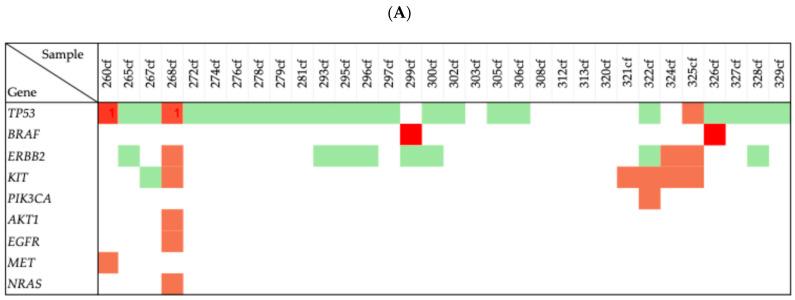
Thyroid cancer (TC) is the most common endocrine malignancy, with a rising global incidence. In Ecuador, TC rates are among the highest worldwide. Generally, fine-needle aspiration (FNA) remains the standard diagnostic tool; however, due to its limitations, alternative or complementary approaches are required. In this context, liquid biopsy, particularly circulating tumor DNA (ctDNA), offers a promising, minimally invasive option for tumor genotyping. Objective: This study evaluated the concordance between genetic variants identified in ctDNA and tumor tissue. Thirty-six women with papillary thyroid cancer were included. Tumor tissue and blood samples were collected, and DNA was extracted. Next-Generation Sequencing (NGS) using the TruSight Tumor 15 panel identified genetic variants in both ctDNA and tumor DNA. Variant pathogenicity was assessed following ACMG guidelines. Genetic ancestry was determined using Ancestry Informative Markers (AIMs). A total of 71 cancer-associated variants were detected, with 81.69% concordance between tumor DNA and ctDNA. was the most frequently mutated gene. While most pathogenic variants were found in tumor tissue, some variants appeared exclusively in ctDNA samples on specific patients, suggesting tumor heterogeneity. Ancestry analysis revealed a predominant Native American component (62.4%). Liquid biopsy demonstrates high concordance with tumor tissue analysis and holds potential as a complementary diagnostic tool for thyroid cancer. However, challenges such as low ctDNA yield and underrepresentation in genetic databases highlight the need for improved protocols and increased inclusion of admixed populations in genomic studies.
甲状腺癌(TC)是最常见的内分泌恶性肿瘤,全球发病率呈上升趋势。在厄瓜多尔,TC发病率位居世界前列。一般来说,细针穿刺活检(FNA)仍然是标准的诊断工具;然而,由于其局限性,需要替代或补充方法。在这种背景下,液体活检,尤其是循环肿瘤DNA(ctDNA),为肿瘤基因分型提供了一种有前景的微创选择。目的:本研究评估了ctDNA中鉴定的基因变异与肿瘤组织之间的一致性。纳入了36例乳头状甲状腺癌女性患者。收集肿瘤组织和血液样本,并提取DNA。使用TruSight Tumor 15 panel进行下一代测序(NGS),以鉴定ctDNA和肿瘤DNA中的基因变异。按照美国医学遗传学与基因组学学会(ACMG)指南评估变异的致病性。使用祖先信息标记(AIMs)确定遗传血统。共检测到71个与癌症相关的变异,肿瘤DNA和ctDNA之间的一致性为81.69%。 是最常发生突变的基因。虽然大多数致病性变异在肿瘤组织中被发现,但一些变异仅出现在特定患者的ctDNA样本中,提示肿瘤异质性。祖先分析显示主要为美洲原住民成分(62.4%)。液体活检与肿瘤组织分析显示出高度一致性,并有望作为甲状腺癌的补充诊断工具。然而,诸如ctDNA产量低和在遗传数据库中代表性不足等挑战凸显了改进方案以及在基因组研究中增加混血人群纳入的必要性。


 Zotero 插件