
群体药物基因组学中的遗传血统揭示了与药物毒性相关的不同地理模式。
Genetic ancestry in population pharmacogenomics unravels distinct geographical patterns related to drug toxicity.
作者信息
Karamperis Kariofyllis, Katz Sonja, Melograna Federico, Ganau Francesc P, Van Steen Kristel, Patrinos George P, Lao Oscar
机构信息
Laboratory of Pharmacogenomics and Individualized Therapy, Department of Pharmacy, School of Health Sciences, University of Patras, Patras, Greece.
Group of Algorithms for Population Genomics, Department of Genetics, Institut de Biologia Evolutiva, IBE, (CSIC-Universitat Pompeu Fabra), Barcelona, Spain.
出版信息
iScience. 2024 Sep 10;27(10):110916. doi: 10.1016/j.isci.2024.110916. eCollection 2024 Oct 18.
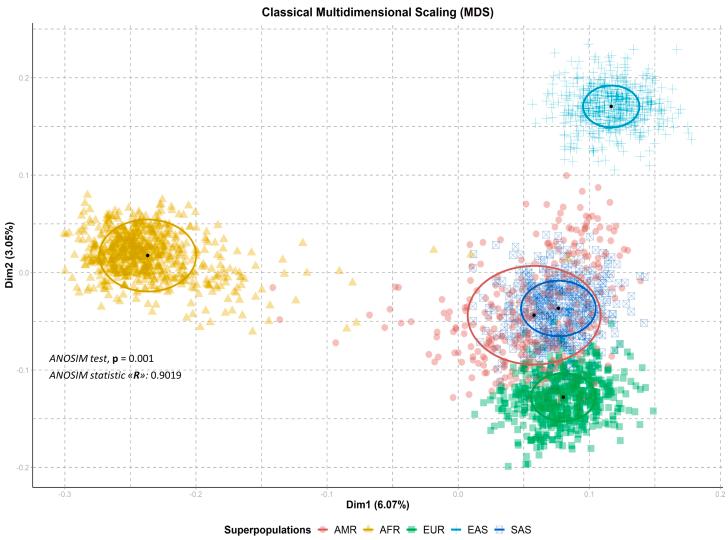
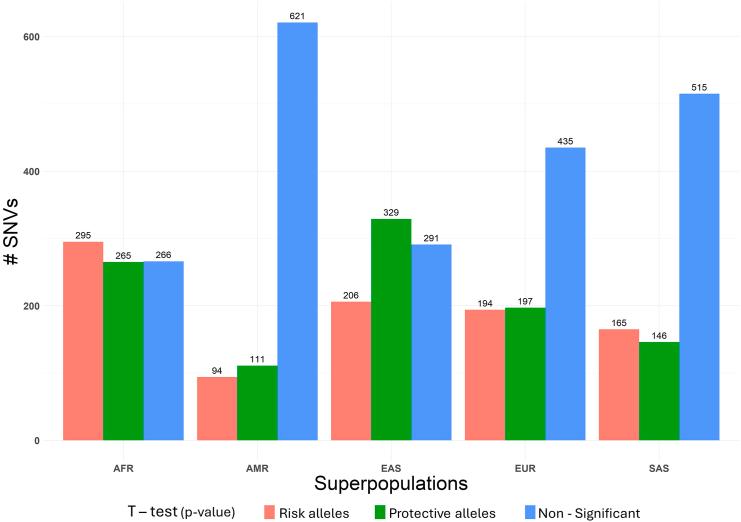
Genetic ancestry plays a major role in pharmacogenomics, and a deeper understanding of the genetic diversity among individuals holds immerse promise for reshaping personalized medicine. In this pivotal study, we have conducted a large-scale genomic analysis of 1,136 pharmacogenomic variants employing machine learning algorithms on 3,714 individuals from publicly available datasets to assess the risk proximity of experiencing drug-related adverse events. Our findings indicate that Admixed Americans and Europeans have demonstrated a higher risk of experiencing drug toxicity, whereas individuals with East Asian ancestry and, to a lesser extent, Oceanians displayed a lower risk proximity. Polygenic risk scores for drug-gene interactions did not necessarily follow similar assumptions, reflecting distinct genetic patterns and population-specific differences that vary depending on the drug class. Overall, our results provide evidence that genetic ancestry is a pivotal factor in population pharmacogenomics and should be further exploited to strengthen even more personalized drug therapy.
遗传血统在药物基因组学中起着重要作用,对个体间遗传多样性的更深入理解为重塑个性化医疗带来了巨大希望。在这项关键研究中,我们利用机器学习算法,对来自公开可用数据集的3714名个体的1136个药物基因组变异进行了大规模基因组分析,以评估发生药物相关不良事件的风险程度。我们的研究结果表明,混血美国人和欧洲人发生药物毒性的风险较高,而东亚血统个体以及在较小程度上大洋洲血统个体发生药物毒性的风险较低。药物-基因相互作用的多基因风险评分不一定遵循类似的假设,这反映了不同的遗传模式和因药物类别而异的人群特异性差异。总体而言,我们的结果证明遗传血统是群体药物基因组学中的一个关键因素,应进一步加以利用,以加强更具个性化的药物治疗。




 Zotero 插件