
环境应激源对新冠病毒感染率的调节在奥密克戎毒株出现之前和奥密克戎时期有所不同。
Modulation of COVID-19 incidence by environmental stressors is variant between pre-Omicron and Omicron periods.
作者信息
Hoffmann Leona, Gilardi Lorenza, Antoni Tobias, Baltruweit Maxana, Bittner Michael, Breitner Susanne, Dally Simon, Erbertseder Thilo, Hawighorst-Knapstein Sabine, Schmitz Marie-Therese, Schneider Rochelle, Wüst Sabine, Rittweger Jörn
机构信息
Institute of Aerospace Medicine, German Aerospace Center (DLR), Cologne, Germany.
German Remote Sensing Data Center, German Aerospace Center (DLR), Weßling, Germany.
出版信息
Sci Rep. 2025 Jul 29;15(1):27636. doi: 10.1038/s41598-025-13521-2.
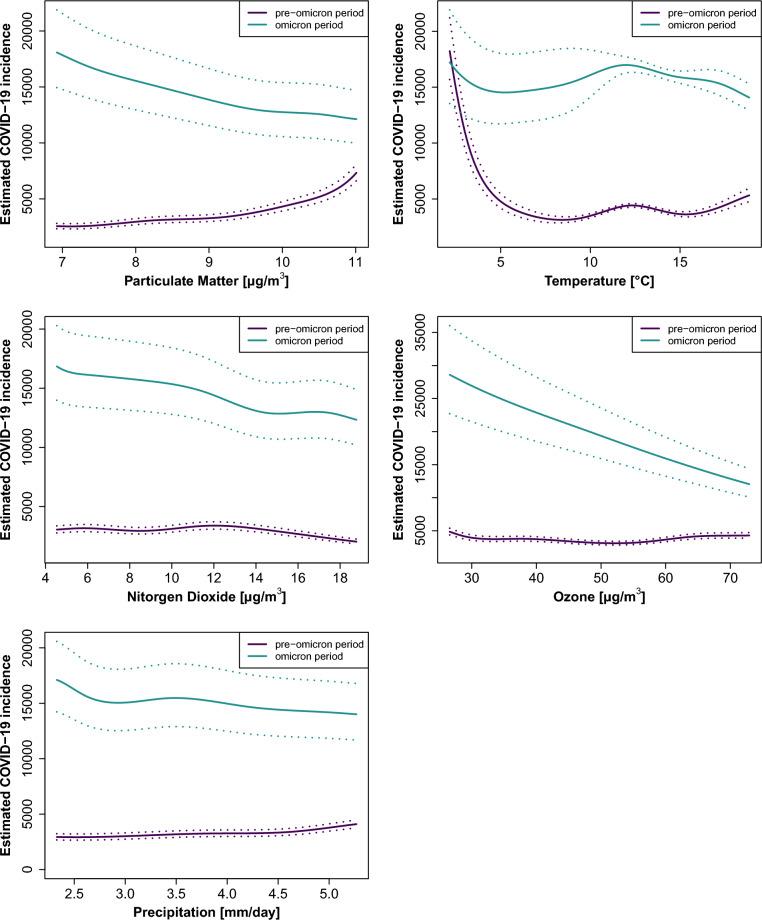
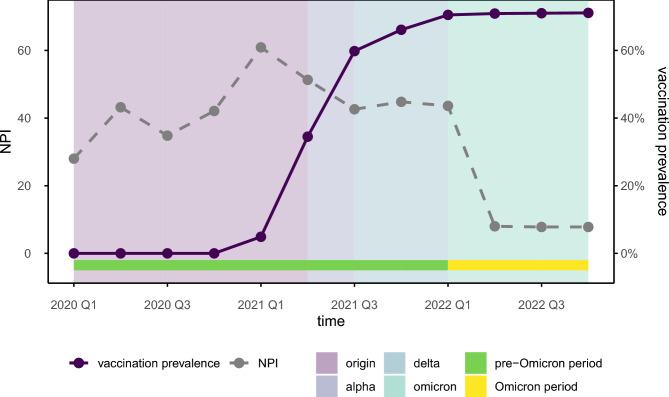
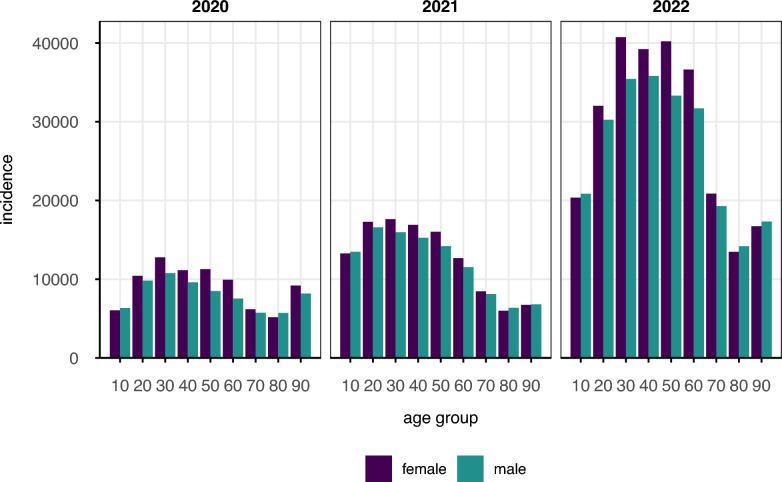
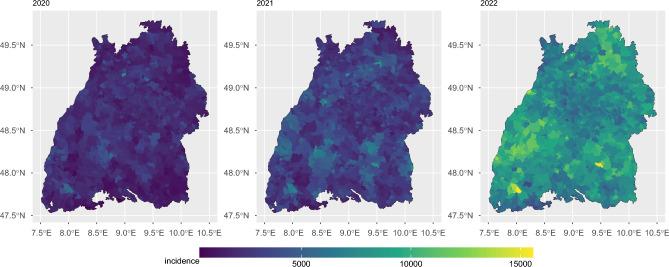
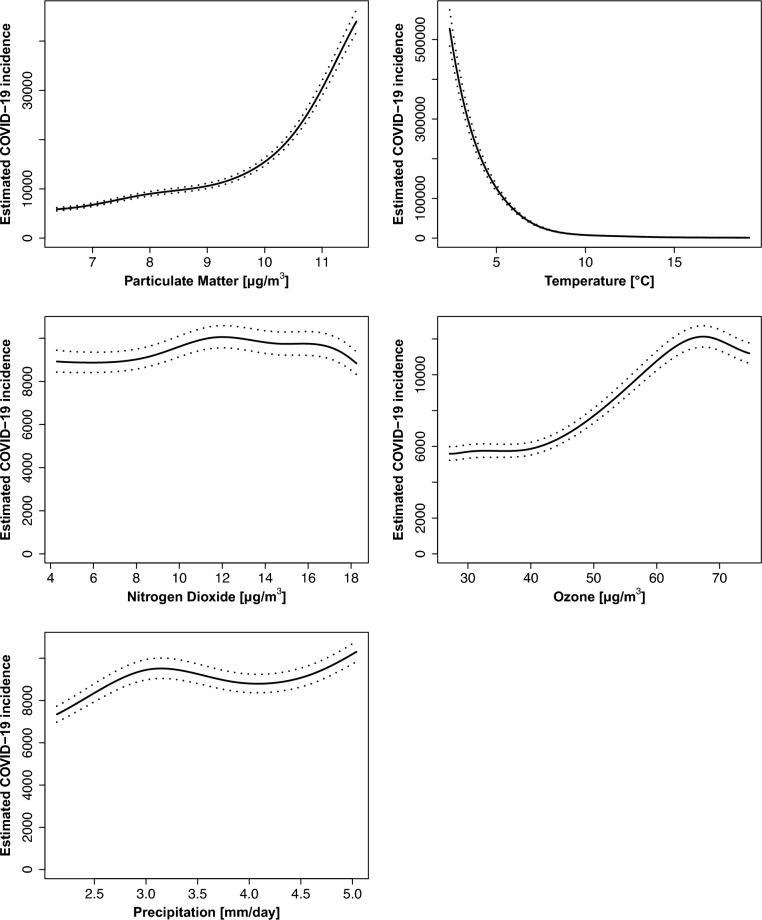
COVID-19 had a devastating impact on humanity. We investigated how residential air pollution (ozone (O), nitrogen dioxide (NO), fine particulate matter (PM)) and meteorological factors (temperature (Temp), precipitation (Prec)) are associated with COVID-19 incidence in Baden-Württemberg (BW), Germany. We utilized data from the Copernicus Atmosphere Monitoring Service and the Copernicus Climate Change Service to model environmental exposure from 2020 to 2022 in postal code areas in BW. Health insurance data on SARS-CoV-2 infections were provided from the health insurance AOK BW on a quarterly level covering approximately 12 million person-years. We examined the spatiotemporal variability with a generalized additive model including various stressors, demographic factors, and area-wide data, offering a comprehensive analysis of the environmental stressor- COVI-10 incidence associations. In 2022, during the prevalence of the Omicron variant, the number of COVID-19 cases tripled compared to 2020. During the pre-Omicron period, COVID-19 incidence showed a positive association with PM (relative risk [RR] 2.41; 95% confidence interval [CI] (2.31, 2.52)), a negative association with Temp (RR 0.39 (0.32, 0.48)), and no clear or slight associations with O, Prec, and NO. During the Omicron period, there were either no clear or slight negative associations with Temp (RR 0.92 (0.74, 1.30)), PM (RR 0.70 (0.64, 0.79)), NO, and Prec and a negative association with O (RR 0.46 (0.40, 0.53)). The analysis found clear links between environmental stressors and COVID-19 incidence, which strongly differed between pre-Omicron and Omicron periods. Consideration of environmental stressor concentration could be relevant in the management of the pandemic.
新冠疫情对人类造成了毁灭性影响。我们研究了德国巴登-符腾堡州(BW)的住宅空气污染(臭氧(O)、二氧化氮(NO)、细颗粒物(PM))和气象因素(温度(Temp)、降水量(Prec))与新冠疫情发病率之间的关联。我们利用哥白尼大气监测服务和哥白尼气候变化服务的数据,对2020年至2022年BW邮政编码区域的环境暴露情况进行建模。来自健康保险公司AOK BW的关于新冠病毒感染的医疗保险数据按季度提供,覆盖约1200万人年。我们使用广义相加模型研究了时空变异性,该模型包括各种压力源、人口因素和区域范围数据,对环境压力源与新冠-19发病率之间的关联进行了全面分析。2022年,在奥密克戎变异株流行期间,新冠病例数相比2020年增加了两倍。在奥密克戎变异株出现之前的时期,新冠发病率与PM呈正相关(相对风险[RR] 2.41;95%置信区间[CI](2.31,2.52)),与Temp呈负相关(RR 0.39(0.32,0.48)),与O、Prec和NO没有明显或轻微关联。在奥密克戎变异株流行期间,与Temp(RR 0.92(0.74,1.30))、PM(RR 0.70(0.64,0.79))、NO和Prec要么没有明显或轻微负相关,与O呈负相关(RR 0.46(0.40,0.53))。分析发现环境压力源与新冠发病率之间存在明显联系,在奥密克戎变异株出现之前和之后的时期差异很大。在疫情管理中考虑环境压力源浓度可能具有重要意义。
 Zotero 插件