
血清溶血磷脂酰胆碱酰基转移酶3水平与代谢变量及2型糖尿病风险的关联:一项横断面研究。
Association of serum lysophosphatidylcholine acyltransferase 3 levels with metabolic variables and risk of type 2 diabetes mellitus: A cross-sectional study.
作者信息
Zhu Haifeng, Zhong Ziyi, Jin Jing, Liu Wei, Cao Yuan, Guo Yawen, Zhao Gaonian, Li Qian
机构信息
Rehabilitation Medicine Department, Taizhou People's Hospital, Taizhou City, Jiangsu Province, China.
Endocrinology Department, Nanjing First Hospital, Nanjing Medical University, Nanjing City, Jiangsu Province, China.
出版信息
PLoS One. 2025 Jul 30;20(7):e0329301. doi: 10.1371/journal.pone.0329301. eCollection 2025.
AIMS
This study aimed to explore the role of serum lysophosphatidylcholine acyltransferase 3 (LPCAT3) in glucose and lipid metabolism and its association with type 2 diabetes mellitus (T2DM).
METHODS
Between July and December 2024, we recruited 256 newly diagnosed T2DM patients and 252 gender- and age-matched individuals with normal glucose tolerance (NGT). Serum LPCAT3 levels were measured using ELISA. Group comparisons were conducted via t-tests or Mann-Whitney U tests. Spearman correlation analysis assessed the relationship between LPCAT3 and metabolic variables. Linear regression identified independent predictors of LPCAT3 levels. Partial Least Squares (PLS) analysis evaluated the correlations between serum LPCAT3 and obesity-related anthropometric indicators, blood glucose and lipid indicators. Logistic regression evaluated the association between LPCAT3 levels and T2DM risk, and ROC analysis determined its predictive value.
RESULTS
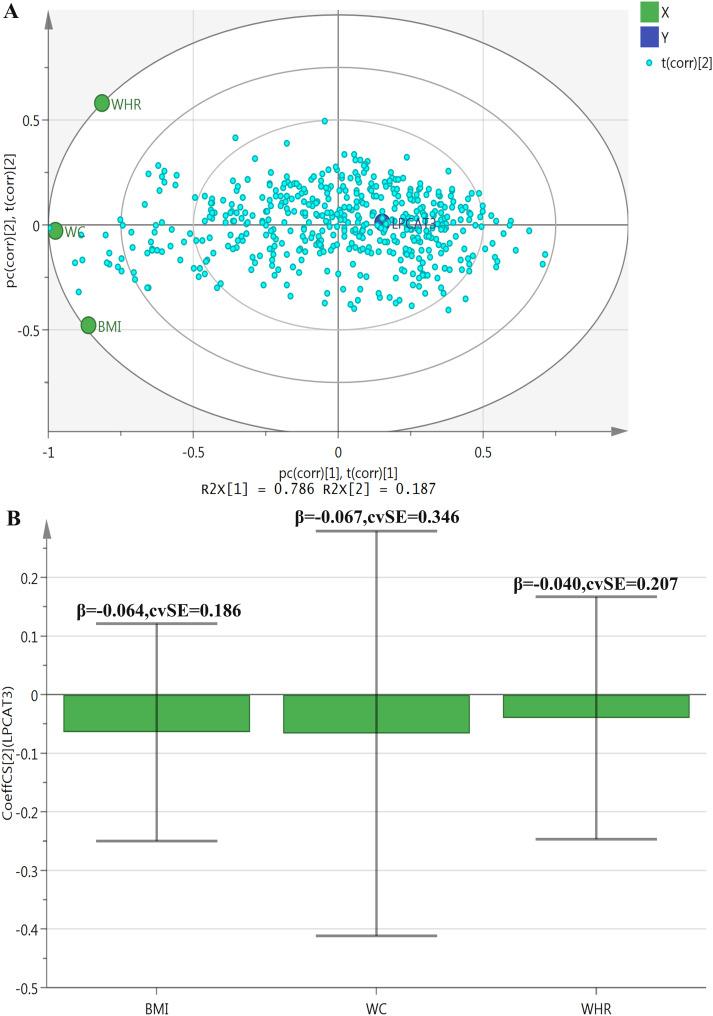
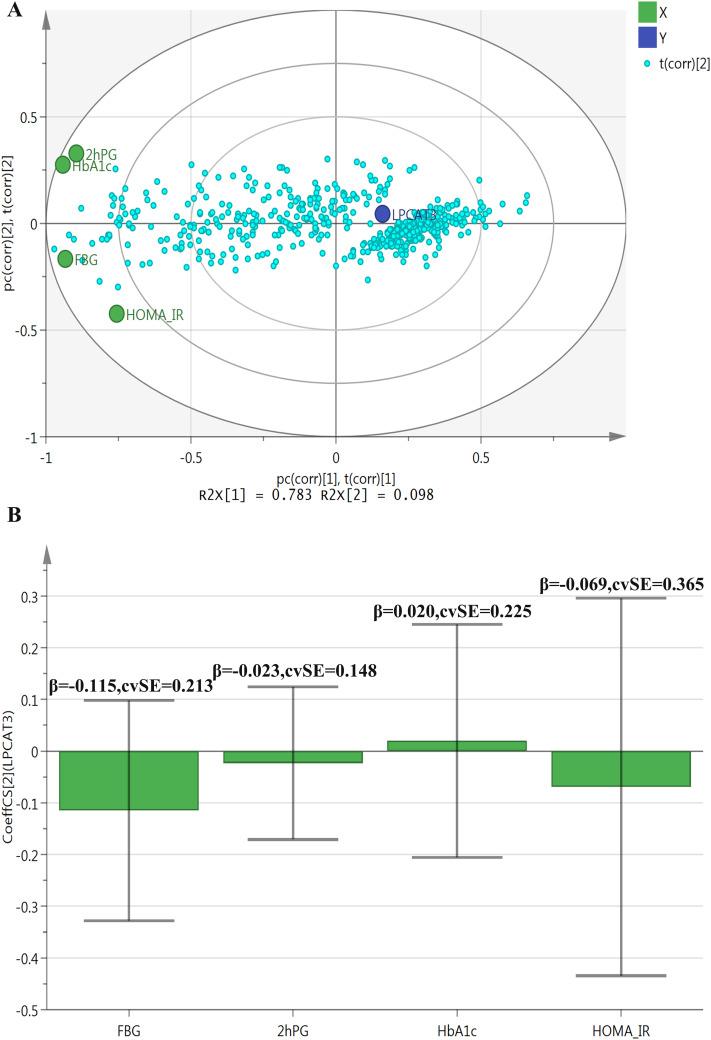
Median LPCAT3 level was lower in T2DM patients (21.51 ng/ml, IQR: 8.47-35.63) compared to the NGT group (24.43 ng/ml, IQR: 14.41-49.37). In NGT individuals, LPCAT3 negatively correlated with high-density lipoprotein cholesterol (HDL), fasting blood glucose (FBG), and glycated hemoglobin (HbA1c). In T2DM patients, LPCAT3 negatively correlated with body mass index (BMI) and waist circumference (WC). Linear regression identified BMI, HDL, and FBG as negative predictors of LPCAT3. PLS analysis revealed negative correlations between LPCAT3 and BMI, WC, HDL and FBG, but with large standard errors. When stratified by LPCAT3 tertiles, the lowest tertile initially showed a higher T2DM incidence than the highest tertile. However, after adjusting for obesity-related indicators, no significant difference was found between them. ROC analysis yielded an AUC of 0.580 for LPCAT3.
CONCLUSION
Although serum LPCAT3 levels are lower in T2DM patients, its predictive capacity for T2DM is constrained. Moreover, the association between LPCAT3 and T2DM risk is likely confounded by obesity-related factors. While LPCAT3 tends to negatively correlate with BMI, HDL, and FBG, these correlations are complex and unstable.
目的
本研究旨在探讨血清溶血磷脂酰胆碱酰基转移酶3(LPCAT3)在糖脂代谢中的作用及其与2型糖尿病(T2DM)的关系。
方法
在2024年7月至12月期间,我们招募了256例新诊断的T2DM患者和252例年龄和性别匹配的糖耐量正常(NGT)个体。采用酶联免疫吸附测定法(ELISA)检测血清LPCAT3水平。通过t检验或曼-惠特尼U检验进行组间比较。Spearman相关性分析评估LPCAT3与代谢变量之间的关系。线性回归确定LPCAT3水平的独立预测因素。偏最小二乘法(PLS)分析评估血清LPCAT3与肥胖相关人体测量指标、血糖和血脂指标之间的相关性。逻辑回归评估LPCAT3水平与T2DM风险之间的关联,ROC分析确定其预测价值。
结果
与NGT组(24.43 ng/ml,IQR:14.41 - 49.37)相比,T2DM患者的LPCAT3中位数水平较低(21.51 ng/ml,IQR:8.47 - 35.63)。在NGT个体中,LPCAT3与高密度脂蛋白胆固醇(HDL)、空腹血糖(FBG)和糖化血红蛋白(HbA1c)呈负相关。在T2DM患者中,LPCAT3与体重指数(BMI)和腰围(WC)呈负相关。线性回归确定BMI、HDL和FBG为LPCAT3的负向预测因素。PLS分析显示LPCAT3与BMI、WC、HDL和FBG之间呈负相关,但标准误较大。按LPCAT3三分位数分层时,最低三分位数最初显示T2DM发病率高于最高三分位数。然而,在调整肥胖相关指标后,两者之间未发现显著差异。LPCAT3的ROC分析得出AUC为0.580。
结论
尽管T2DM患者血清LPCAT3水平较低,但其对T2DM的预测能力有限。此外,LPCAT3与T2DM风险之间的关联可能受到肥胖相关因素的混淆。虽然LPCAT3倾向于与BMI、HDL和FBG呈负相关,但这些相关性复杂且不稳定。


 Zotero 插件