
差异交联和收缩性马达驱动核染色质压缩。
Differential Crosslinking and Contractile Motors Drive Nuclear Chromatin Compaction.
作者信息
Theeyancheri Ligesh, Banigan Edward J, Schwarz J M
机构信息
Physics Department, Syracuse University, Syracuse, NY 13244 USA.
Institute of Medical Engineering & Science and Department of Physics, Massachusetts Institute of Technology, Cambridge, MA 02139, USA.
出版信息
ArXiv. 2025 Jul 23:arXiv:2507.17883v1.
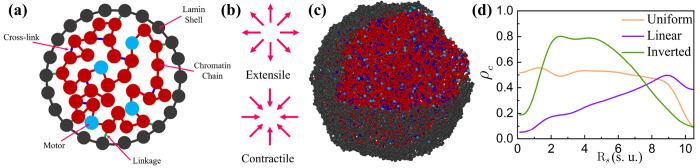
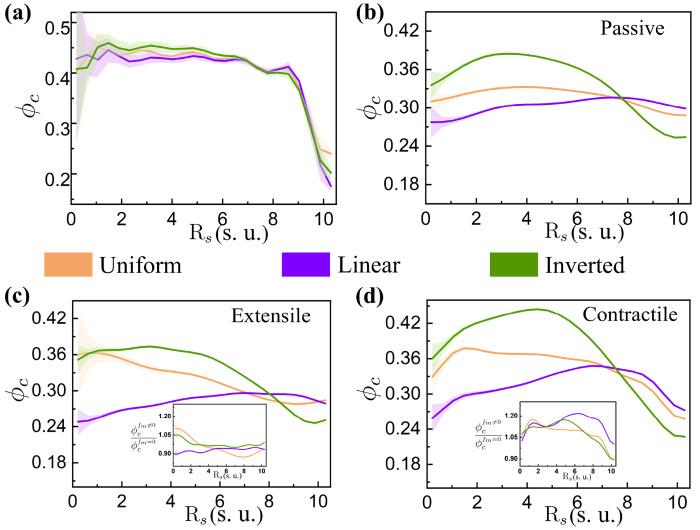
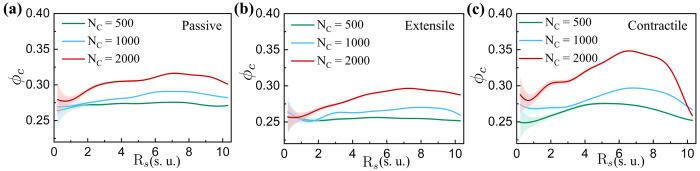
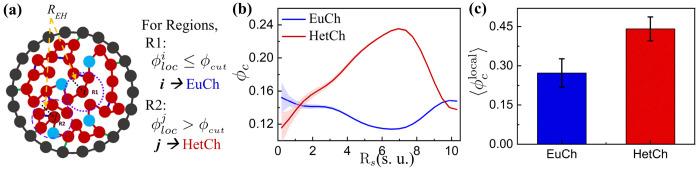
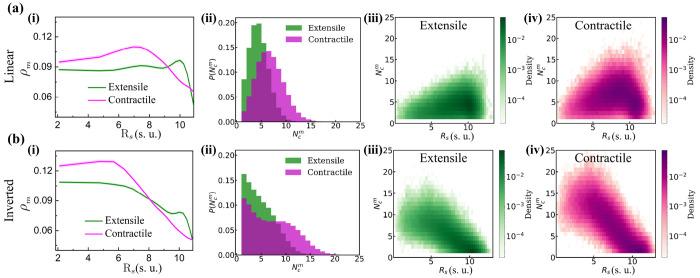
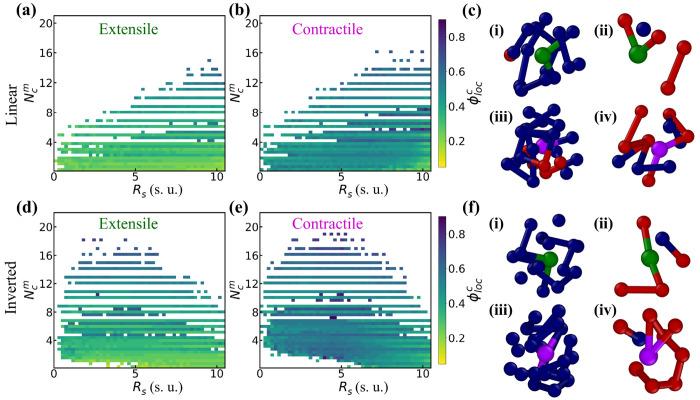
During interphase, a typical cell nucleus features spatial compartmentalization of transcriptionally active euchromatin and repressed heterochromatin domains. In conventional nuclear organization, euchromatin predominantly occupies the nuclear interior, while heterochromatin, which is approximately 50% more dense than euchromatin, is positioned near the nuclear periphery. Peripheral chromatin organization can be further modulated by the nuclear lamina, which is itself a deformable structure. While a number of biophysical mechanisms for compartmentalization within rigid nuclei have been explored, we study a chromatin model consisting of an active, crosslinked polymer tethered to a deformable, polymeric lamina shell. Contractile motors, the deformability of the shell, and the spatial distribution of crosslinks all play pivotal roles in this compartmentalization. We find that a radial crosslink density distribution, even with a small linear differential of higher crosslinking density at the edge of the nucleus, combined with contractile motor activity, drives genomic segregation, in agreement with experimental observations. This arises from contractile motors preferentially drawing crosslinks into their vicinity at the nuclear periphery, forming high-density domains that promote heterochromatin formation. We also find an increased stiffness of nuclear wrinkles given the preferential heterochromatin compaction below the lamina shell, which is consistent with instantaneous nuclear stiffening under applied nanoindentation. We conclude with the potential for experimental validation of our model predictions.
在间期,典型的细胞核具有转录活性常染色质和抑制性异染色质结构域的空间分隔。在传统的核组织中,常染色质主要占据核内部,而异染色质比常染色质密度大约高50%,位于核周边附近。周边染色质组织可被核纤层进一步调节,核纤层本身是一种可变形结构。虽然已经探索了许多在刚性核内进行分隔的生物物理机制,但我们研究了一种染色质模型,该模型由附着在可变形聚合物薄片壳上的活性交联聚合物组成。收缩马达、壳的可变形性以及交联的空间分布在这种分隔中都起着关键作用。我们发现,即使在核边缘具有较高交联密度的小线性差异的径向交联密度分布,与收缩马达活性相结合,也能驱动基因组分离,这与实验观察结果一致。这是由于收缩马达优先将交联吸引到其在核周边附近的区域,形成促进异染色质形成的高密度结构域。我们还发现,由于在薄片壳下方优先进行异染色质压实,核褶皱的刚度增加,这与施加纳米压痕时的瞬时核硬化一致。我们最后讨论了对我们模型预测进行实验验证的可能性。

 Zotero 插件