
培美曲塞耐药肺癌细胞中B淋巴瘤莫洛尼鼠白血病病毒插入区域1同源物与Ⅰ型胰岛素样生长因子受体之间的相互调节
Reciprocal regulation between B lymphoma Mo-MLV insertion region 1 homolog and type I insulin-like growth factor receptor in pemetrexed-resistant lung cancer cells.
作者信息
Shen Huan-Ting, Chien Peng-Ju, Sheu Gwo-Tarng, Wang Bing-Yen, Chang Wen-Wei
机构信息
Department of Pulmonary Medicine, Taichung Tzu Chi Hospital, Buddhist Tzu Chi Medical Foundation, Taichung, Taiwan.
Department of Biomedical Sciences, Chung Shan Medical University, Taichung, Taiwan.
出版信息
Tzu Chi Med J. 2025 Apr 11;37(3):285-292. doi: 10.4103/tcmj.tcmj_288_24. eCollection 2025 Jul-Sep.
OBJECTIVES
The objective of this study was to investigate the role of type I insulin-like growth factor receptor (IGF-1R) in pemetrexed-resistant lung cancer cells and its interaction with B lymphoma Mo-MLV insertion region 1 homolog (BMI1), previously identified as a key resistance gene.
MATERIALS AND METHODS
The study started with the analysis of the activation of IGF-1R in pemetrexed-resistant A549 (A400) lung cancer cells by Western blot analysis of its form of phosphorylation. Cancer stem cell (CSC) activity was assessed by tumor sphere culture. IGF-1R inhibition was performed by picropodophyllin (PPP), an IGF-1R inhibitor, or by shRNA-mediated RNA silencing. A Nonobese diabetic/severe combined immunodeficiency (NOD/SCID) mouse xenograft model was used to access pemetrexed sensitivity. To further understand the relationship between IGF-1R and BMI1, both BMI1 knockdown and overexpression experiments were performed to assess IGF-1R phosphorylation by western blot.
RESULTS
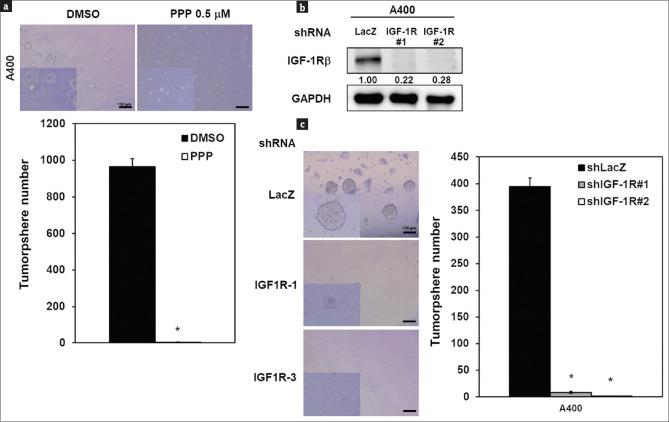
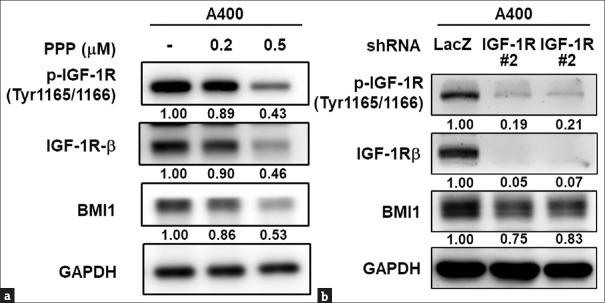
Increased IGF-1R phosphorylation was found in A400 cells, and subsequent IGF-1R inhibition resulted in a reduction in CSC activity in these resistant cells. In the studies, PPP treatment effectively suppressed tumor growth and reduced BMI1 expression in A400 tumor tissue. Further investigation showed that BMI1 knockdown in A400 cells resulted in decreased IGF-1R phosphorylation, whereas BMI1 overexpression in A549 cells resulted in increased IGF-1R phosphorylation, indicating an interaction between these two proteins.
CONCLUSION
A novel reciprocal regulatory relationship between IGF-1R and BMI1 has been identified in lung cancer cells, suggesting potential therapeutic strategies to combat pemetrexed resistance in lung cancer patients.
目的
本研究旨在探讨I型胰岛素样生长因子受体(IGF-1R)在培美曲塞耐药肺癌细胞中的作用及其与先前被鉴定为关键耐药基因的B淋巴瘤Mo-MLV插入区域1同源物(BMI1)的相互作用。
材料与方法
该研究首先通过对培美曲塞耐药的A549(A400)肺癌细胞中IGF-1R磷酸化形式的蛋白质印迹分析,来分析IGF-1R的激活情况。通过肿瘤球培养评估癌症干细胞(CSC)活性。采用IGF-1R抑制剂鬼臼苦素(PPP)或通过短发夹RNA(shRNA)介导的RNA沉默来抑制IGF-1R。使用非肥胖糖尿病/严重联合免疫缺陷(NOD/SCID)小鼠异种移植模型来评估培美曲塞敏感性。为了进一步了解IGF-1R与BMI1之间的关系,进行了BMI1基因敲低和过表达实验,通过蛋白质印迹法评估IGF-1R磷酸化情况。
结果
在A400细胞中发现IGF-1R磷酸化增加,随后抑制IGF-1R导致这些耐药细胞中的CSC活性降低。在研究中,PPP处理有效抑制了A400肿瘤组织中的肿瘤生长并降低了BMI1表达。进一步研究表明,A400细胞中BMI1基因敲低导致IGF-1R磷酸化减少,而A549细胞中BMI1过表达导致IGF-1R磷酸化增加,表明这两种蛋白之间存在相互作用。
结论
在肺癌细胞中发现了IGF-1R与BMI1之间一种新的相互调节关系,这为对抗肺癌患者的培美曲塞耐药性提供了潜在的治疗策略。



 Zotero 插件