
欧洲以患者为中心的医疗服务实用方法:混合方法研究构建综合癌症护理网络的概念框架
Practical Approaches to Patient-Centered Care in Europe: Mixed Methods Study Developing a Conceptual Framework for Comprehensive Cancer Care Networks.
作者信息
Hickmann Emily, Richter Peggy, Schlieter Hannes, Cemazar Maja, Dudek-Godeau Dorota, Grapentin Nele, Griesshammer Ellen, Jelenc Marjetka, Liutkauskiene Sigita, Ravaud Alain, Troussard Xavier, Wesselmann Simone
机构信息
Technische Universität Dresden, Faculty of Business and Economics, Research Group Digital Health, Dresden, Germany.
Institute of Oncology Ljubljana, Ljubljana, Slovenia.
出版信息
JMIR Cancer. 2025 Jul 31;11:e59683. doi: 10.2196/59683.
BACKGROUND
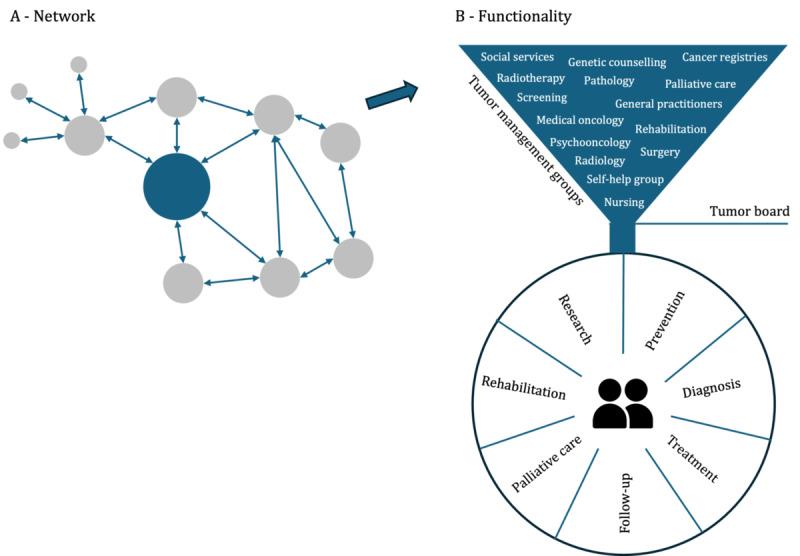
In contemporary health care, patient-centered care has emerged as a pivotal paradigm shift that redefines the traditional physician-centric model. Particularly in the context of cancer care, marked by its intricate nature and emotional impact, there is a pressing requirement to rethink how health care is delivered. In this context, comprehensive cancer care networks (CCCNs) provide a new means of structuring and delivering quality cancer care, recognizing each patient's unique preferences and needs.
OBJECTIVE
This study aimed to establish a consistent definition and framework for patient centeredness in CCCNs, facilitating the integration of a patient-centered approach to enhance care quality.
METHODS
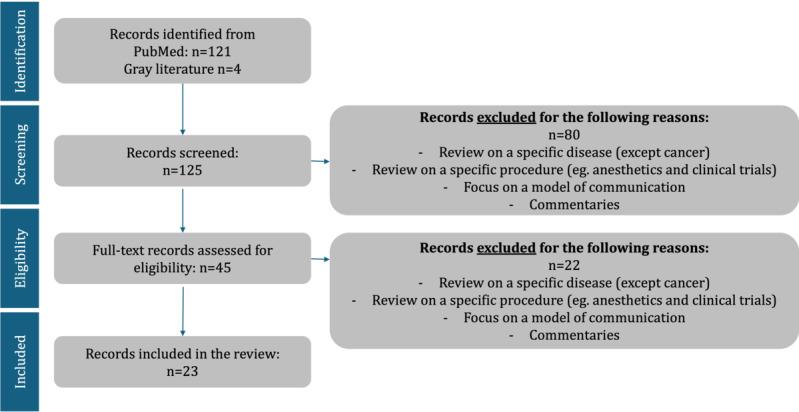
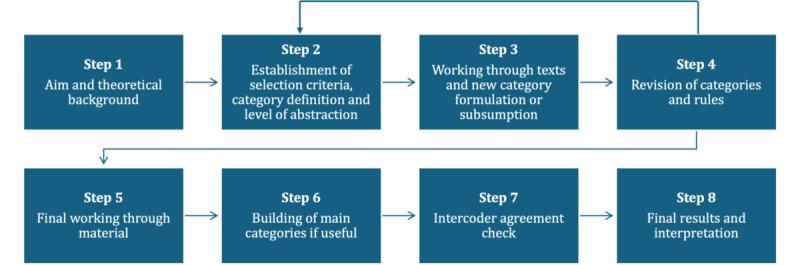
We conducted an umbrella review focusing on generic and oncology-specific dimensions of patient centeredness to establish the definition and framework. The data were analyzed and synthesized using an inductive category development approach, which guided the derivation of dimensions for the framework. The review was complemented by a survey of 23 key stakeholders within CCCNs and a focus group with patient representatives. This process involved iterative group discussions to achieve consensus on the framework and definition.
RESULTS
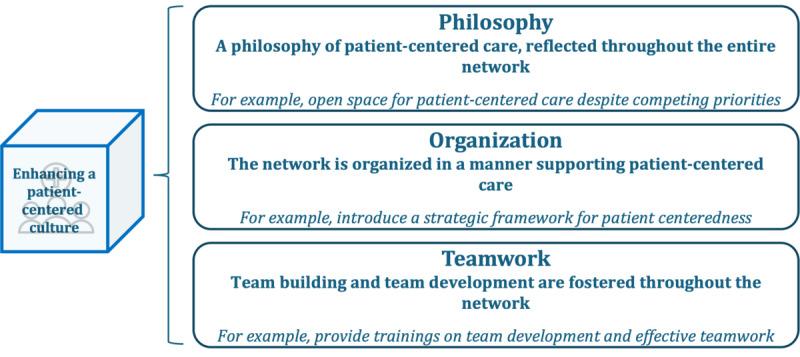
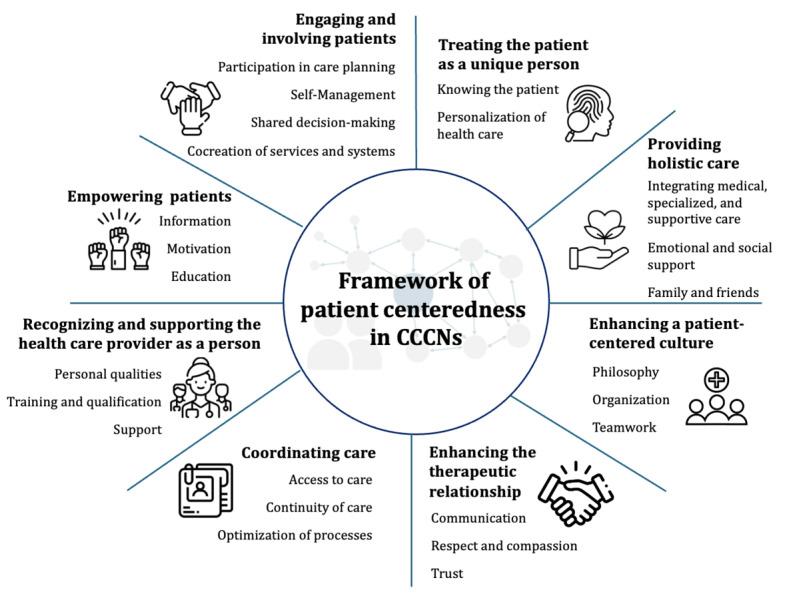
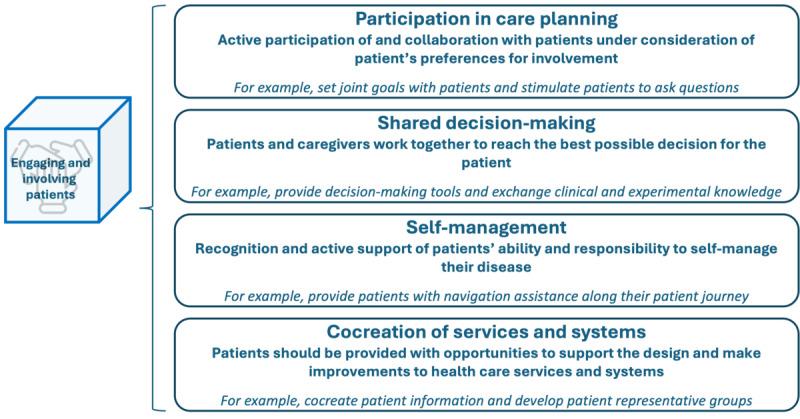
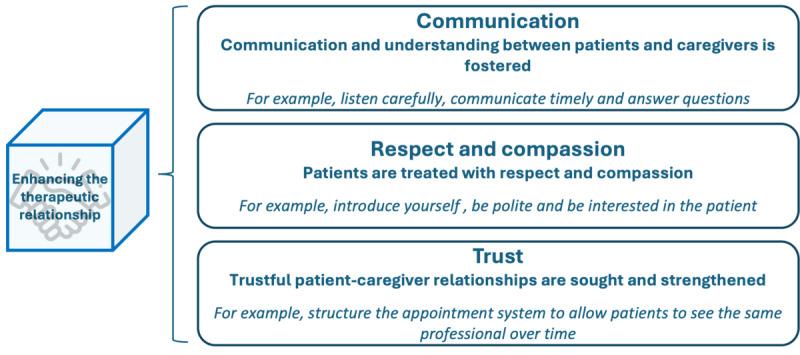
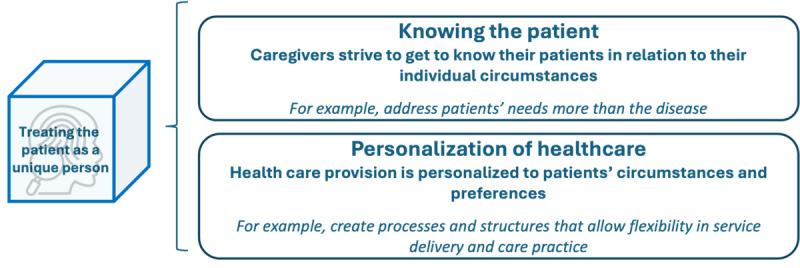
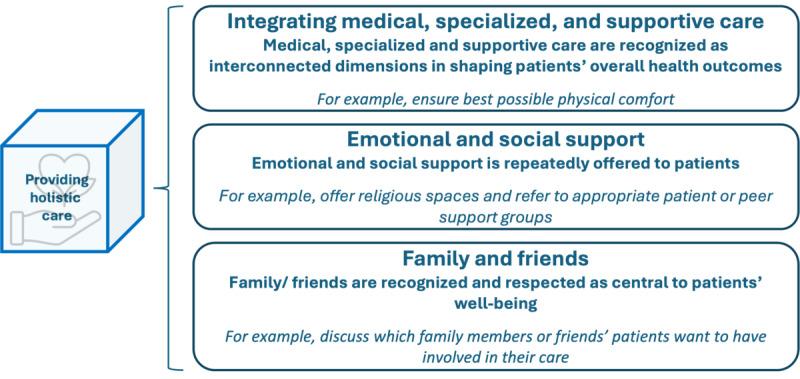
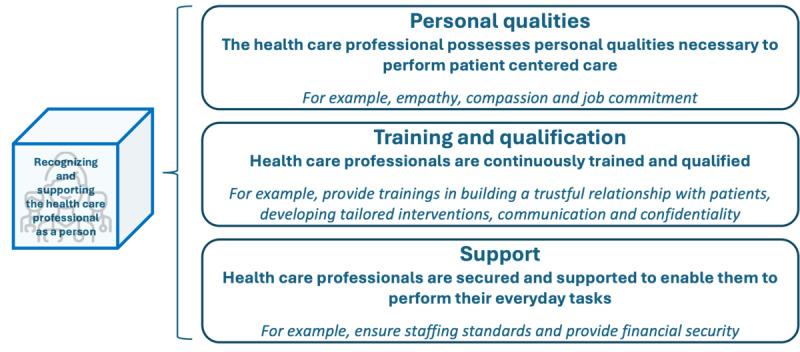
The study presents a robust definition and framework of patient centeredness tailored to CCCNs, validated by an initial agreement rate of 96% among survey respondents. Patient centeredness in a CCCN is defined as a philosophy of care prioritizing the physical, emotional, and social needs and personal values of patients with cancer at every step of the patient pathway. In patient-centered CCCNs, patients are empowered and engaged in becoming active partners in health care in relation to their individual preferences and capabilities, with the goal of providing personalized, high-quality, holistic care with the best possible outcomes. The framework comprises 8 primary dimensions: empowering patients, engaging and involving patients, treating the patient as a unique person, enhancing the therapeutic relationship, enhancing a patient-centered culture, providing holistic care, recognizing and supporting the health care professional as a person, and coordinating care. Each dimension is supported by specific subdimensions and actionable patient-centered activities that facilitate practical implementation.
CONCLUSIONS
The results provide a comprehensive perspective on the complex elements that compose patient-centered care within CCCNs in Europe. This contributes to a better understanding and application of patient centeredness in cancer care and possibly other contexts. The results presented in this paper promise to support cancer care networks and other health care contexts in creating a patient-centered environment where patients feel genuinely heard, valued, and actively engaged in their care decisions.
背景
在当代医疗保健中,以患者为中心的护理已成为一种关键的范式转变,重新定义了传统的以医生为中心的模式。特别是在癌症护理的背景下,其具有复杂性和情感影响,迫切需要重新思考医疗保健的提供方式。在这种背景下,综合癌症护理网络(CCCNs)提供了一种构建和提供优质癌症护理的新方式,认识到每个患者的独特偏好和需求。
目的
本研究旨在为CCCNs中以患者为中心建立一致的定义和框架,促进以患者为中心的方法的整合以提高护理质量。
方法
我们进行了一项综合综述,重点关注以患者为中心的一般维度和肿瘤学特定维度,以建立定义和框架。使用归纳类别发展方法对数据进行分析和综合,该方法指导框架维度的推导。该综述辅以对CCCNs内23名关键利益相关者的调查以及与患者代表的焦点小组讨论。这个过程涉及反复的小组讨论,以就框架和定义达成共识。
结果
该研究提出了一个针对CCCNs量身定制的强大的以患者为中心的定义和框架,调查受访者的初始同意率为96%,验证了该定义和框架。CCCNs中的以患者为中心被定义为一种护理理念,在患者就医过程的每一步都优先考虑癌症患者的身体、情感和社会需求以及个人价值观。在以患者为中心的CCCNs中,患者被赋予权力并参与成为医疗保健中的积极伙伴,根据他们的个人偏好和能力,目标是提供个性化、高质量、全面的护理并取得尽可能好的结果。该框架包括8个主要维度:赋予患者权力、让患者参与并融入、将患者视为独特的个体、加强治疗关系、增强以患者为中心的文化、提供全面护理、认可并支持医护人员作为个体、协调护理。每个维度都由特定的子维度和可操作的以患者为中心的活动支持,以促进实际实施。
结论
研究结果为欧洲CCCNs中构成以患者为中心的护理的复杂要素提供了全面的视角。这有助于更好地理解和应用癌症护理及可能其他背景下的以患者为中心。本文呈现的结果有望支持癌症护理网络和其他医疗保健背景创建一个以患者为中心的环境,让患者感到真正被倾听、被重视并积极参与他们的护理决策。


 Zotero 插件