
农业或园艺体力活动通过动脉僵硬度、认知功能和脑白质状态对心血管疾病和痴呆相关标志物的影响:横断面研究和干预性研究结果
Effects of agricultural or gardening physical activity on cardiovascular disease and dementia-related markers via arterial stiffness, cognitive function, and cerebral white matter status: results from cross-sectional and interventional studies.
作者信息
Nishiwaki Masato, Takada Seiya, Otsuka Shotaro, Makizako Hyuma, Sakakima Harutoshi, Shiomi Naoto, Ooba Satomi, Matsumoto Naoyuki, Kikuchi Kiyoshi
机构信息
Faculty of Engineering, Osaka Institute of Technology, Osaka, Japan.
Department of Orthopaedic Surgery, Graduate School of Medical and Dental Sciences, Kagoshima University, Kagoshima, Japan.
出版信息
Front Public Health. 2025 Jul 17;13:1509528. doi: 10.3389/fpubh.2025.1509528. eCollection 2025.
BACKGROUND
Agricultural or gardening physical activity (AGPA) offers potential as a simple strategy to improve cardiovascular disease and dementia-related markers; however, the actual preventive effects remain unclear. Our objective was to investigate AGPA regarding related markers of cardiovascular disease and dementia using cross-sectional and interventional approaches.
METHODS AND RESULTS
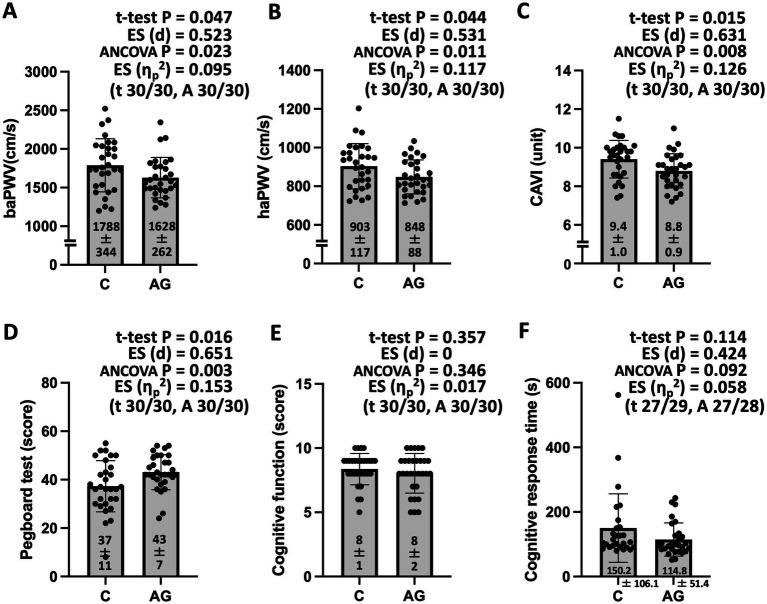
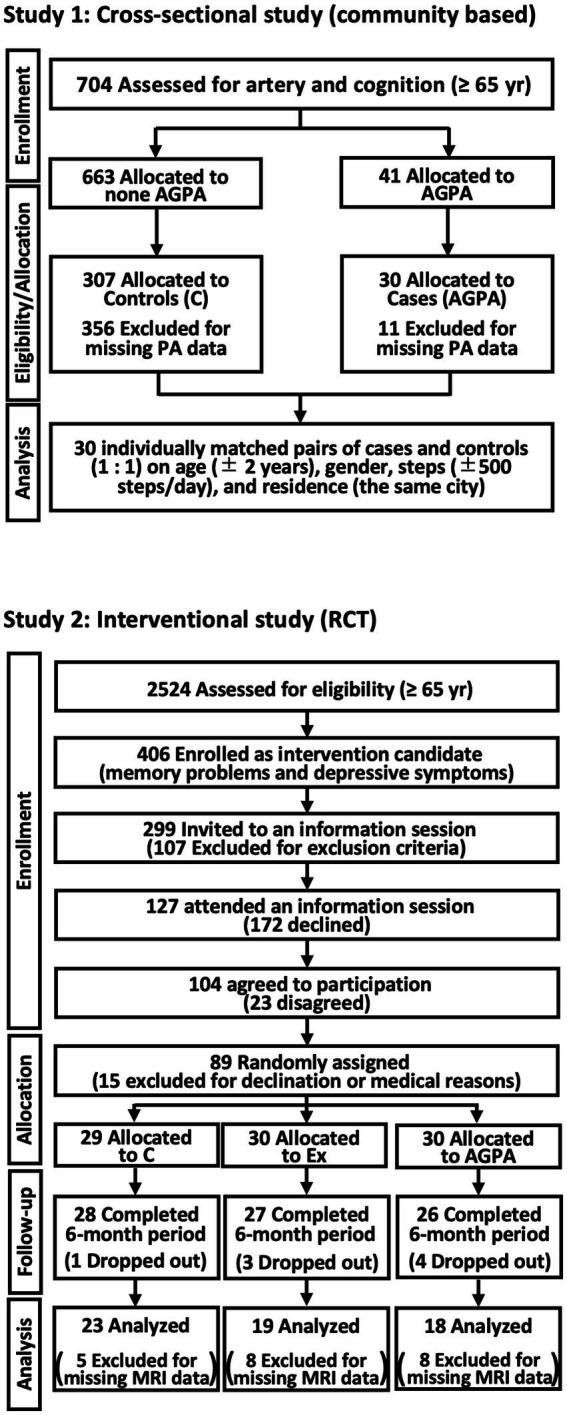
In Study 1, community-based older individuals were assessed, and 30 individuals who performed AGPA (AG group) and 30 1:1 age-, sex-, and objective activity-matched controls were cross-sectionally compared (mean age, 75 ± 6 y). Arterial stiffness (pulse wave velocity) was lower and hand-finger dexterity (pegboard test) was higher in the AG vs. control groups. The interventional results of Study 2 (secondary analysis of a randomized controlled trial) confirmed that consistent AGPA might regress white matter hyperintensities in older individuals.
CONCLUSION
Our findings suggest that consistent AGPA may improve cardiovascular disease and dementia-related markers in older healthy individuals via arterial stiffness, cognitive function, and cerebral white matter status. This information could have major implications for integrated strategies for lifelong health.
SECONDARY ANALYSIS OF CLINICAL TRIALS STUDY 2: Study for Decreasing Depressive Symptoms and Increasing Memory Performance in the older adults (Trial registration number UMIN000018547, Date of registration 2015/08/07), URL: https://center6.umin.ac.jp/cgi-open-bin/ctr/ctr_view.cgi?recptno=R000021462.
背景
农业或园艺体力活动(AGPA)作为一种改善心血管疾病和痴呆相关指标的简单策略具有潜力;然而,其实际预防效果仍不明确。我们的目的是采用横断面研究和干预性研究方法,调查AGPA与心血管疾病和痴呆相关指标的关系。
方法与结果
在研究1中,对社区老年个体进行评估,横断面比较了30名进行AGPA的个体(AG组)和30名年龄、性别及客观活动相匹配的对照者(平均年龄75±6岁)。与对照组相比,AG组的动脉僵硬度(脉搏波速度)较低,手-手指灵活性(钉板试验)较高。研究2的干预结果(一项随机对照试验的二次分析)证实,持续进行AGPA可能使老年个体的白质高信号减退。
结论
我们的研究结果表明,持续进行AGPA可能通过改善动脉僵硬度、认知功能和脑白质状态,改善健康老年人的心血管疾病和痴呆相关指标。这一信息可能对终身健康的综合策略具有重要意义。
临床试验研究2的二次分析:老年人抑郁症状减轻和记忆表现增强的研究(试验注册号UMIN000018547,注册日期2015/08/07),网址:https://center6.umin.ac.jp/cgi-open-bin/ctr/ctr_view.cgi?recptno=R000021462
 Zotero 插件