
揭示儿童肉芽肿性疾病中隐藏的免疫缺陷:一例报告
Uncovering hidden immune defects in childhood granulomatous disorders: a case report.
作者信息
Sarli Walter Maria, Quaranta Francesca, Canessa Clementina, Lodi Lorenzo, Pisano Laura, Buccoliero Anna Maria, Oranges Teresa, Sieni Elena, Simonini Gabriele, Bartolini Luca, Venturini Elisabetta, Galli Luisa, Azzari Chiara, Ricci Silvia
机构信息
Department of Health Sciences, University of Florence, Florence, Italy.
Immunology Unit, Meyer Children's Hospital IRCCS, Florence, Italy.
出版信息
Front Immunol. 2025 Jul 18;16:1634661. doi: 10.3389/fimmu.2025.1634661. eCollection 2025.
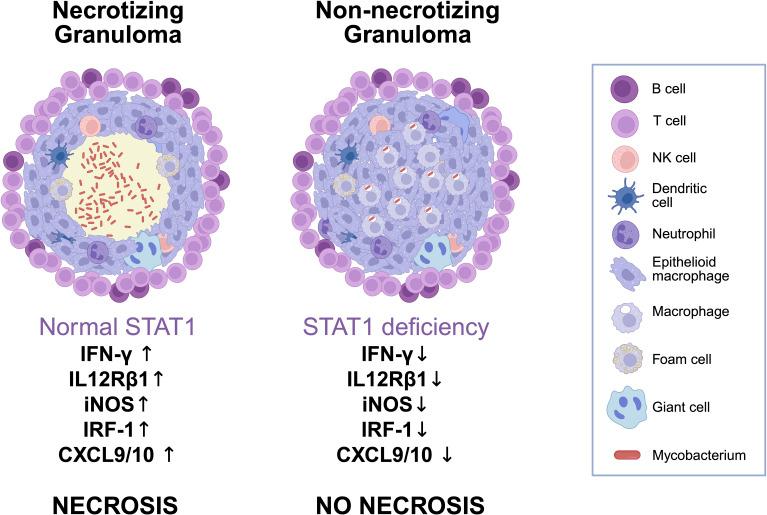
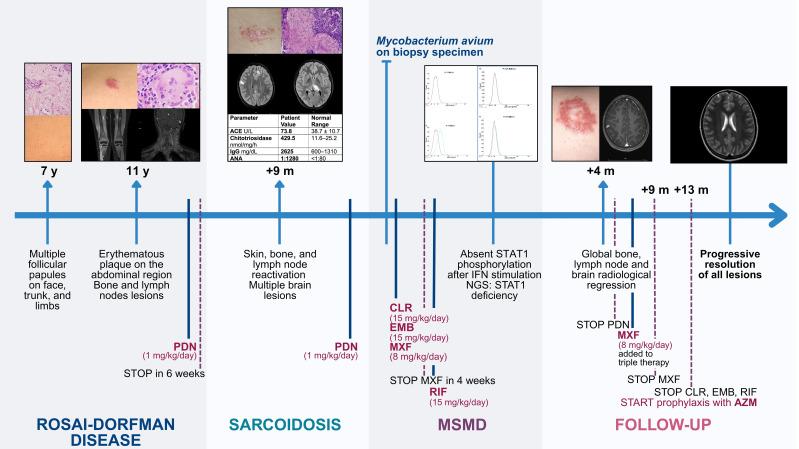
Granulomatous diseases in childhood present a complex diagnostic landscape, particularly when histological and clinical findings overlap with those of systemic inflammatory or histiocytic disorders. A subset of these conditions may represent the clinical onset of inborn errors of immunity (IEI), such as Mendelian Susceptibility to Mycobacterial Disease (MSMD), where atypical or sterile granulomas may obscure the underlying infectious or genetic etiology. Recognition of IEI behind granulomatous diseases can radically alter patient's prognosis and therapeutic management. This report describes the case of a 11-years-old with an initial diagnosis of Rosai-Dorfman disease based on clinical and and histological findings. Following relapse after steroid tapering the diagnosis was revised to sarcoidosis, supported by non-caseating granulomas and compatible laboratory findings. Only after cultures from biopsy specimens revealed complex (MAC), immunological investigations were undertaken, revealing a STAT1 dominant negative deficiency, consistent with MSMD. This report underscores the need of considering IEI in pediatric patients presenting with granulomatous inflammation, especially when clinical course is atypical or refractory to standard immunosuppressive therapies. Early microbiological and immunogenetic assessment is essential to avoid diagnostic delay, prevent inappropriate treatment, and guide targeted antimicrobial therapy.
儿童肉芽肿性疾病的诊断情况复杂,尤其是当组织学和临床发现与全身性炎症或组织细胞疾病的表现重叠时。这些病症的一部分可能代表免疫缺陷病(IEI)的临床发作,例如孟德尔遗传性分枝杆菌易感性疾病(MSMD),其中非典型或无菌性肉芽肿可能掩盖潜在的感染性或遗传病因。认识到肉芽肿性疾病背后的IEI可从根本上改变患者的预后和治疗管理。本报告描述了一例11岁患儿,最初根据临床和组织学发现诊断为罗萨伊-多夫曼病。在减停类固醇后复发,诊断修正为结节病,非干酪样肉芽肿和相符的实验室检查结果支持这一诊断。仅在活检标本培养显示鸟分枝杆菌复合群(MAC)后,才进行免疫学检查,发现STAT1显性负性缺陷,符合MSMD。本报告强调,对于出现肉芽肿性炎症的儿科患者,尤其是临床病程不典型或对标准免疫抑制治疗无效时,需要考虑IEI。早期微生物学和免疫遗传学评估对于避免诊断延误、防止不适当治疗以及指导针对性抗菌治疗至关重要。


 Zotero 插件