
神经重症监护中的药物治疗变异性与精准医学
Pharmacotherapy variability and precision medicine in neurocritical care.
作者信息
Mahmoud Sherif Hanafy, Kharouba Maged, Aboelezz Asma, Elshamy Adham, Gunn Ellen
机构信息
Neurotherapeutics and Clinical Pharmacokinetics (Neuro-CPK) Laboratory, Faculty of Pharmacy and Pharmaceutical Sciences, University of Alberta, Edmonton, AB, Canada.
出版信息
Front Neurol. 2025 Jul 18;16:1630163. doi: 10.3389/fneur.2025.1630163. eCollection 2025.
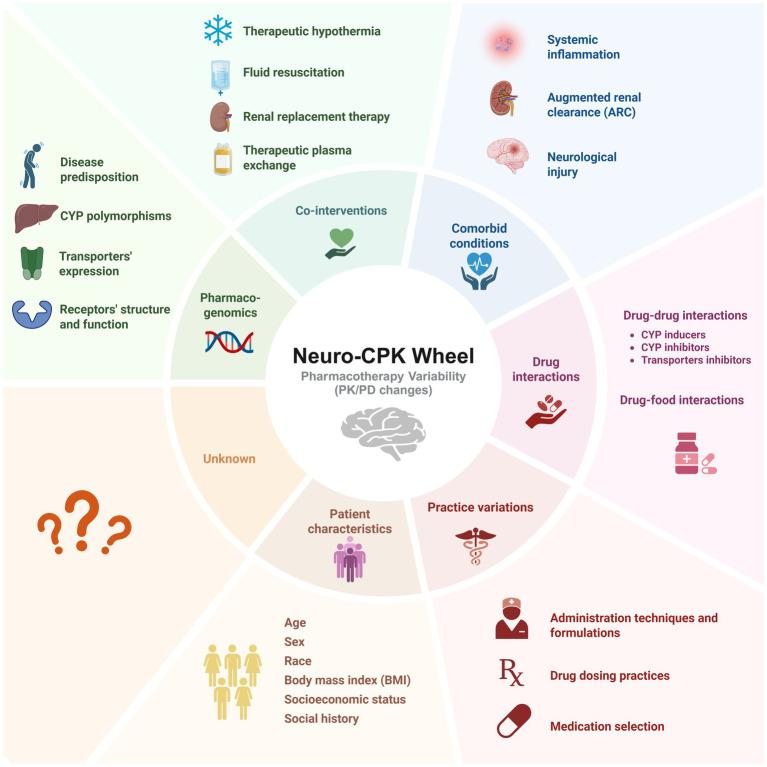
Pharmacotherapy variability is defined as the variability in drug response among and within individuals that is attributed to the inter and intra-individual differences in the action and disposition of drugs. Neurological and medical complications in neurocritical care contribute significantly to the overall disease prognosis. Pharmacological management plays a key role in managing many of those complications such as cerebral vasospasm, delayed cerebral ischemia, hyponatremia, infections, and seizures. However, pathophysiologic changes secondary to neurological and critical illnesses make the medical management of these patients challenging, contributing to pharmacotherapy variability. Interindividual differences in disease pathophysiology, altered organ function, systemic inflammation, hemodynamic instability, and common interventions employed in intensive care settings could alter the pharmacokinetics and pharmacodynamics of medications. The use of potentially ineffective treatments and suboptimal dosing of medications to manage patients can lead to poor outcomes as the understanding of the effect of neurological injury on the action and disposition of drugs is limited. This narrative review highlights the factors contributing to pharmacotherapy variability in neurocritical care, equipping clinicians with critical insights to refine patient management strategies. In conclusion, pharmacotherapy variability within neurocritical care introduces additional layers of complexity that may significantly contribute to therapy failure, adverse drug reactions, and setbacks in drug development. Understanding these variations is essential for identifying subpopulations that may derive the greatest benefit from specific therapies, representing a critical step toward achieving precision medicine in neurocritical care, ensuring the administration of the appropriate medication to the right patient at the correct dosage regimen.
药物治疗变异性被定义为个体之间和个体内部药物反应的变异性,这归因于药物作用和处置方面的个体间和个体内差异。神经重症监护中的神经和医学并发症对整体疾病预后有显著影响。药物治疗在管理许多此类并发症方面发挥着关键作用,如脑血管痉挛、迟发性脑缺血、低钠血症、感染和癫痫发作。然而,神经和危重病继发的病理生理变化使得这些患者的药物治疗具有挑战性,导致药物治疗变异性。疾病病理生理学的个体差异、器官功能改变、全身炎症、血流动力学不稳定以及重症监护环境中常用的干预措施可能会改变药物的药代动力学和药效学。由于对神经损伤对药物作用和处置的影响了解有限,使用可能无效的治疗方法和药物剂量不足来管理患者可能会导致不良后果。这篇叙述性综述强调了导致神经重症监护中药物治疗变异性的因素,为临床医生提供关键见解以完善患者管理策略。总之,神经重症监护中的药物治疗变异性引入了额外的复杂性层面,可能会显著导致治疗失败、药物不良反应和药物研发挫折。了解这些差异对于识别可能从特定疗法中获得最大益处的亚群至关重要,这是在神经重症监护中实现精准医学的关键一步,确保以正确的剂量方案为合适的患者给予适当的药物。

 Zotero 插件