
康复的新冠肺炎患者的白质变化:来自扩散张量成像(DTI)、扩散峰度成像(DKI)和神经突方向离散与密度成像(NODDI)指标的见解
White matter changes in recovered COVID-19 patients: insights from DTI, DKI, and NODDI metrics.
作者信息
Yuan Manxi, Lu Ruiqi, Liu Yu, Zhu Hui, Wang Hao, Wang Jingzhi, Song Yang, Yang Lei, Xiao Mingzhong
机构信息
The First School of Clinical Medicine, Hubei University of Chinese Medicine, Wuhan, China.
School of Laboratory Medicine, Hubei University of Chinese Medicine, Wuhan, China.
出版信息
Front Neurol. 2025 Jul 18;16:1580262. doi: 10.3389/fneur.2025.1580262. eCollection 2025.
BACKGROUND
COVID-19 affects not only the respiratory system but also the central nervous system, resulting in symptoms such as anosmia and confusion. Understanding the long-term neurological effects of COVID-19 is critical for comprehensive patient care and management.
PURPOSE
To study the long-term neurological effects of COVID-19, focusing on changes in white matter structural complexity using advanced neuroimaging techniques.
METHODS
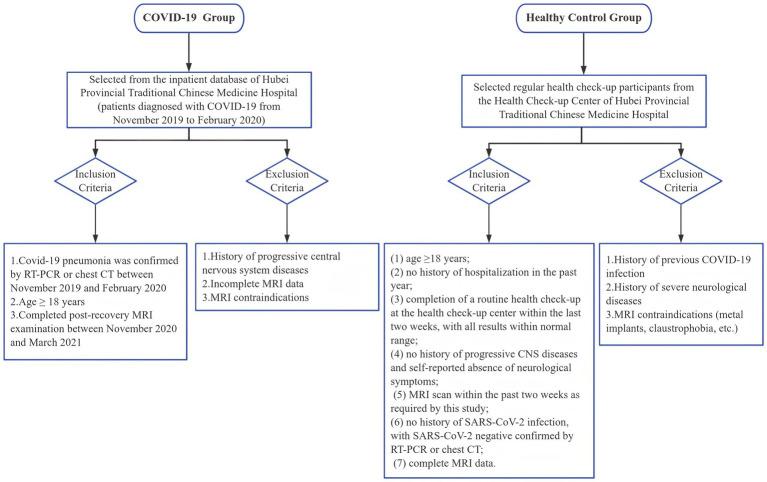
Thirty-eight participants including 22 recovered COVID-19 patients and 16 healthy controls, underwent MRI scans with T1-weighted, T2-weighted, and diffusion-weighted imaging. Advanced diffusion sequences, including diffusion tensor imaging (DTI), diffusion kurtosis imaging (DKI), and neurite orientation dispersion and density imaging (NODDI), were used to assess microstructural integrity.
RESULTS
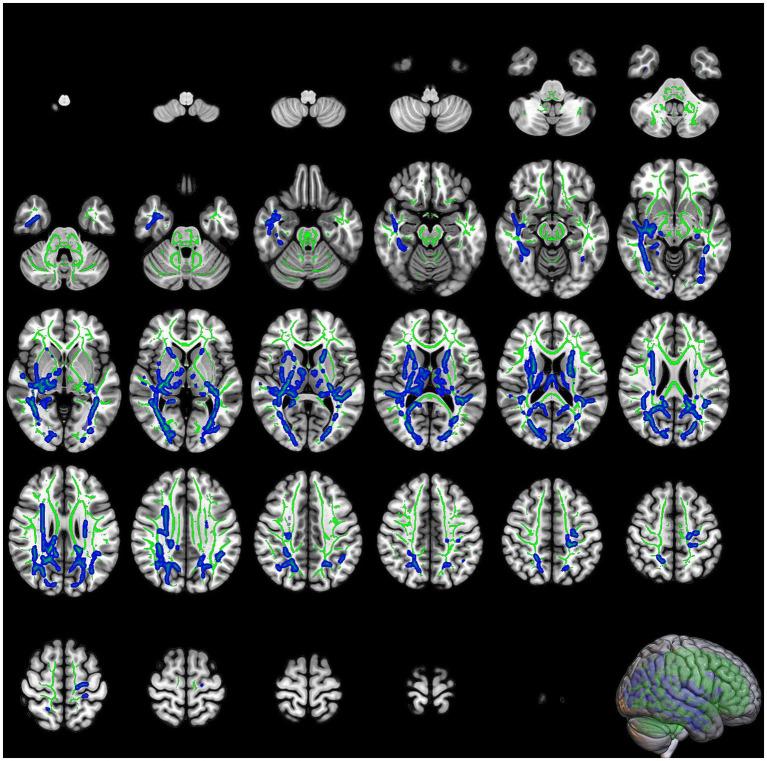
Significant differences in DKI metrics were observed, particularly in mean kurtosis (MK) and radial kurtosis (RK). Reduced MK and RK values were observed in certain regions, particularly the right inferior fronto-occipital fasciculus (IFOF), indicating reduced structural complexity of the white matter. No significant differences in DTI and NODDI metrics or clinical and demographic characteristics were found between the groups.
CONCLUSION
This study highlights the potential long-term neurological sequelae in recovered COVID-19 patients as evidenced by changes in white matter structural complexity. These findings underscore the importance of continued monitoring and tailored interventions to address neurological sequelae as part of the post-COVID-19 recovery process.
背景
新型冠状病毒肺炎(COVID-19)不仅影响呼吸系统,还影响中枢神经系统,导致嗅觉丧失和意识混乱等症状。了解COVID-19的长期神经学影响对于全面的患者护理和管理至关重要。
目的
研究COVID-19的长期神经学影响,重点关注使用先进神经成像技术观察白质结构复杂性的变化。
方法
38名参与者,包括22名康复的COVID-19患者和16名健康对照者,接受了T1加权、T2加权和扩散加权成像的MRI扫描。使用包括扩散张量成像(DTI)、扩散峰度成像(DKI)和神经突方向离散度与密度成像(NODDI)在内的先进扩散序列来评估微观结构完整性。
结果
观察到DKI指标存在显著差异,尤其是平均峰度(MK)和径向峰度(RK)。在某些区域观察到MK和RK值降低,特别是右侧额枕下束(IFOF),表明白质结构复杂性降低。两组之间在DTI和NODDI指标或临床和人口统计学特征方面未发现显著差异。
结论
本研究强调了康复的COVID-19患者潜在的长期神经后遗症,白质结构复杂性的变化证明了这一点。这些发现强调了在COVID-19后恢复过程中持续监测和针对性干预以解决神经后遗症的重要性。

 Zotero 插件