
血清总免疫球蛋白E升高与肺癌风险增加相关:一项回顾性研究。
Elevated serum total immunoglobulin E is associated with an increased risk of lung cancer: a retrospective study.
作者信息
Zhou Dongmei, Liu Jia, Zhang Chu, Kang Dan, Kang Jiayang, Meng Zihan, Wang Xiaonan
机构信息
Department of Gerontology and Geriatrics, The First Hospital of China Medical University, Shenyang, Liaoning, China.
出版信息
Front Immunol. 2025 Jul 21;16:1637803. doi: 10.3389/fimmu.2025.1637803. eCollection 2025.
BACKGROUND
This study investigated the correlation between serum total IgE levels and the risk of lung cancer using univariate and multivariate logistic regression analysis.
METHODS
This cross-sectional retrospective cohort study included clinical and laboratory data from 675 lung cancer patients and 1,193 healthy controls.
RESULTS
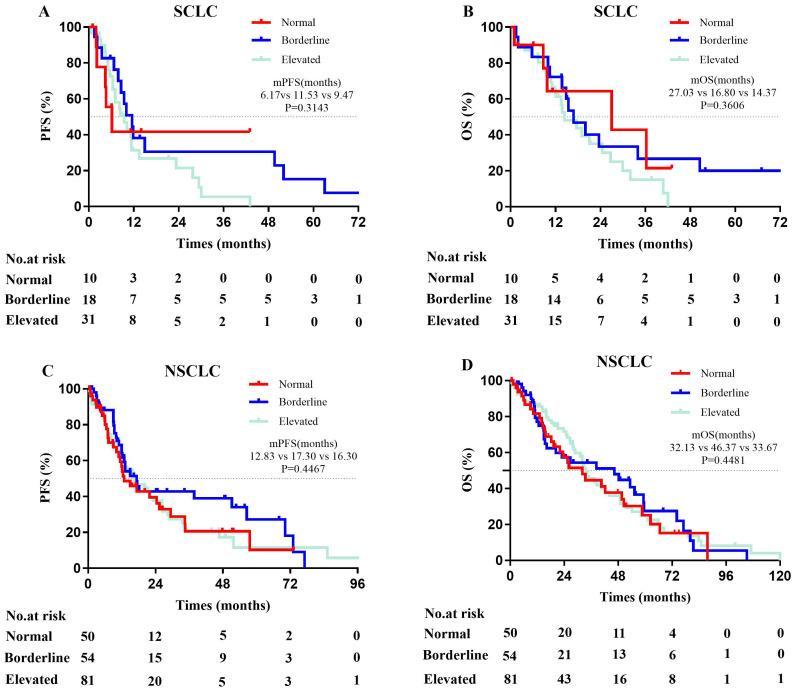
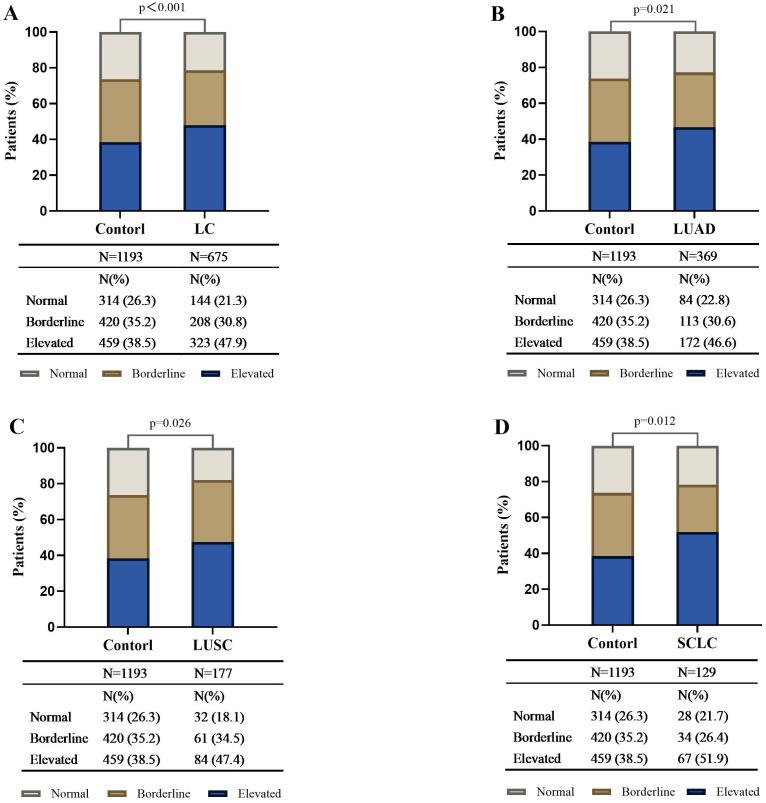
The lung cancer patients showed significantly higher serum total IgE levels compared to healthy individuals, with 47.9% of patients having IgE levels >100 IU/ml (P < 0.01). Higher serum total IgE levels (>100 IU/ml) were significantly associated with increased risk of lung cancer (OR=1.534, 95% CI: 1.203-1.957; P < 0.001). Multivariate logistic regression analysis results showed that age ≥65 years (OR=4.775, 95% CI = 3.478-6.555; P <0.001), smoking history (OR=1.719, 95% CI = 1.198-2.466; P =0.003), and an elevated lymphocyte-to-monocyte ratio (LMR) (OR=0.777, 95% CI = 0.678-0.890; P <0.001) were independent risk factors for lung cancer development in subjects with serum total IgE levels >100 IU/ml. The higher the serum total IgE level, the higher the T stage, N stage, M stage and the later the tumor clinical stage (all P <0.001). Survival analysis did not show statistically significant differences in the median progression-free survival (PFS) (P>0.05) or overall survival (OS) (P>0.05) among advanced lung cancer patients with different IgE levels (high and low).
CONCLUSION
Lung cancer patients demonstrated elevated serum total IgE levels. Higher serum IgE levels were significantly associated with an increased risk of lung cancer. Therefore, serum total IgE level is a potential diagnostic biomarker for lung cancer. Moreover, IgE and its related allergic immune responses offer potential as innovative therapeutic targets in elderly lung cancer patients with an history of smoking and elevated monocyte counts.
背景
本研究采用单因素和多因素逻辑回归分析,探讨血清总IgE水平与肺癌风险之间的相关性。
方法
这项横断面回顾性队列研究纳入了675例肺癌患者和1193例健康对照者的临床和实验室数据。
结果
与健康个体相比,肺癌患者的血清总IgE水平显著更高,47.9%的患者IgE水平>100 IU/ml(P<0.01)。血清总IgE水平较高(>100 IU/ml)与肺癌风险增加显著相关(OR=1.534,95%CI:1.203 - 1.957;P<0.001)。多因素逻辑回归分析结果显示,年龄≥65岁(OR=4.775,95%CI = 3.478 - 6.555;P<0.001)、吸烟史(OR=1.719,95%CI = 1.198 - 2.466;P =0.003)以及淋巴细胞与单核细胞比值(LMR)升高(OR=0.777,95%CI = 0.678 - 0.890;P<0.001)是血清总IgE水平>100 IU/ml的受试者发生肺癌的独立危险因素。血清总IgE水平越高,T分期、N分期、M分期越高,肿瘤临床分期越晚(均P<0.001)。生存分析显示,不同IgE水平(高和低)的晚期肺癌患者在无进展生存期(PFS)中位数(P>0.05)或总生存期(OS)(P>0.05)方面无统计学显著差异。
结论
肺癌患者血清总IgE水平升高。较高的血清IgE水平与肺癌风险增加显著相关。因此,血清总IgE水平是肺癌的潜在诊断生物标志物。此外,IgE及其相关的过敏免疫反应在有吸烟史且单核细胞计数升高的老年肺癌患者中作为创新治疗靶点具有潜力。
 Zotero 插件