
提高药物依从性和生活方式改变:一种针对心力衰竭患者的基于图像的教育工具。
Improving Medication Adherence and Lifestyle Changes: An Image-Based Educational Tool for Patients with Heart Failure.
作者信息
Gao Lingyan, Xie Qing, Liu Tiantian, Liu Hua, Yan Suying, Han Yalei, Zhang Meijing, Zhu Dawei, Guo Na, Nicholas Stephen, Maitland Elizabeth, Wang Dongxiao
机构信息
Department of Pharmacy, Aerospace Center Hospital, Beijing, People's Republic of China.
Department of Cardiology, Aerospace Center Hospital, Beijing, People's Republic of China.
出版信息
Patient Prefer Adherence. 2025 Jul 30;19:2251-2262. doi: 10.2147/PPA.S530695. eCollection 2025.
BACKGROUND
A lack of disease-specific knowledge in heart failure (HF) patients is associated with poor adherence to complex medication regimens and non-pharmacological recommendations, especially among individuals with low health literacy. Existing educational tools have been shown to be inadequate, highlighting the need for more accessible and effective alternatives.
PURPOSE
To develop an educational tool that improves HF knowledge in a more accessible and effective way.
METHODS
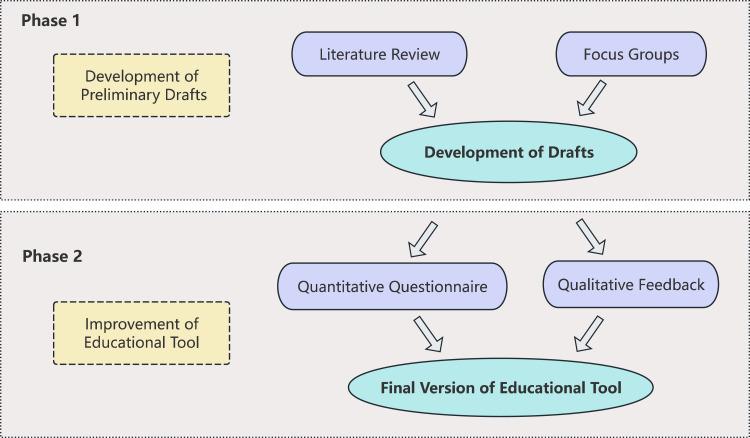
An image-based educational tool was created by healthcare professionals and HF patients, drawing on the Health Belief Model (HBM) and utilizing both qualitative and quantitative approaches. Project objectives were defined and content was guided by a literature review and focus group interviews. The tool was refined through iterative optimization using feedback and questionnaires.
RESULTS
Thirteen healthcare professionals and eight HF patients participated in the development and refinement of the educational tool. The final tool consisted of seven A3-sized images and accompanying text, addressing the following topics: (1) Cognition of HF; (2) Cause and classification of HF; (3) Inducing factors and prevention of HF; (4)-(5) Medication treatments of HF; (6) Exercise and self-management of HF; (7) "We are on the same journey" - a supportive theme for HF patients. The final version of the tool demonstrated high accuracy, readability, usability, and overall satisfaction, with all categories receiving scores of ≥4.5 on a 5-point Likert scale.
CONCLUSION
The image-based educational tool, developed using HBM, effectively meets the needs of HF patients. It shows strong performance in terms of accuracy, readability, usability, and satisfaction, which may ultimately help improve adherence to both pharmacological treatments and non-pharmacological recommendations for HF management.
背景
心力衰竭(HF)患者缺乏特定疾病知识与对复杂药物治疗方案和非药物建议的依从性差有关,尤其是在健康素养较低的个体中。现有教育工具已被证明不足,凸显了对更易获取且有效的替代工具的需求。
目的
开发一种以更易获取且有效的方式提高HF知识的教育工具。
方法
医疗保健专业人员和HF患者利用健康信念模型(HBM)并采用定性和定量方法创建了一种基于图像的教育工具。通过文献综述和焦点小组访谈确定项目目标并指导内容。利用反馈和问卷通过迭代优化对该工具进行完善。
结果
13名医疗保健专业人员和8名HF患者参与了教育工具的开发和完善。最终工具由七张A3尺寸的图像及附带文字组成,涉及以下主题:(1)对HF的认知;(2)HF的病因和分类;(3)HF的诱发因素及预防;(4)-(5)HF的药物治疗;(6)HF的运动和自我管理;(7)“我们同路”——一个针对HF患者的支持性主题。该工具的最终版本在准确性、可读性、可用性和总体满意度方面表现出色,所有类别在5点李克特量表上的得分均≥4.5。
结论
使用HBM开发的基于图像的教育工具有效满足了HF患者的需求。它在准确性、可读性、可用性和满意度方面表现出色,这最终可能有助于提高对HF管理的药物治疗和非药物建议的依从性。
 Zotero 插件