
手机短信用于心血管疾病二级预防中的药物依从性。
Mobile phone text messaging for medication adherence in secondary prevention of cardiovascular disease.
机构信息
School of Health Sciences, Faculty of Medicine and Health, The University of Sydney, Sydney, Australia.
The George Institute for Global Health, University of New South Wales, Sydney , Australia.
出版信息
Cochrane Database Syst Rev. 2024 Mar 27;3(3):CD011851. doi: 10.1002/14651858.CD011851.pub3.
BACKGROUND
Cardiovascular diseases (CVDs) are the leading cause of death globally, accounting for almost 18 million deaths annually. People with CVDs have a five times greater chance of suffering a recurrent cardiovascular event than people without known CVDs. Although drug interventions have been shown to be cost-effective in reducing the risk of recurrent cardiovascular events, adherence to medication remains suboptimal. As a scalable and cost-effective approach, mobile phone text messaging presents an opportunity to convey health information, deliver electronic reminders, and encourage behaviour change. However, it is uncertain whether text messaging can improve medication adherence and clinical outcomes. This is an update of a Cochrane review published in 2017.
OBJECTIVES
To evaluate the benefits and harms of mobile phone text messaging for improving medication adherence in people with CVDs compared to usual care.
SEARCH METHODS
We searched CENTRAL, MEDLINE, Embase, four other databases, and two trial registers. We also checked the reference lists of all primary included studies and relevant systematic reviews and meta-analyses. The date of the latest search was 30 August 2023.
SELECTION CRITERIA
We included randomised controlled trials (RCTs) with participants with established arterial occlusive events. We included trials investigating interventions using short message service (SMS) or multimedia messaging service (MMS) with the aim of improving adherence to medication for the secondary prevention of cardiovascular events. The comparator was usual care. We excluded cluster-RCTs and quasi-RCTs.
DATA COLLECTION AND ANALYSIS
We used standard Cochrane methods. Our primary outcomes were medication adherence, fatal cardiovascular events, non-fatal cardiovascular events, and combined CVD event. Secondary outcomes were low-density lipoprotein cholesterol for the effect of statins, blood pressure for antihypertensive drugs, heart rate for the effect of beta-blockers, urinary 11-dehydrothromboxane B2 for the antiplatelet effects of aspirin, adverse effects, and patient-reported experience. We used GRADE to assess the certainty of the evidence for each outcome.
MAIN RESULTS
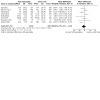
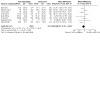
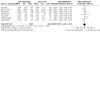
We included 18 RCTs involving a total of 8136 participants with CVDs. We identified 11 new studies in the review update and seven studies in the previous version of the review. Participants had various CVDs including acute coronary syndrome, coronary heart disease, stroke, myocardial infarction, and angina. All studies were conducted in middle- and high-income countries, with no studies conducted in low-income countries. The mean age of participants was 53 to 64 years. Participants were recruited from hospitals or cardiac rehabilitation facilities. Follow-up ranged from one to 12 months. There was variation in the characteristics of text messages amongst studies (e.g. delivery method, frequency, theoretical grounding, content used, personalisation, and directionality). The content of text messages varied across studies, but generally included medication reminders and healthy lifestyle information such as diet, physical activity, and weight loss. Text messages offered advice, motivation, social support, and health education to promote behaviour changes and regular medication-taking. We assessed risk of bias for all studies as high, as all studies had at least one domain at unclear or high risk of bias. Medication adherence Due to different evaluation score systems and inconsistent definitions applied for the measurement of medication adherence, we did not conduct meta-analysis for medication adherence. Ten out of 18 studies showed a beneficial effect of mobile phone text messaging for medication adherence compared to usual care, whereas the other eight studies showed either a reduction or no difference in medication adherence with text messaging compared to usual care. Overall, the evidence is very uncertain about the effects of mobile phone text messaging for medication adherence when compared to usual care. Fatal cardiovascular events Text messaging may have little to no effect on fatal cardiovascular events compared to usual care (odds ratio 0.83, 95% confidence interval (CI) 0.47 to 1.45; 4 studies, 1654 participants; low-certainty evidence). Non-fatal cardiovascular events We found very low-certainty evidence that text messaging may have little to no effect on non-fatal cardiovascular events. Two studies reported non-fatal cardiovascular events, neither of which found evidence of a difference between groups. Combined CVD events We found very low-certainty evidence that text messaging may have little to no effect on combined CVD events. Only one study reported combined CVD events, and did not find evidence of a difference between groups. Low-density lipoprotein cholesterol Text messaging may have little to no effect on low-density lipoprotein cholesterol compared to usual care (mean difference (MD) -1.79 mg/dL, 95% CI -4.71 to 1.12; 8 studies, 4983 participants; very low-certainty evidence). Blood pressure Text messaging may have little to no effect on systolic blood pressure (MD -0.93 mmHg, 95% CI -3.55 to 1.69; 8 studies, 5173 participants; very low-certainty evidence) and diastolic blood pressure (MD -1.00 mmHg, 95% CI -2.49 to 0.50; 5 studies, 3137 participants; very low-certainty evidence) when compared to usual care. Heart rate Text messaging may have little to no effect on heart rate compared to usual care (MD -0.46 beats per minute, 95% CI -1.74 to 0.82; 4 studies, 2946 participants; very low-certainty evidence).
AUTHORS' CONCLUSIONS: Due to limited evidence, we are uncertain if text messaging reduces medication adherence, fatal and non-fatal cardiovascular events, and combined cardiovascular events in people with cardiovascular diseases when compared to usual care. Furthermore, text messaging may result in little or no effect on low-density lipoprotein cholesterol, blood pressure, and heart rate compared to usual care. The included studies were of low methodological quality, and no studies assessed the effects of text messaging in low-income countries or beyond the 12-month follow-up. Long-term and high-quality randomised trials are needed, particularly in low-income countries.
背景
心血管疾病(CVDs)是全球范围内导致死亡的主要原因,每年约有 1800 万人因此死亡。患有 CVDs 的人再次发生心血管事件的可能性是没有已知 CVDs 的人的五倍。尽管药物干预已被证明可以降低再次发生心血管事件的风险,但药物的依从性仍然不理想。由于移动电话短信传递具有可扩展性和成本效益,因此提供了一种传达健康信息、提供电子提醒和鼓励行为改变的机会。然而,尚不确定短信能否改善药物依从性和临床结局。这是 2017 年发表的 Cochrane 综述的更新。
目的
评估与常规护理相比,移动电话短信在改善 CVD 患者的药物依从性方面的获益和危害。
检索方法
我们检索了 CENTRAL、MEDLINE、Embase、其他四个数据库和两个试验注册库。我们还检查了所有纳入的初级研究和相关系统评价和荟萃分析的参考文献列表。最新检索日期为 2023 年 8 月 30 日。
纳入标准
我们纳入了有明确动脉闭塞性事件的参与者的随机对照试验(RCTs)。我们纳入了使用短消息服务(SMS)或多媒体消息服务(MMS)的干预措施,旨在改善药物治疗对心血管事件二级预防的药物依从性的研究。对照组为常规护理。我们排除了群组随机对照试验和准随机对照试验。
数据收集和分析
我们使用了标准的 Cochrane 方法。我们的主要结局是药物依从性、致命性心血管事件、非致命性心血管事件和合并的 CVD 事件。次要结局是他汀类药物的低密度脂蛋白胆固醇、降压药物的血压、β受体阻滞剂的心率、阿司匹林的抗血小板作用的尿 11-去氢血栓素 B2、不良反应和患者报告的体验。我们使用 GRADE 评估每个结局的证据确定性。
主要结果
我们纳入了 18 项 RCTs,涉及 8136 名 CVD 患者。在本次综述更新中,我们发现了 11 项新研究,而在前一次版本的综述中,我们发现了 7 项研究。参与者患有各种 CVDs,包括急性冠状动脉综合征、冠心病、中风、心肌梗死和心绞痛。所有研究均在中高收入国家进行,没有在低收入国家进行的研究。参与者的平均年龄为 53 至 64 岁。参与者是从医院或心脏康复机构招募的。随访时间从 1 个月到 12 个月不等。研究之间的短信特征存在差异(例如,传递方式、频率、理论基础、使用的内容、个性化和方向性)。短信内容因研究而异,但通常包括药物提醒和健康生活方式信息,如饮食、体育活动和减肥。短信提供了建议、动机、社会支持和健康教育,以促进行为改变和定期服药。我们对所有研究的偏倚风险进行了评估,均为高风险,因为所有研究都至少有一个领域存在不明确或高偏倚风险。药物依从性:由于评估药物依从性的评分系统不同且不一致,并且应用的定义也不一致,因此我们没有对药物依从性进行荟萃分析。18 项研究中有 10 项研究表明,与常规护理相比,移动电话短信对药物依从性有有益影响,而另外 8 项研究则表明,与常规护理相比,短信对药物依从性的影响要么是减少,要么没有差异。总体而言,与常规护理相比,移动电话短信对药物依从性的影响的证据非常不确定。致命性心血管事件:与常规护理相比,短信可能对致命性心血管事件几乎没有或没有影响(比值比 0.83,95%置信区间(CI)0.47 至 1.45;4 项研究,1654 名参与者;低确定性证据)。非致命性心血管事件:我们发现非常低确定性证据表明,短信对非致命性心血管事件可能几乎没有或没有影响。两项研究报告了非致命性心血管事件,但都没有发现组间的差异。合并的 CVD 事件:我们发现非常低确定性证据表明,短信对合并的 CVD 事件可能几乎没有或没有影响。只有一项研究报告了合并的 CVD 事件,并且没有发现组间的差异。低密度脂蛋白胆固醇:与常规护理相比,短信可能对低密度脂蛋白胆固醇几乎没有或没有影响(平均差(MD)-1.79 mg/dL,95%置信区间(CI)-4.71 至 1.12;8 项研究,4983 名参与者;非常低确定性证据)。血压:与常规护理相比,短信可能对收缩压(MD-0.93 mmHg,95%置信区间(CI)-3.55 至 1.69;8 项研究,5173 名参与者;非常低确定性证据)和舒张压(MD-1.00 mmHg,95%置信区间(CI)-2.49 至 0.50;5 项研究,3137 名参与者;非常低确定性证据)几乎没有或没有影响。心率:与常规护理相比,短信可能对心率几乎没有或没有影响(MD-0.46 次/分钟,95%置信区间(CI)-1.74 至 0.82;4 项研究,2946 名参与者;非常低确定性证据)。
作者结论
由于证据有限,我们不确定与常规护理相比,短信是否会降低心血管疾病患者的药物依从性、致命和非致命心血管事件以及合并心血管事件的发生率。此外,与常规护理相比,短信可能对低密度脂蛋白胆固醇、血压和心率几乎没有或没有影响。纳入的研究质量较低,并且没有研究评估短信在低收入国家或超过 12 个月的随访中的效果。需要进行长期和高质量的随机试验,特别是在低收入国家。






 Zotero 插件