
糖尿病肾病和垂体腺瘤中炎症网络的综合孟德尔随机化分析:揭示复杂的因果关系
Comprehensive Mendelian randomization analysis of inflammatory networks in diabetic nephropathy and pituitary adenoma: unveiling complex causal relationships.
作者信息
Fu Yi, Chen Yongyong
机构信息
Department of Nephrology, Jiang'an County Hospital of Traditional Chinese Medicine, SiChuan, 644200, China.
Department of Endocrinology, The fifth people's hospital of Chongqing,Chongqing university affiliated renji hospital, Chongqing, 401336, China.
出版信息
Discov Oncol. 2025 Aug 8;16(1):1508. doi: 10.1007/s12672-025-03291-8.
BACKGROUND
The intricate relationships between inflammatory pathways, diabetic nephropathy, and pituitary adenomas remain poorly understood. This study aimed to comprehensively investigate the causal associations between inflammatory factors, diabetic nephropathy, and pituitary adenoma risk using Mendelian randomization approaches.
METHODS
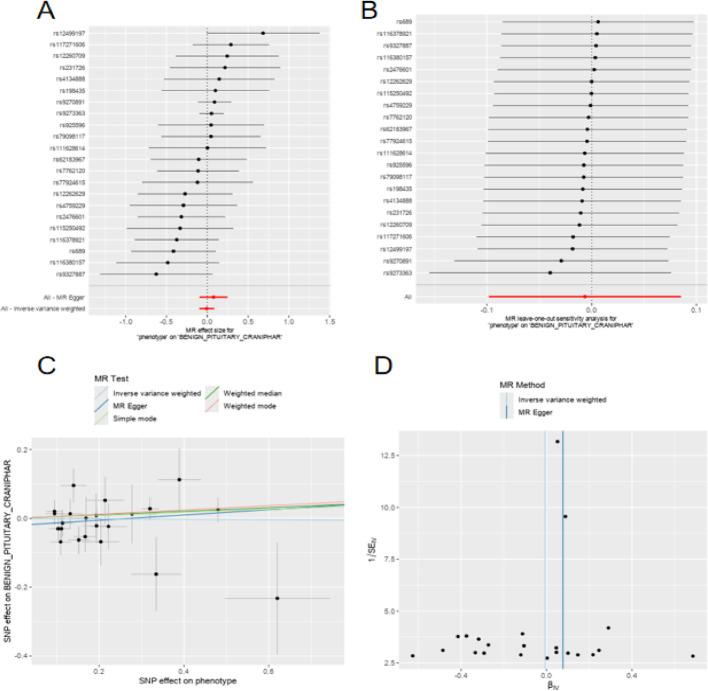
We conducted a systematic Mendelian randomization analysis employing multiple statistical methods including inverse variance weighted (IVW), MR-Egger, and weighted mode approaches. A comprehensive inflammatory factor profile encompassing cytokines, chemokines, growth factors, and immunoregulatory molecules was analyzed. Sensitivity analyses including scatter plots and funnel plots were performed to validate the robustness of causal inferences.
RESULTS
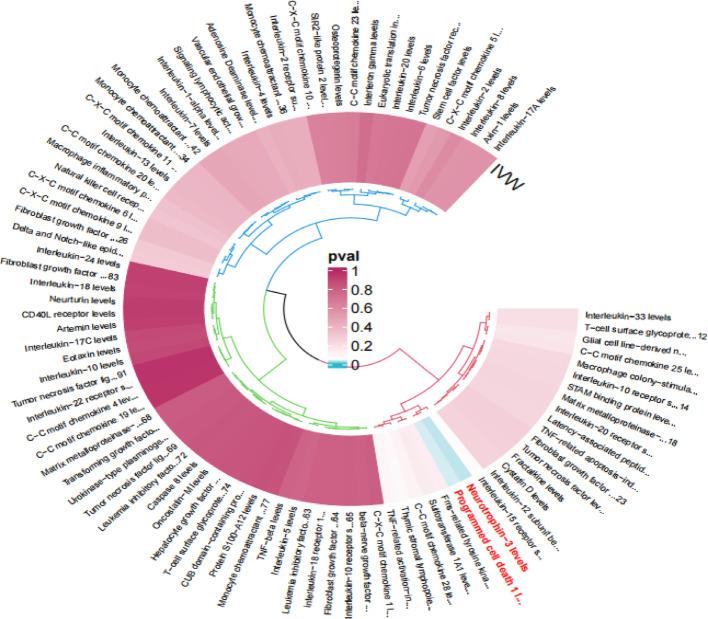
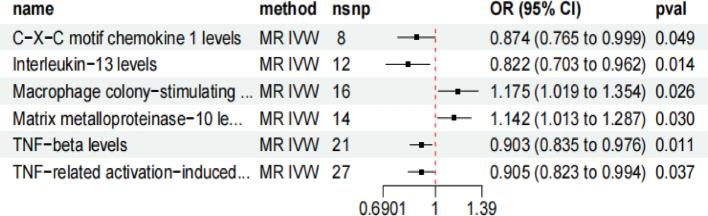
The panoramic analysis revealed distinct inflammatory signatures associated with disease risk. For pituitary adenomas, Neurotrophin-3 demonstrated significant protective effects (OR = 0.754, 95% CI: 0.583-0.975, P = 0.031), while programmed cell death 1 ligand emerged as a risk factor (OR = 1.320, 95% CI: 1.016-1.714, P = 0.037). Regarding diabetic nephropathy, six inflammatory factors showed significant associations: CX3C-motif chemokine 1 (OR = 0.514, P = 0.049), interleukin-13 (OR = 0.822, P = 0.014), TNF-beta (OR = 0.903, P = 0.011), and TNF-related activation-induced cytokine (OR = 0.905, P = 0.037) exhibited protective effects, whereas macrophage colony-stimulating factor (OR = 1.175, P = 0.026) and matrix metalloproteinase-10 (OR = 1.142, P = 0.030) increased disease risk. Notably, no significant causal relationship was observed between diabetic nephropathy and pituitary adenoma risk across all analytical methods.
CONCLUSIONS
This comprehensive Mendelian randomization analysis reveals complex, disease-specific inflammatory networks underlying diabetic nephropathy and pituitary adenoma pathogenesis.
背景
炎症通路、糖尿病肾病和垂体腺瘤之间的复杂关系仍未得到充分理解。本研究旨在使用孟德尔随机化方法全面调查炎症因子、糖尿病肾病和垂体腺瘤风险之间的因果关联。
方法
我们采用多种统计方法进行了系统的孟德尔随机化分析,包括逆方差加权(IVW)、MR-Egger和加权模式方法。分析了包括细胞因子、趋化因子、生长因子和免疫调节分子在内的全面炎症因子谱。进行了包括散点图和漏斗图在内的敏感性分析,以验证因果推断的稳健性。
结果
全景分析揭示了与疾病风险相关的不同炎症特征。对于垂体腺瘤,神经营养因子-3显示出显著的保护作用(OR = 0.754,95% CI:0.583 - 0.975,P = 0.031),而程序性细胞死亡1配体则成为一个风险因素(OR = 1.320,95% CI:1.016 - 1.714,P = 0.037)。关于糖尿病肾病,六种炎症因子显示出显著关联:CX3C基序趋化因子1(OR = 0.514,P = 0.049)、白细胞介素-13(OR = 0.822,P = 0.014)、肿瘤坏死因子-β(OR = 0.903,P = 0.011)和肿瘤坏死因子相关激活诱导细胞因子(OR = 0.905,P = 0.037)表现出保护作用,而巨噬细胞集落刺激因子(OR = 1.175,P = 0.026)和基质金属蛋白酶-10(OR = 1.142,P = 0.030)增加了疾病风险。值得注意的是,在所有分析方法中,未观察到糖尿病肾病与垂体腺瘤风险之间存在显著的因果关系。
结论
这项全面的孟德尔随机化分析揭示了糖尿病肾病和垂体腺瘤发病机制背后复杂的、疾病特异性的炎症网络。



 Zotero 插件