
骨肉瘤中的核因子κB信号通路:从信号网络到靶向治疗
NF-κB signaling pathway in osteosarcoma: from signaling networks to targeted therapy.
作者信息
Xue Juandi, Yang Xiao-Ran, Wang Li
机构信息
The First People's Hospital of Lanzhou City, Lanzhou, Gansu, China.
出版信息
Front Oncol. 2025 Jul 25;15:1565760. doi: 10.3389/fonc.2025.1565760. eCollection 2025.
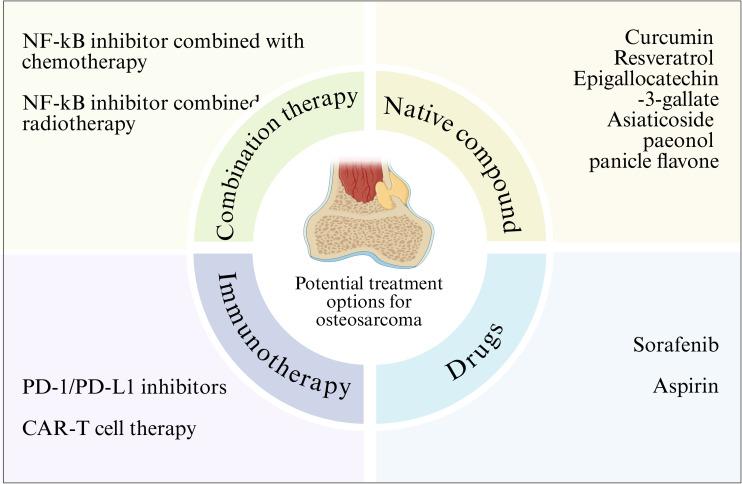
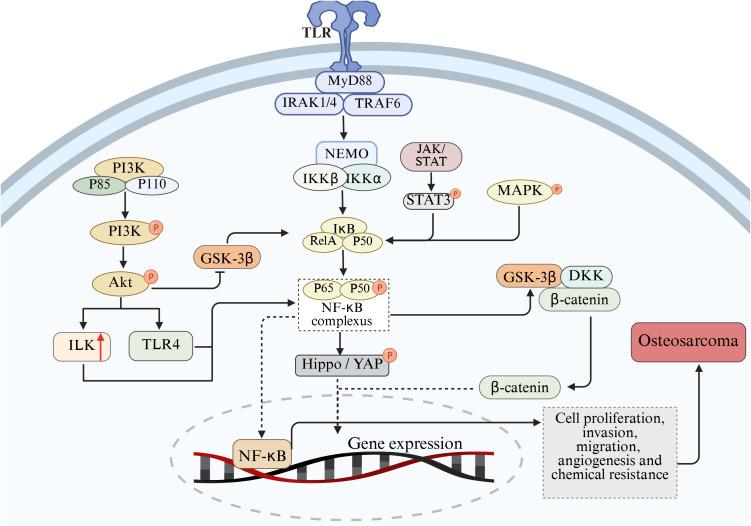
Osteosarcoma (OS) is the most common primary malignant bone tumor that frequently occurs in children and adolescents. Although neoadjuvant chemotherapy has shown efficacy for OS, the long-term survival rate of OS patients remains low, highlighting the necessity of seeking more effective treatment methods. In cancer cells, abnormal activation of signaling pathways can widely affect cell activity from growth and proliferation to apoptosis, invasion and metastasis. As a highly complex and unique signal transduction pathway, the NF-κB pathway is involved in various physiological and pathological processes. In the field of oncology, the abnormal activation of the NF-κB pathway is closely related to the occurrence, development, metastasis and drug resistance of tumors, and is regarded as an important potential target for tumor treatment. Studies have confirmed that the NF-κB signaling pathway is an important driver of osteosarcoma. Abnormal activation of this pathway can promote the proliferation of osteosarcoma cells, inhibit apoptosis, enhance migration and invasion abilities, and immune escape processes. While inhibition of NF-κB pathway can effectively inhibit or reverse the above pathological processes. In this review, we summarized the role and mechanism of the NF-κB pathway in OS, discussed the therapeutic significance of targeting this pathway for OS, as well as the current insufficient research and problems to be solved regarding this pathway in OS. This review is helpful for us to understand the role of NF-κB on OS, and provides a theoretical basis for targeting the NF-κB pathway as a therapeutic target for OS and developing new therapeutic strategies.
骨肉瘤(OS)是最常见的原发性恶性骨肿瘤,常发生于儿童和青少年。尽管新辅助化疗已显示出对骨肉瘤的疗效,但骨肉瘤患者的长期生存率仍然较低,这凸显了寻求更有效治疗方法的必要性。在癌细胞中,信号通路的异常激活可广泛影响细胞活动,从生长、增殖到凋亡、侵袭和转移。作为一条高度复杂且独特的信号转导通路,核因子κB(NF-κB)通路参与各种生理和病理过程。在肿瘤学领域,NF-κB通路的异常激活与肿瘤的发生、发展、转移及耐药性密切相关,被视为肿瘤治疗的重要潜在靶点。研究证实,NF-κB信号通路是骨肉瘤的重要驱动因素。该通路的异常激活可促进骨肉瘤细胞增殖、抑制凋亡、增强迁移和侵袭能力以及免疫逃逸过程。而抑制NF-κB通路可有效抑制或逆转上述病理过程。在本综述中,我们总结了NF-κB通路在骨肉瘤中的作用及机制,探讨了针对该通路治疗骨肉瘤的意义,以及目前在骨肉瘤中关于该通路研究的不足和有待解决的问题。本综述有助于我们了解NF-κB在骨肉瘤中的作用,并为将NF-κB通路作为骨肉瘤的治疗靶点及开发新的治疗策略提供理论依据。


 Zotero 插件