
循环微小RNA作为结直肠癌患者诊断的液体活检生物标志物:一项系统评价和荟萃分析。
Circulating miRNAs as liquid biopsy biomarkers for diagnosis in patients with colorectal cancer: a systematic review and meta-analysis.
作者信息
Schwab Sydney, Nonaka Taichiro
机构信息
School of Medicine, Louisiana State University Health Shreveport, Shreveport, LA, United States.
Department of Cellular Biology and Anatomy, Louisiana State University Health Sciences Center, Shreveport, LA, United States.
出版信息
Front Genet. 2025 Jul 28;16:1574586. doi: 10.3389/fgene.2025.1574586. eCollection 2025.
OBJECTIVE
Colorectal cancer (CRC) remains a leading cause of cancer-related mortality worldwide, emphasizing the need for noninvasive and reliable diagnostic tools. Circulating microRNAs (miRNAs) have emerged as promising liquid biopsy biomarkers for CRC detection. This meta-analysis aimed to evaluate the diagnostic accuracy of blood- and saliva-derived miRNAs in CRC, assessing their sensitivity, specificity, and overall clinical potential.
METHODS
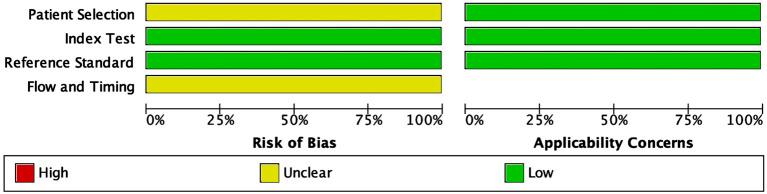
A comprehensive literature search was conducted across PubMed, Web of Science, and Scopus to identify relevant studies published between 2004 and 2024. Eligible studies included those that evaluated miRNA expression in plasma, serum, or saliva of CRC patients. A random-effects model was applied to calculate pooled sensitivity, specificity, diagnostic odds ratio (DOR), and area under the receiver operating characteristic curve (AUC). Heterogeneity was assessed using Cochrane's Q test and I statistics, and risk of bias was evaluated using the QUADAS-2 tool.
RESULTS
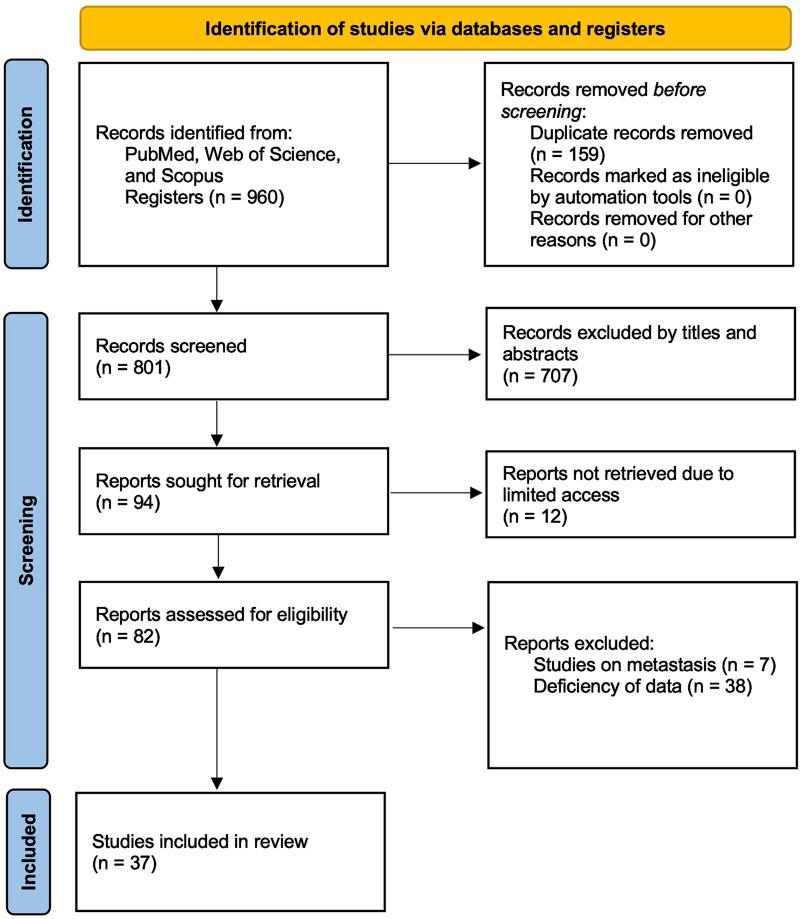
A total of 37 studies with 2,775 patients were included in this meta-analysis. The pooled diagnostic performance demonstrated an AUC of 0.87 for combined blood- and saliva-derived miRNAs and 0.86 for blood-derived miRNAs alone, with both categories showing a sensitivity of 0.76 and specificity of 0.83. The diagnostic likelihood ratio (DLR) analysis yielded DLR positive values > 4 and DLR negative values < 0.3, indicating strong discriminatory ability. The DOR was 15.98 for combined blood- and saliva-derived miRNAs and 15.49 for blood-derived miRNAs alone, highlighting their comparable diagnostic potential. These findings suggest that circulating miRNAs serve as reliable biomarkers for CRC detection.
CONCLUSION
This meta-analysis supports the diagnostic utility of circulating miRNAs as noninvasive biomarkers for CRC detection, with saliva-derived miRNAs offering a potential complementary role. Blood-based miRNA analysis demonstrated high diagnostic accuracy, and the integration of saliva-derived miRNAs slightly improved AUC. Future research should focus on standardizing miRNA panels and validation in larger, independent cohorts to facilitate their clinical application in CRC screening and early detection.
目的
结直肠癌(CRC)仍是全球癌症相关死亡的主要原因,这凸显了对非侵入性且可靠的诊断工具的需求。循环微RNA(miRNA)已成为用于CRC检测的有前景的液体活检生物标志物。本荟萃分析旨在评估血液和唾液来源的miRNA在CRC诊断中的准确性,评估其敏感性、特异性和整体临床潜力。
方法
在PubMed、Web of Science和Scopus数据库中进行全面的文献检索,以识别2004年至2024年期间发表的相关研究。符合条件的研究包括那些评估CRC患者血浆、血清或唾液中miRNA表达的研究。应用随机效应模型计算合并敏感性、特异性、诊断比值比(DOR)和受试者工作特征曲线下面积(AUC)。使用Cochrane's Q检验和I统计量评估异质性,并使用QUADAS-2工具评估偏倚风险。
结果
本荟萃分析共纳入37项研究,涉及2775例患者。合并血液和唾液来源的miRNA的汇总诊断性能显示AUC为0.87,仅血液来源的miRNA的AUC为0.86,两类的敏感性均为0.76,特异性均为0.83。诊断似然比(DLR)分析得出DLR阳性值>4且DLR阴性值<0.3,表明具有较强的鉴别能力。合并血液和唾液来源的miRNA的DOR为15.98,仅血液来源的miRNA的DOR为15.49,突出了它们相当的诊断潜力。这些发现表明循环miRNA可作为CRC检测的可靠生物标志物。
结论
本荟萃分析支持循环miRNA作为CRC检测的非侵入性生物标志物的诊断效用,唾液来源的miRNA具有潜在的互补作用。基于血液的miRNA分析显示出较高的诊断准确性,唾液来源的miRNA的整合略微提高了AUC。未来的研究应专注于标准化miRNA检测板并在更大的独立队列中进行验证,以促进其在CRC筛查和早期检测中的临床应用。



 Zotero 插件