
偏头痛与神经炎症:脂肪因子和细胞因子与临床特征的相关性
Migraine and neuroinflammation: correlation of adipokines and cytokines with clinical features.
作者信息
Ulutaş Can, Bayır Buse Rahime Hasırcı, Çetinkaya Yılmaz, Güler Eray Metin, Ağırcan Dilek, Özkan Beyza Nur
机构信息
Haydarpasa Numune Training and Research Hospital, Istanbul, Turkey.
University of Health Medicine, Istanbul, Turkey.
出版信息
BMC Neurol. 2025 Aug 13;25(1):338. doi: 10.1186/s12883-025-04319-w.
OBJECTIVE
Migraine is one of the most disabling conditions affecting the quality of life in society. The pathophysiology of migraine is not yet fully understood, but neuroinflammation is thought to play an important role. The aim of our study is to investigate the potential biomarker properties of adipokines and cytokines in migraine and to assess their relationship with clinical features, including headache frequency, severity, disability scores.
MATERIALS AND METHODS
The study included a total of 90 participants: 30 with episodic migraines (EM), 30 with chronic migraines(CM), and 30 healthy volunteers, all aged between 18 and 50 years. Data were collected on patients age, sex, migraine characteristics (pain location, type), attack frequency over the past 3 months, duration of the disease, attack severity, and body mass index. During the interictal period, blood levels of high molecular weight (HMW) adiponectin, leptin, resistin, IL-6, TNF-α, and IL-1β were measured using ELISA kits.
RESULTS
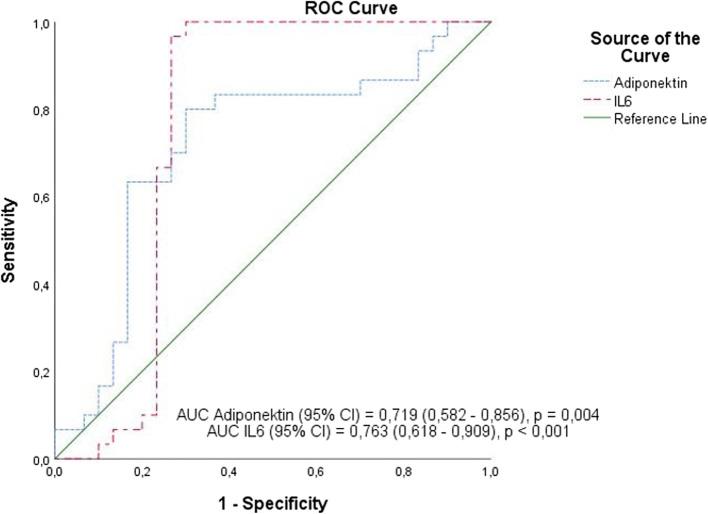
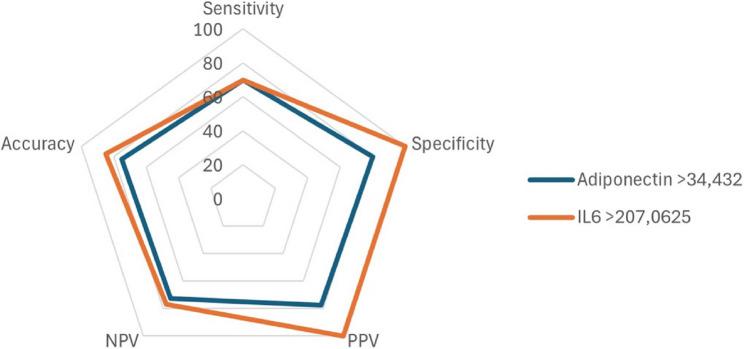
The age, sex, and body mass index between the patient and control groups were similar. Levels of HMW-adiponectin, resistin, IL-6, TNF-α, and IL-1β were significantly higher in the patient group compared to the control group (p < 0.001 for each). HMW-adiponectin and IL-6 levels were significantly higher in CM patients compared to the EM group (p = 0.004 and p < 0.001, respectively). Additionally, adiponectin and IL-6 levels were positively correlated with the number of painful days, and IL-6 and leptin levels correlated with MIDAS scores.
CONCLUSIONS
The higher levels of cytokines and adipokines, in migraine patients compared to the control group suggest a potential role of neuroinflammation in migraine pathophysiology. The elevated levels of HMW-adiponectin and IL-6 in CM patients indicate that these molecules may be associated with the mechanisms involved in the chronification of migraine and pain burden.
目的
偏头痛是影响社会生活质量的最致残性疾病之一。偏头痛的病理生理学尚未完全阐明,但神经炎症被认为起着重要作用。我们研究的目的是调查脂肪因子和细胞因子在偏头痛中的潜在生物标志物特性,并评估它们与临床特征的关系,包括头痛频率、严重程度、残疾评分。
材料与方法
该研究共纳入90名参与者:30名发作性偏头痛(EM)患者、30名慢性偏头痛(CM)患者和30名健康志愿者,年龄均在18至50岁之间。收集了患者的年龄、性别、偏头痛特征(疼痛部位、类型)、过去3个月的发作频率、病程、发作严重程度和体重指数。在发作间期,使用酶联免疫吸附测定试剂盒测量高分子量(HMW)脂联素、瘦素、抵抗素、白细胞介素-6(IL-6)、肿瘤坏死因子-α(TNF-α)和白细胞介素-1β(IL-1β)的血液水平。
结果
患者组和对照组之间的年龄、性别和体重指数相似。与对照组相比,患者组中HMW脂联素、抵抗素、IL-6、TNF-α和IL-1β的水平显著更高(每项p < 0.001)。与EM组相比,CM患者中HMW脂联素和IL-6水平显著更高(分别为p = 0.004和p < 0.001)。此外,脂联素和IL-6水平与疼痛天数呈正相关,IL-6和瘦素水平与偏头痛残疾评估量表(MIDAS)评分相关。
结论
与对照组相比,偏头痛患者中细胞因子和脂肪因子水平更高,提示神经炎症在偏头痛病理生理学中可能起作用。CM患者中HMW脂联素和IL-6水平升高表明这些分子可能与偏头痛慢性化和疼痛负担所涉及的机制有关。


 Zotero 插件