
单染色体出芽酵母菌株的复制程序
Replication program of a single-chromosome budding yeast strain.
作者信息
Pellet Jade, Lacroix Laurent, Theulot Bertrand, Simonin Chavignier Emma, Tourancheau Alan, Proux Florence, Hermann-Le Denmat Sylvie, Millot Gael A, Le Tallec Benoît, Hyrien Olivier
机构信息
Institut de Biologie de l'École Normale Supérieure (IBENS), École Normale Supérieure, CNRS, INSERM, Université PSL, 46 rue d'Ulm, F-75005 Paris, France.
Sorbonne Université, Collège Doctoral, F-75005 Paris, France.
出版信息
Nucleic Acids Res. 2025 Aug 11;53(15). doi: 10.1093/nar/gkaf754.
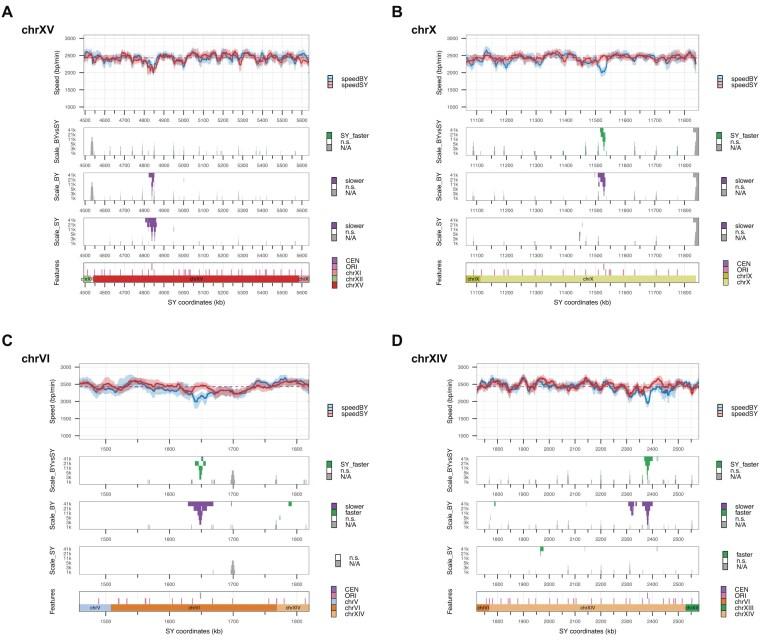
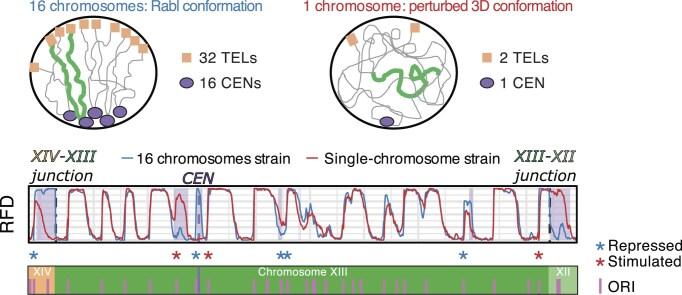
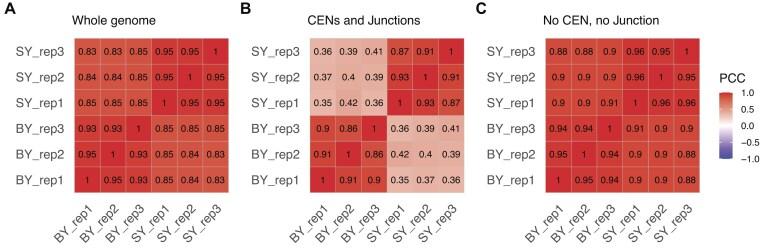
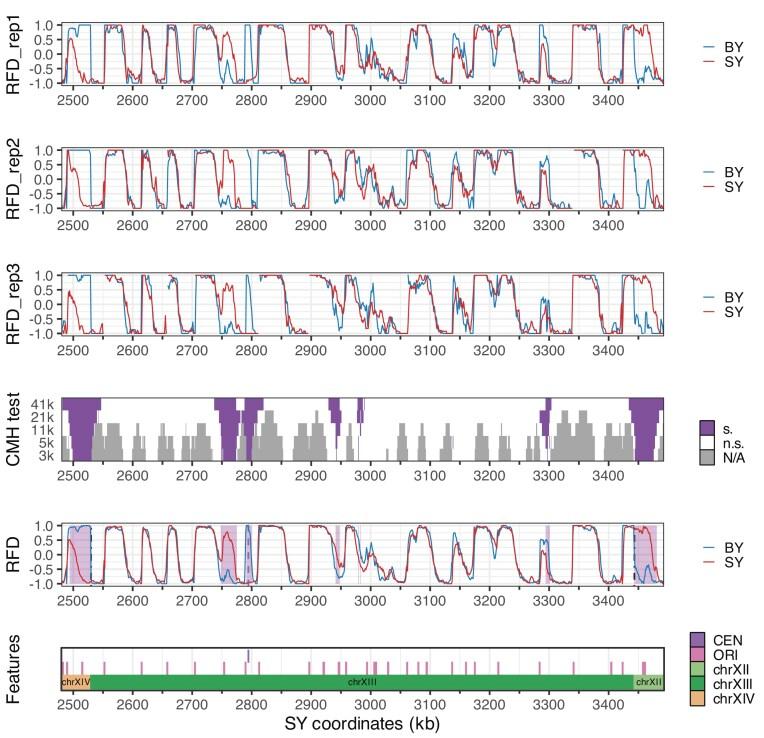
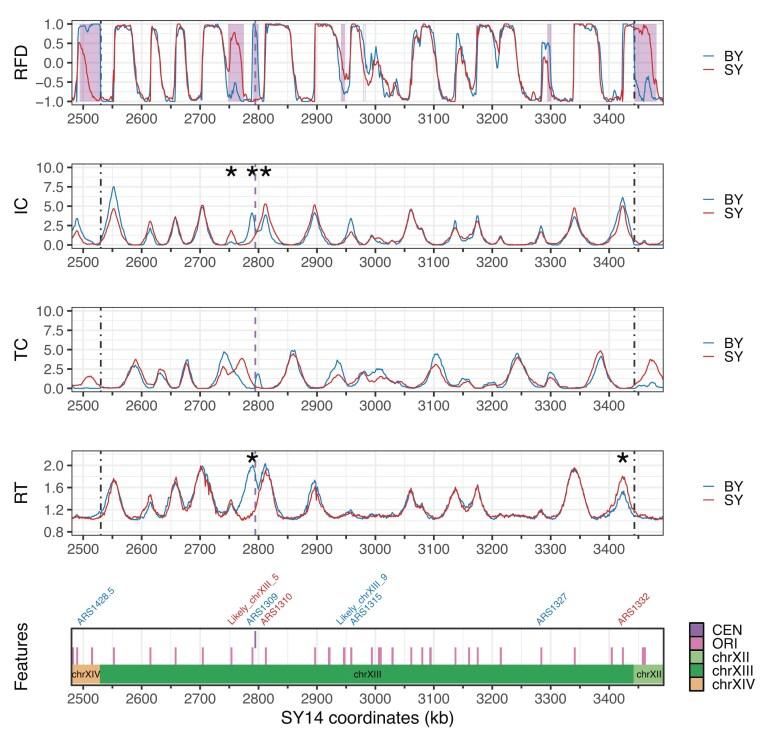
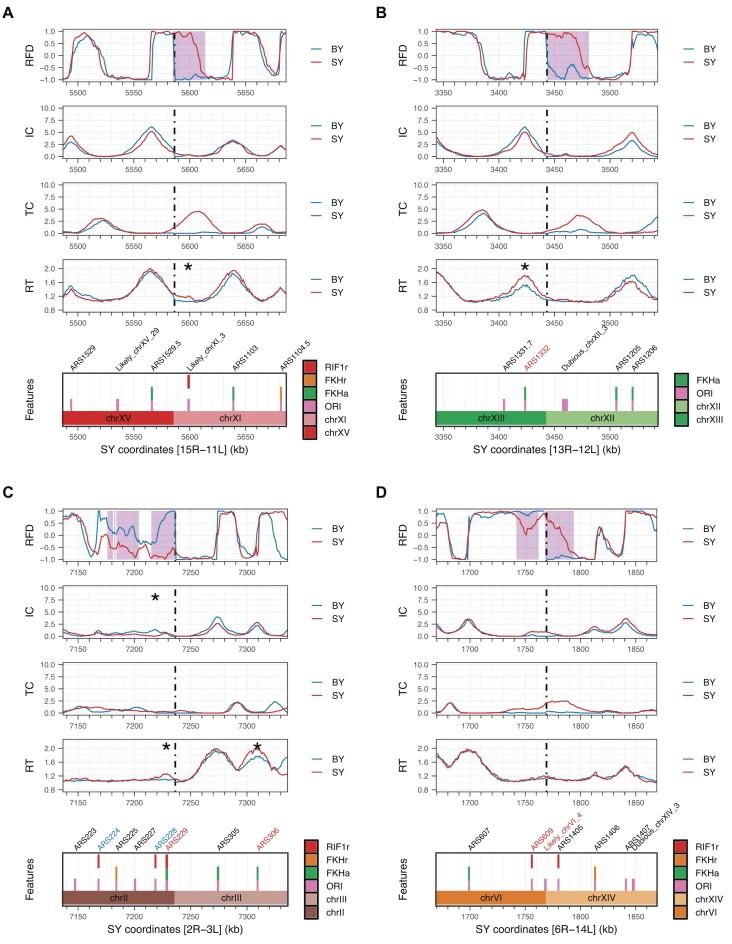
Nuclear architecture and chromosome folding are often speculated to influence genome replication. In yeasts, centromeres cluster close to the spindle pole body and telomeres position at the nuclear periphery. This 'Rabl configuration' spatially segregates the most early and late replicating parts of the genome, centromeres and telomeres, respectively, suggesting that origin position along the centromere-telomere axis may influence origin activity. Here, we investigated DNA replication in a wild-type, 16-chromosome Saccharomyces cerevisiae strain and in its single-chromosome counterpart engineered by chromosome fusion and elimination of all but two telomeres and one centromere, which strongly affects genome folding and abrogates the Rabl conformation. Using nanopore sequencing-based methods, we found that the DNA replication program of both strains was virtually indistinguishable, with the exception of origin inactivation next to deleted centromeres and changes in origin efficiency and fork direction at chromosome fusions, as anticipated from the known origin-regulation properties of centromeres and telomeres. Only a handful of replication changes, mostly due to local origin repression, were observed elsewhere. Fork speed was also unaffected except at deleted centromeres. In conclusion, the DNA replication program of budding yeast is remarkably resilient to perturbations of chromosome folding and loss of the Rabl conformation.
人们常常推测核结构和染色体折叠会影响基因组复制。在酵母中,着丝粒聚集在靠近纺锤体极体的位置,端粒位于核周边。这种“拉布尔构型”在空间上分别将基因组中最早和最晚复制的部分,即着丝粒和端粒分隔开来,这表明沿着着丝粒 - 端粒轴的起始位点位置可能影响起始活性。在此,我们研究了野生型的、具有16条染色体的酿酒酵母菌株及其通过染色体融合和除两个端粒和一个着丝粒外的所有染色体消除构建的单染色体对应菌株中的DNA复制情况,这种操作强烈影响基因组折叠并消除了拉布尔构象。使用基于纳米孔测序的方法,我们发现这两种菌株的DNA复制程序几乎没有区别,除了在缺失着丝粒附近的起始位点失活以及在染色体融合处起始效率和叉方向的变化,正如从着丝粒和端粒已知的起始调控特性所预期的那样。在其他地方仅观察到少数复制变化,主要是由于局部起始抑制。除了在缺失着丝粒处,叉速度也未受影响。总之,芽殖酵母的DNA复制程序对染色体折叠的扰动和拉布尔构象的丧失具有显著的弹性。


 Zotero 插件