
转化生长因子β诱导上皮-间质转化和转移中的网络基序与超级基序
Network motifs and hypermotifs in TGFβ-induced epithelial to mesenchymal transition and metastasis.
作者信息
Sai Bhavani Gottumukkala, Palanisamy Anbumathi
机构信息
Department of Biotechnology, National Institute of Technology Warangal, Telangana, India.
出版信息
Front Syst Biol. 2023 Mar 3;3:1099951. doi: 10.3389/fsysb.2023.1099951. eCollection 2023.
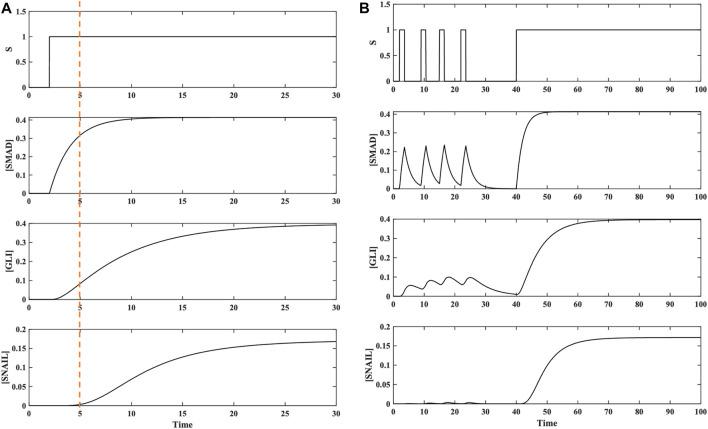
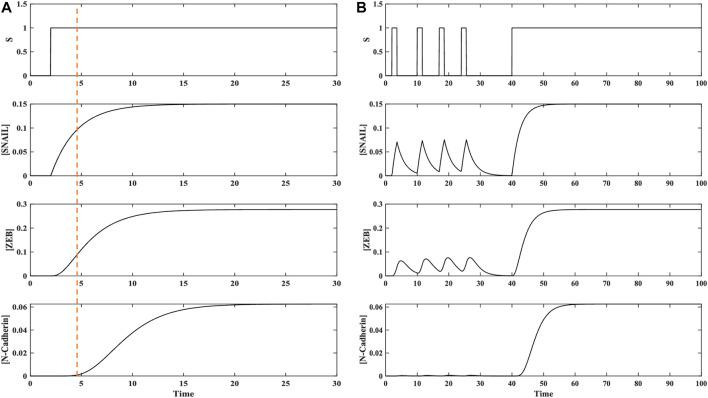
Epithelial to mesenchymal transition (EMT) is a complex, non-linear, dynamic multistep process that plays an integral role in the development of metastatic cancers. A diverse range of signaling molecules, along with their associated pathways, were observed to be involved in promoting EMT and cancer metastasis. Transforming growth factor-β (TGFβ), through its SMAD-dependent and SMAD-independent signaling, orchestrates numerous regulators that converge on key EMT transcription factors (TFs). These TFs further govern the phenotypic transition of cancer cells from epithelial to mesenchymal states. This study explores the TGFβ signaling pathway and its unique network architecture to understand their information processing roles in EMT. Two coherent type 1 feed forward network motifs regulating the expression of SNAIL and N-cadherin were observed. SNAIL, which is one of the crucial regulators of EMT, links both the coherent type 1 feed forward loops (C1FFLs) leading to hypermotif-like structure (Adler and Medzhitov, 2022). Systems modeling and analysis of these motifs and hypermotifs illustrated several interesting emergent information processing roles of the regulators involved. The known roles of these regulators, as described in the literature, were highly correlated with the emergent properties observed. The motifs illustrated persistence detection and noise filtration in regulating the expression of SNAIL and N-cadherin. Along with these system-level properties, the hypermotif architecture also exhibited temporal expression of GLI, SNAIL, ZEB, and N-cadherin. Furthermore, a hypothetical three-layered C1FFL hypermotif was postulated and analyzed. The analysis revealed various interesting system-level properties. However, possible existence of such real biological networks needs further exploration both theoretically and experimentally. Deciphering these network motifs and hypermotifs has provided an additional understanding of the complex biological phenomenon, such as EMT in cancer metastasis.
上皮-间质转化(EMT)是一个复杂、非线性、动态的多步骤过程,在转移性癌症的发展中起着不可或缺的作用。人们观察到多种信号分子及其相关通路参与促进EMT和癌症转移。转化生长因子-β(TGFβ)通过其SMAD依赖和SMAD非依赖信号传导,协调众多调节因子,这些调节因子汇聚于关键的EMT转录因子(TFs)。这些TFs进一步控制癌细胞从上皮状态到间质状态的表型转变。本研究探索TGFβ信号通路及其独特的网络结构,以了解它们在EMT中的信息处理作用。观察到两个调控SNAIL和N-钙黏蛋白表达的相干型1前馈网络基序。SNAIL是EMT的关键调节因子之一,连接两个相干型1前馈环(C1FFLs),形成超基序样结构(Adler和Medzhitov,2022)。对这些基序和超基序的系统建模和分析揭示了所涉及调节因子的几个有趣的新兴信息处理作用。文献中描述的这些调节因子的已知作用与观察到的新兴特性高度相关。这些基序在调控SNAIL和N-钙黏蛋白表达时表现出持续性检测和噪声过滤。除了这些系统水平的特性外,超基序结构还表现出GLI、SNAIL、ZEB和N-钙黏蛋白的时间表达。此外,还假设并分析了一个假设的三层C1FFL超基序。分析揭示了各种有趣的系统水平特性。然而,这种真实生物网络的可能存在需要在理论和实验上进一步探索。解读这些网络基序和超基序为理解癌症转移中的复杂生物学现象(如EMT)提供了额外的认识。




 Zotero 插件