
个性化治疗中的癌症干细胞:机制、微环境相互作用及治疗弱点
Cancer stem cells in personalized therapy: mechanisms, microenvironment crosstalk, and therapeutic vulnerabilities.
作者信息
Yin Ling, Zhou Shoubing, Zhang Hongliang, Shang Yuhua, Wu Songquan, Jin Tengchuan
机构信息
Center of Disease Immunity and Intervention, College of Medicine, Lishui University, Lishui, China.
College of Medicine, University of Florida, Gainesville, FL, United States.
出版信息
Front Cell Dev Biol. 2025 Jul 30;13:1619597. doi: 10.3389/fcell.2025.1619597. eCollection 2025.
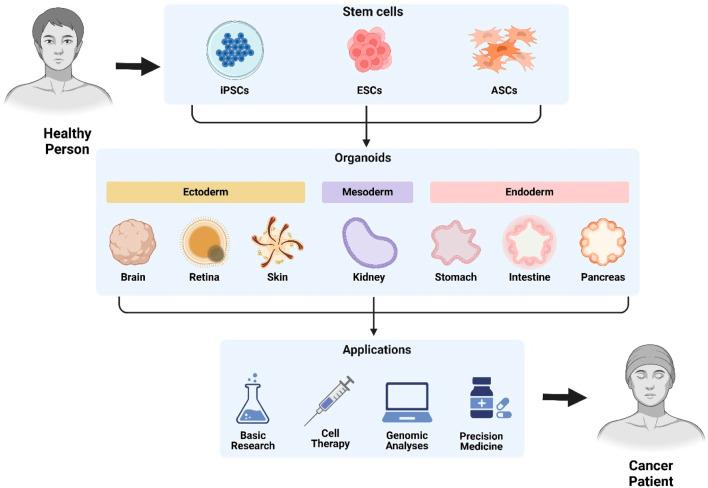
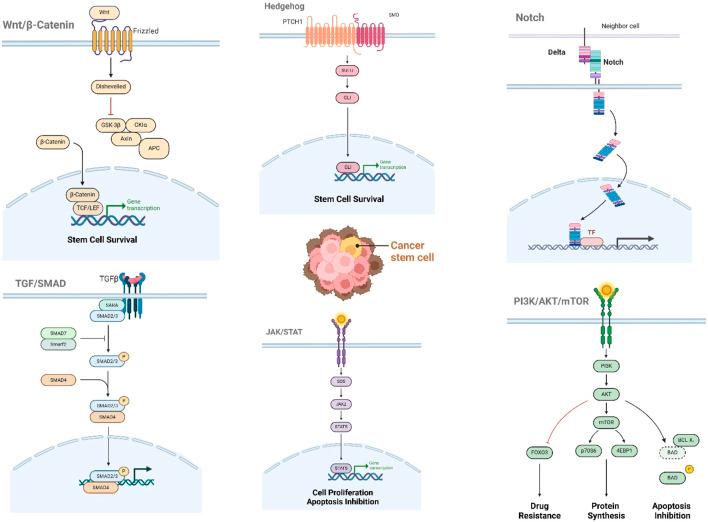
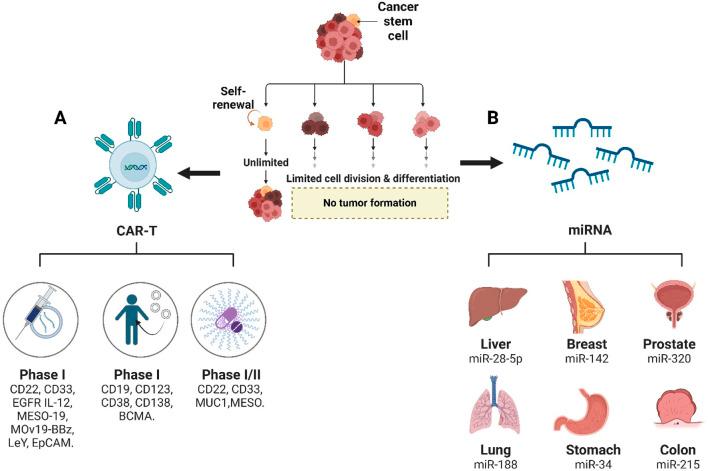
Cancer stem cells (CSCs) drive tumor progression, therapy resistance, and metastasis through unique membrane biology, glycosylation patterns, and metabolic adaptations. CSCs exhibit a distinct glycocalyx profile enriched in hyaluronan, heparan sulfate, and sialylated glycans, facilitating immune evasion, adhesion, and survival. Key signaling pathways-Wnt/β-catenin, Hedgehog, Notch, JAK/STAT, TGF/SMAD, and PI3K/AKT/mTOR-regulate CSC stemness and therapeutic resistance. Emerging biomarkers (CD44, CD133, ALDH1, EpCAM) and targeted therapies (CAR-T cells, miRNA modulation, lipid metabolism inhibitors) show promise in disrupting CSC resilience. Advances in single-cell omics, CRISPR screening, and patient-derived organoids (PDOs) enhance CSC characterization and precision medicine applications. However, challenges remain in standardizing organoid cultures, replicating tumor microenvironments, and overcoming CSC plasticity. Integrating CSC-targeted strategies with conventional therapies may improve clinical outcomes by eradicating therapy-resistant populations and preventing relapse. This review underscores the need for innovative combination therapies to eradicate CSCs and improve clinical outcomes, while addressing challenges in biomarker validation, therapeutic resistance, and translational applications.
癌症干细胞(CSCs)通过独特的膜生物学、糖基化模式和代谢适应驱动肿瘤进展、治疗抗性和转移。癌症干细胞表现出富含透明质酸、硫酸乙酰肝素和唾液酸化聚糖的独特糖萼特征,促进免疫逃逸、黏附和存活。关键信号通路——Wnt/β-连环蛋白、刺猬信号通路、Notch、JAK/STAT、TGF/SMAD和PI3K/AKT/mTOR——调节癌症干细胞的干性和治疗抗性。新兴的生物标志物(CD44、CD133、醛脱氢酶1、上皮细胞黏附分子)和靶向治疗(嵌合抗原受体T细胞、微小RNA调节、脂质代谢抑制剂)在破坏癌症干细胞的恢复力方面显示出前景。单细胞组学、CRISPR筛选和患者来源类器官(PDOs)的进展增强了癌症干细胞的特征描述和精准医学应用。然而,在标准化类器官培养、复制肿瘤微环境和克服癌症干细胞可塑性方面仍然存在挑战。将针对癌症干细胞的策略与传统疗法相结合,可能通过根除治疗抗性群体和预防复发来改善临床结果。本综述强调需要创新的联合疗法来根除癌症干细胞并改善临床结果,同时应对生物标志物验证、治疗抗性和转化应用方面的挑战。
 Zotero 插件