
(斯普伦格)。梅里关于化疗药物通过PD-L1/MMP14/HSPA5途径对舌癌细胞活力的影响
The Chemotherapy Medication of (Spreng). Merr. on the Viability of Tongue Cancer Cells Through the PD-L1/MMP14/HSPA5 Pathway.
作者信息
Chen Jingkun, Zheng Xiaohui, Wang Xiaobing, Weng Ching-Feng
机构信息
Department of Stomatology, Zhongshan Hospital Affiliated with Xiamen University, Xiamen, 361004, People's Republic of China.
Department of Physiology, School of Basic Medical Sciences, Key Laboratory of Functional and Clinical Translational Medicine, Fujian Province University, Xiamen Medical College, Xiamen, 361023, People's Republic of China.
出版信息
Cancer Manag Res. 2025 Aug 12;17:1613-1623. doi: 10.2147/CMAR.S533380. eCollection 2025.
BACKGROUND
Oral tongue squamous cell carcinoma (OTSCC), the most prevalent oral malignancy, lacks effective treatments.
OBJECTIVE
Evaluate Evodia lepta ( ) as a potential OTSCC therapeutic.
METHODS
Cell viability (CCK-8) and protein expression (Western blot) were assessed in OTSCC (CAL27, TCA8113) and 3T3 cells after 24h treatment with or cisplatin.
RESULTS
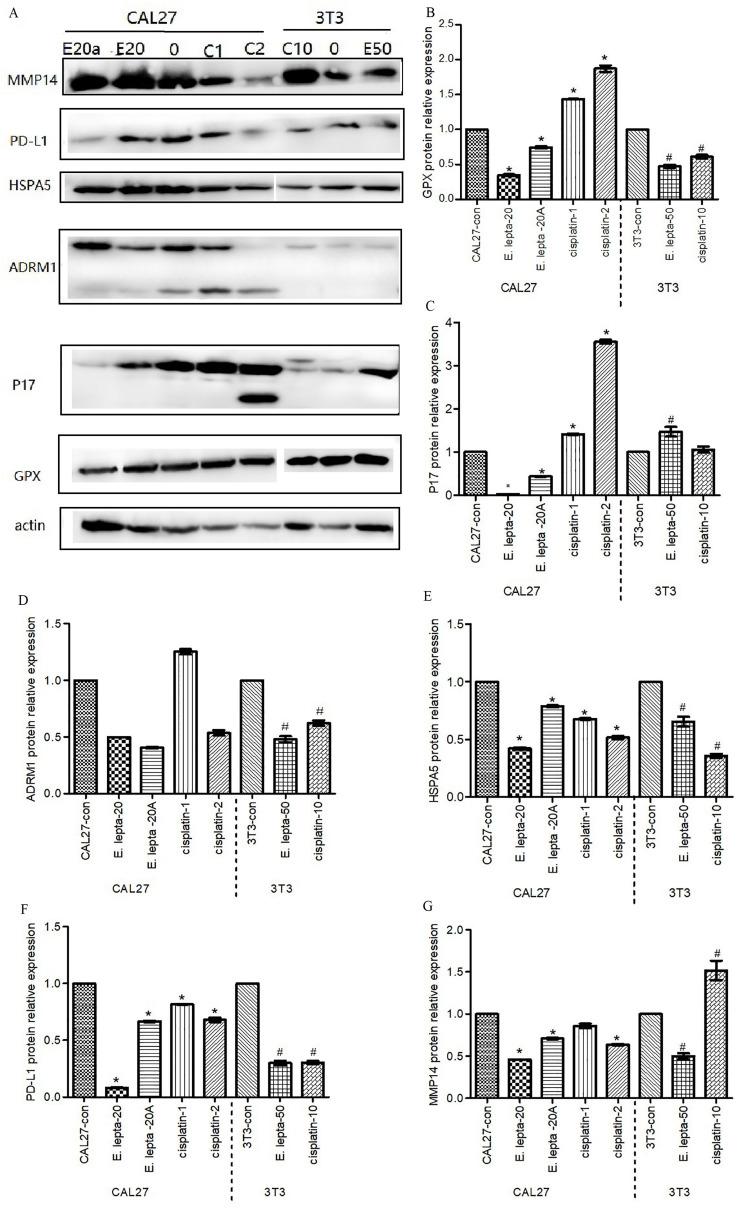
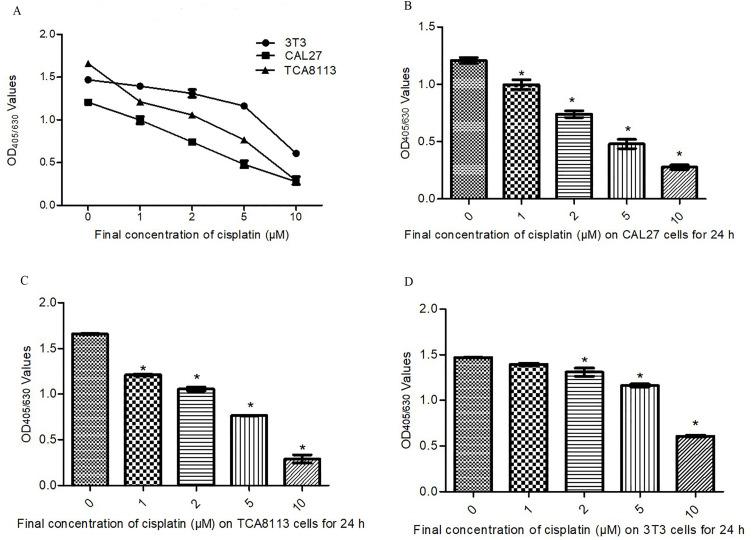
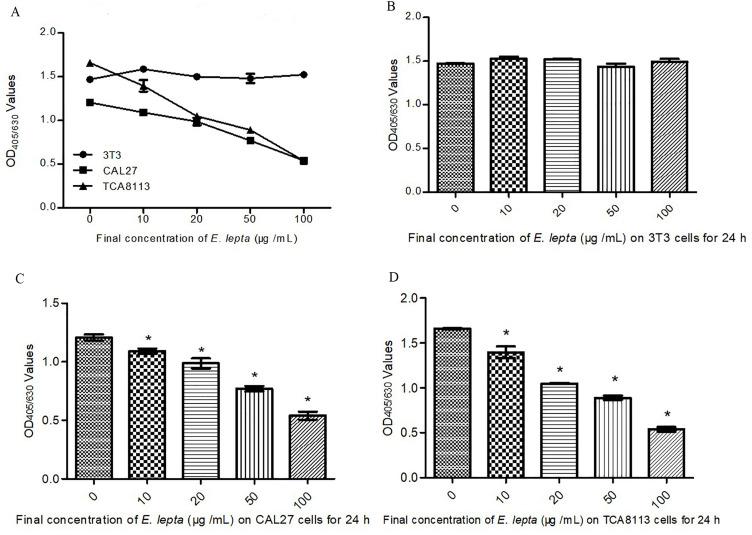
Cisplatin significantly reduced the viability in all cells (IC: 3T3 = 9.5 μM; CAL27/TCA8113 = 3.5 μM). selectively targeted OTSCC cells (IC: CAL27 = 80 μg/mL; TCA8113 = 60 μg/mL) with no 3T3 toxicity. Protein expression analysis revealed that downregulated GPX4, ADRM1, MMP14, PD-L1, and HSPA5 in both CAL27 and 3T3 cells. Interestingly, the expression of p17 exhibited divergent regulation between cell types. In contrast, cisplatin treatment upregulated GPX4 and downregulated MMP14, PD-L1, and HSPA5 in CAL27 cells, with p17 regulation opposing that observed with .
CONCLUSION
selectively induces ferroptosis through GPX4 and HSPA5 downregulation, demonstrating multi-target effects including proteostasis disruption (ADRM1), metastasis inhibition (MMP14), and immune evasion suppression (PD-L1). Its GPX4 suppression contrasts with cisplatin's upregulation, suggesting utility in cisplatin-resistant OTSCC. PD-L1 reduction implies immunotherapeutic potential, meriting further study.
背景
口腔舌鳞状细胞癌(OTSCC)是最常见的口腔恶性肿瘤,缺乏有效的治疗方法。
目的
评估鸦胆子()作为OTSCC潜在治疗药物的效果。
方法
用鸦胆子或顺铂处理OTSCC(CAL27、TCA8113)和3T3细胞24小时后,评估细胞活力(CCK-8法)和蛋白质表达(蛋白质免疫印迹法)。
结果
顺铂显著降低了所有细胞的活力(IC:3T3 = 9.5 μM;CAL27/TCA8113 = 3.5 μM)。鸦胆子选择性地靶向OTSCC细胞(IC:CAL27 = 80 μg/mL;TCA8113 = 60 μg/mL),对3T3细胞无毒性。蛋白质表达分析显示,鸦胆子下调了CAL27和3T3细胞中的GPX4、ADRM1、MMP14、PD-L1和HSPA5。有趣的是,p17的表达在不同细胞类型之间表现出不同的调节。相比之下,顺铂处理上调了CAL27细胞中的GPX4,下调了MMP14、PD-L1和HSPA5,p17的调节与鸦胆子处理时观察到的相反。
结论
鸦胆子通过下调GPX4和HSPA5选择性地诱导铁死亡,显示出多靶点效应,包括蛋白稳态破坏(ADRM1)、转移抑制(MMP14)和免疫逃逸抑制(PD-L1)。其对GPX4的抑制与顺铂的上调形成对比,表明在顺铂耐药的OTSCC中具有应用价值。PD-L1的降低意味着具有免疫治疗潜力,值得进一步研究。
 Zotero 插件