
在马氏网诱捕样本中,关键昆虫指标的研究结果能否在不同分类群中通用?
Are Findings of Key Insect Metrics Generalizable Across Different Taxa in Malaise Trap Samples?
作者信息
Remmel Nicole, Enss Julian, Haase Peter, Sinclair James S
机构信息
Department of River Ecology and Conservation Senckenberg Research Institute and Natural History Museum Frankfurt Gelnhausen Germany.
Faculty of Biology University of Duisburg-Essen Essen Germany.
出版信息
Ecol Evol. 2025 Aug 15;15(8):e72006. doi: 10.1002/ece3.72006. eCollection 2025 Aug.
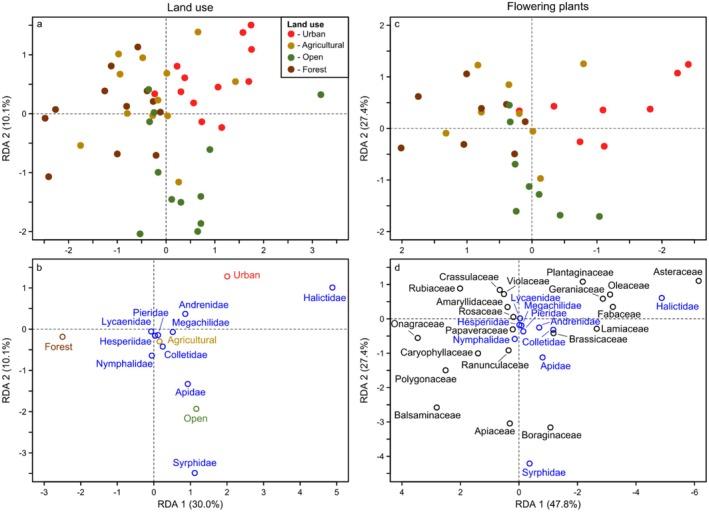
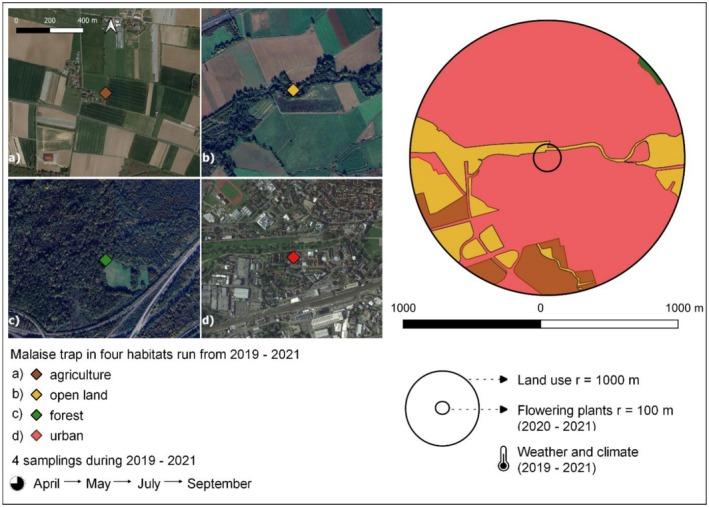
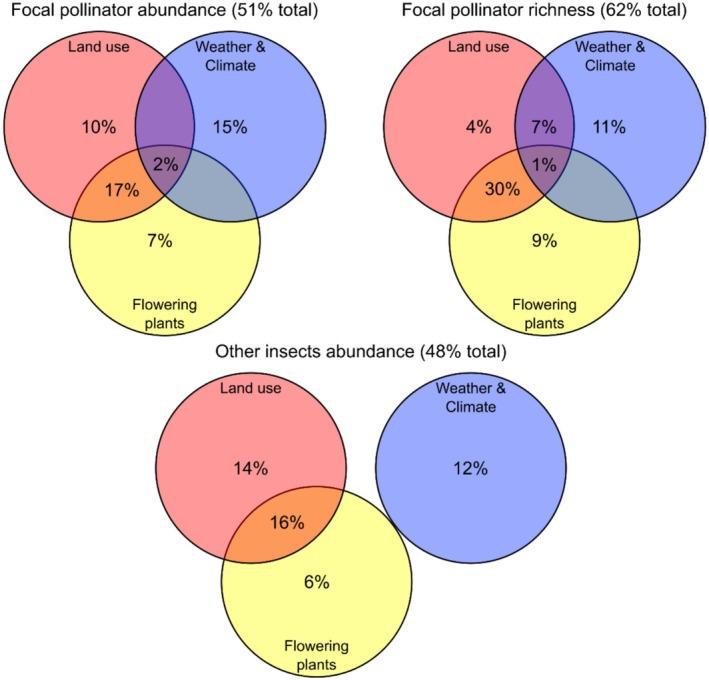
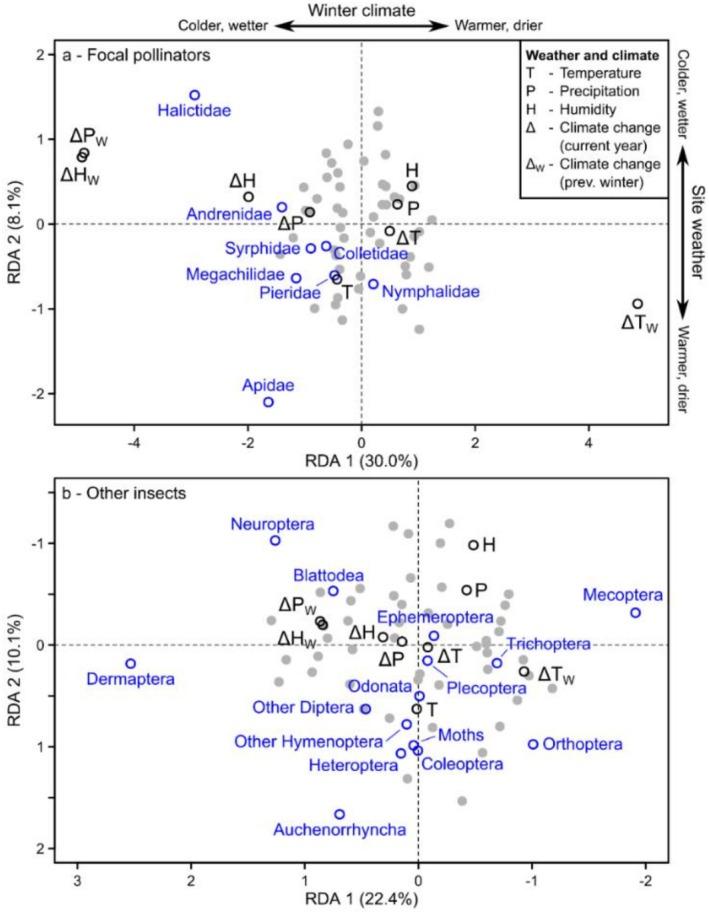
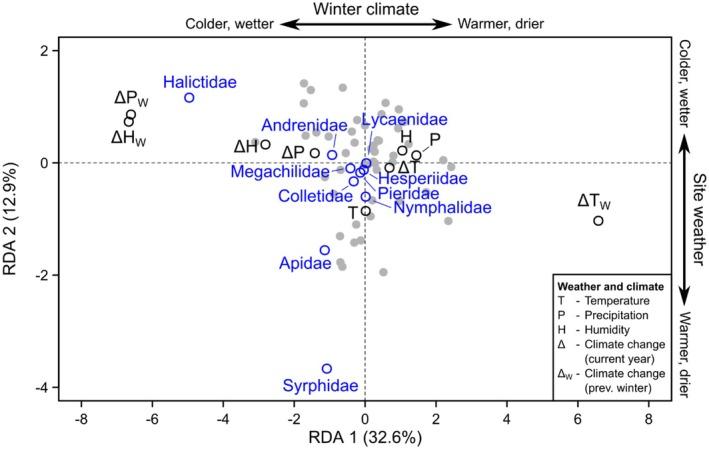
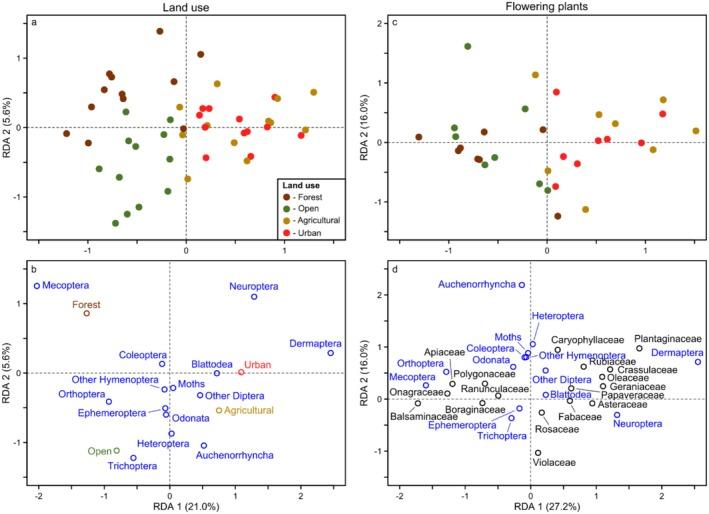
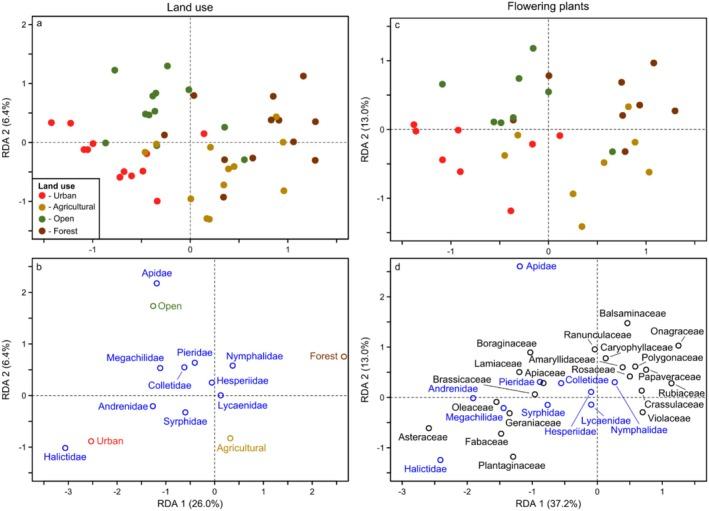
Recent reports of insect declines and drivers thereof are often based on total biomass from Malaise traps. However, it remains unclear whether these changes reflect shifts in other community metrics (e.g., total abundance) and important taxa, such as key pollinators. To address this question, we collected Malaise trap samples from four different habitats (forest, urban, agriculture and open land) and four seasons (early spring, late spring, midsummer and early autumn) during 2019-2021. We measured the total biomass of each sample, then morphologically identified the insects in each sample, comprising 533,128 total individuals. We determined whether changes in total biomass reflected changes in total community abundance, and whether community relationships to habitat characteristics of land cover, weather/climate, and flowering plants were the same between the most common insects (represented by 15 different taxonomic groups) versus relatively fewer focal pollinators, specifically bees, butterflies, and hoverflies. Biomass was generally related to abundance, except in a small subset of communities comprising more larger-bodied taxa. Additionally, both overall community composition and pollinator composition were explained by the same weather and climate variables and the same habitat characteristics. However, pollinator relationships to habitat were likely driven by different mechanisms, specifically covarying changes in flowering plants. Our results suggest that patterns in Malaise trap biomass, and the relationships of prominent taxa to habitat characteristics, could be used to infer similar changes in other important community metrics and taxa, including pollinators. However, some insects responded to shifts in habitat characteristics for different underlying reasons, indicating the need for caution when using such inferences to inform conservation and management to ensure the correct mechanisms are being addressed.
近期有关昆虫数量下降及其驱动因素的报告通常基于马氏网诱捕器捕获的总生物量。然而,目前尚不清楚这些变化是否反映了其他群落指标(如总丰度)的变化以及重要类群的变化,例如关键传粉者。为了解决这个问题,我们在2019年至2021年期间,从四个不同栖息地(森林、城市、农业和开阔地)以及四个季节(早春、晚春、仲夏和初秋)收集了马氏网诱捕器样本。我们测量了每个样本的总生物量,然后对每个样本中的昆虫进行形态学鉴定,总计有533,128个个体。我们确定了总生物量的变化是否反映了群落总丰度的变化,以及在最常见的昆虫(由15个不同分类群代表)与相对较少的重点传粉者(特别是蜜蜂、蝴蝶和食蚜蝇)之间,群落与土地覆盖、天气/气候和开花植物等栖息地特征的关系是否相同。生物量一般与丰度相关,但在一小部分包含更多大体型类群的群落中除外。此外,整体群落组成和传粉者组成都可以由相同的天气和气候变量以及相同的栖息地特征来解释。然而,传粉者与栖息地的关系可能由不同机制驱动,特别是开花植物的协变变化。我们的结果表明,马氏网诱捕器生物量的模式以及突出类群与栖息地特征的关系,可用于推断其他重要群落指标和类群(包括传粉者)的类似变化。然而,一些昆虫因不同的潜在原因对栖息地特征的变化做出反应,这表明在利用此类推断为保护和管理提供信息时需谨慎,以确保解决正确的机制问题。


 Zotero 插件