
扩大生物多样性监测范围:通过代谢条形码技术估算德国各地马氏网诱捕到的31846种昆虫。
Upscaling biodiversity monitoring: Metabarcoding estimates 31,846 insect species from Malaise traps across Germany.
作者信息
Buchner Dominik, Sinclair James S, Ayasse Manfred, Beermann Arne J, Buse Jörn, Dziock Frank, Enss Julian, Frenzel Mark, Hörren Thomas, Li Yuanheng, Monaghan Michael T, Morkel Carsten, Müller Jörg, Pauls Steffen U, Richter Ronny, Scharnweber Tobias, Sorg Martin, Stoll Stefan, Twietmeyer Sönke, Weisser Wolfgang W, Wiggering Benedikt, Wilmking Martin, Zotz Gerhard, Gessner Mark O, Haase Peter, Leese Florian
机构信息
Aquatic Ecosystem Research, University of Duisburg Essen, Essen, Germany.
Senckenberg Research Institute and Natural History Museum Frankfurt, Gelnhausen, Germany.
出版信息
Mol Ecol Resour. 2025 Jan;25(1):e14023. doi: 10.1111/1755-0998.14023. Epub 2024 Oct 4.
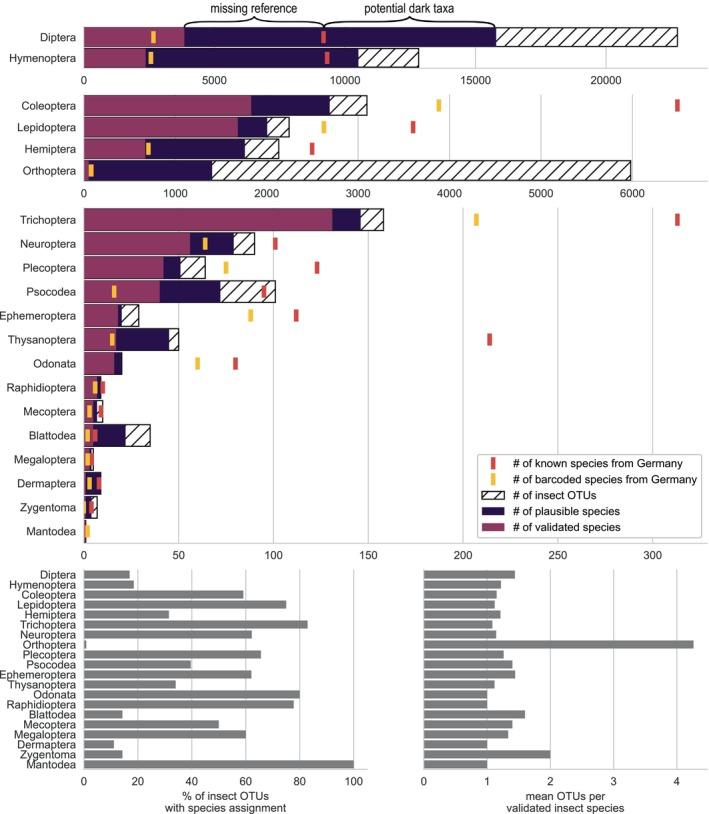
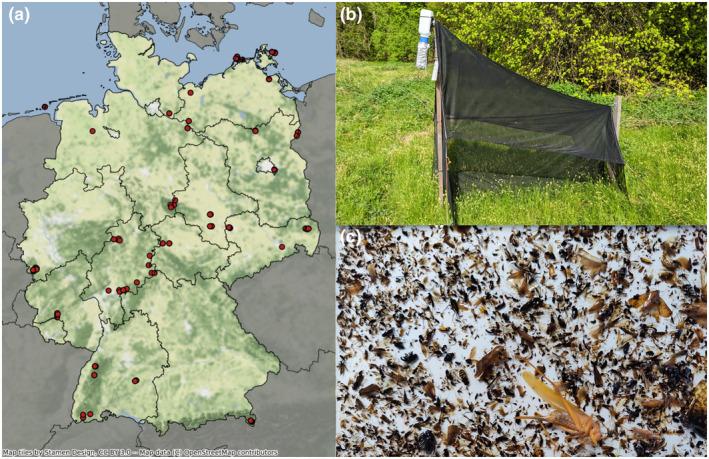
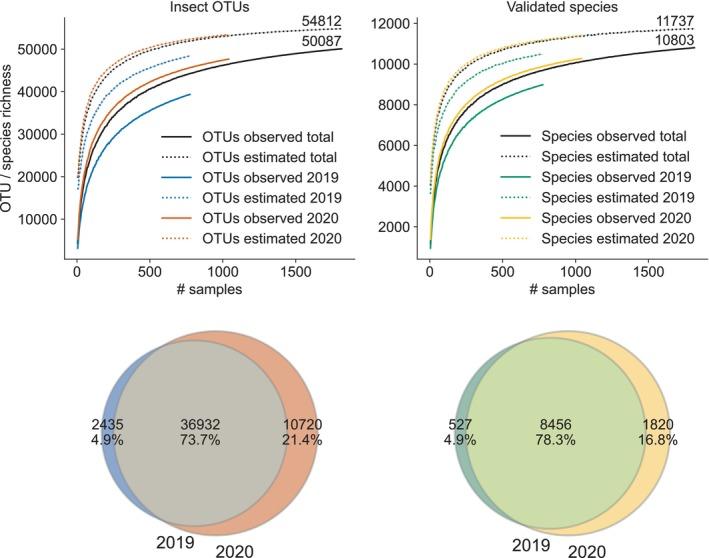
Mitigating ongoing losses of insects and their key functions (e.g. pollination) requires tracking large-scale and long-term community changes. However, doing so has been hindered by the high diversity of insect species that requires prohibitively high investments of time, funding and taxonomic expertise when addressed with conventional tools. Here, we show that these concerns can be addressed through a comprehensive, scalable and cost-efficient DNA metabarcoding workflow. We use 1815 samples from 75 Malaise traps across Germany from 2019 and 2020 to demonstrate how metabarcoding can be incorporated into large-scale insect monitoring networks for less than 50 € per sample, including supplies, labour and maintenance. We validated the detected species using two publicly available databases (GBOL and GBIF) and the judgement of taxonomic experts. With an average of 1.4 M sequence reads per sample we uncovered 10,803 validated insect species, of which 83.9% were represented by a single Operational Taxonomic Unit (OTU). We estimated another 21,043 plausible species, which we argue either lack a reference barcode or are undescribed. The total of 31,846 species is similar to the number of insect species known for Germany (35,500). Because Malaise traps capture only a subset of insects, our approach identified many species likely unknown from Germany or new to science. Our reproducible workflow (80% OTU-similarity among years) provides a blueprint for large-scale biodiversity monitoring of insects and other biodiversity components in near real time.
减轻昆虫及其关键功能(如授粉)的持续损失需要追踪大规模和长期的群落变化。然而,这样做受到昆虫物种高度多样性的阻碍,使用传统工具处理时,这需要投入高得令人望而却步的时间、资金和分类学专业知识。在这里,我们表明,这些问题可以通过一个全面、可扩展且具有成本效益的DNA宏条形码工作流程来解决。我们使用了2019年和2020年来自德国各地75个马氏网的1815个样本,以证明如何将宏条形码纳入大规模昆虫监测网络,每个样本成本低于50欧元,包括耗材、人工和维护费用。我们使用两个公开可用的数据库(GBOL和GBIF)以及分类学专家的判断来验证检测到的物种。每个样本平均有140万个序列读数,我们发现了10803个经过验证的昆虫物种,其中83.9%由单个操作分类单元(OTU)代表。我们估计还有21043个可能的物种,我们认为这些物种要么缺少参考条形码,要么未被描述。这31846个物种的总数与德国已知的昆虫物种数量(约35500种)相似。由于马氏网只捕获了一部分昆虫,我们的方法识别出了许多可能在德国不为人知或科学界新发现的物种。我们可重复的工作流程(年份之间OTU相似度约为80%)为近乎实时的大规模昆虫和其他生物多样性组成部分的生物多样性监测提供了蓝图。
 Zotero 插件