
急性呼吸窘迫综合征中的右心衰竭
Right-sided heart failure in acute respiratory distress syndrome.
作者信息
Yogeswaran Athiththan, Kremer Nils C, Janetzko Patrick, Schäfer Simon, Rako Zvonimir A, Vadász István, Hecker Matthias, Tello Khodr
机构信息
Department of Internal Medicine, Universities of Giessen and Marburg Lung Center (UGMLC), Institute for Lung Health (ILH), Cardio-Pulmonary Institute (CPI), Member of the German Center for Lung Research (DZL), Giessen, Germany.
Department of Internal Medicine, Universities of Giessen and Marburg Lung Center (UGMLC), Institute for Lung Health (ILH), Cardio-Pulmonary Institute (CPI), Member of the German Center for Lung Research (DZL), Giessen, Germany
出版信息
Eur Respir Rev. 2025 Aug 20;34(177). doi: 10.1183/16000617.0060-2025. Print 2025 Jul.
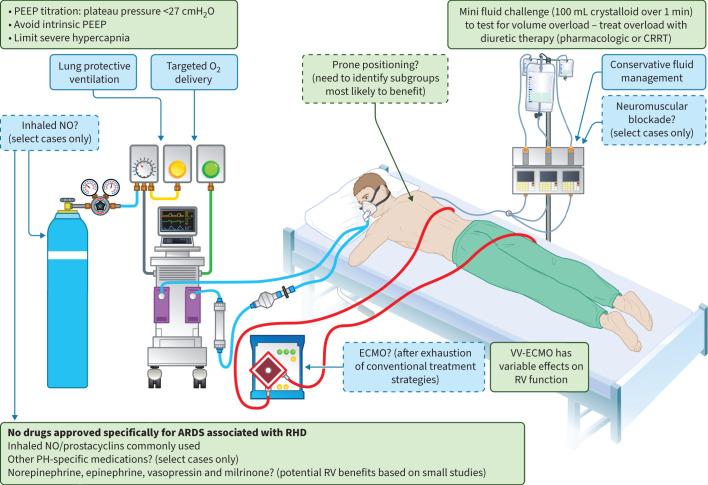
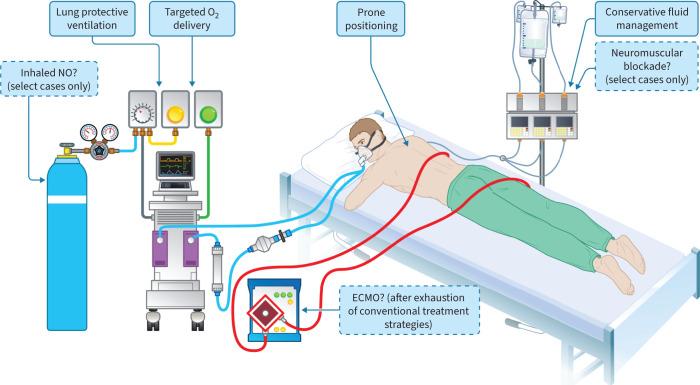
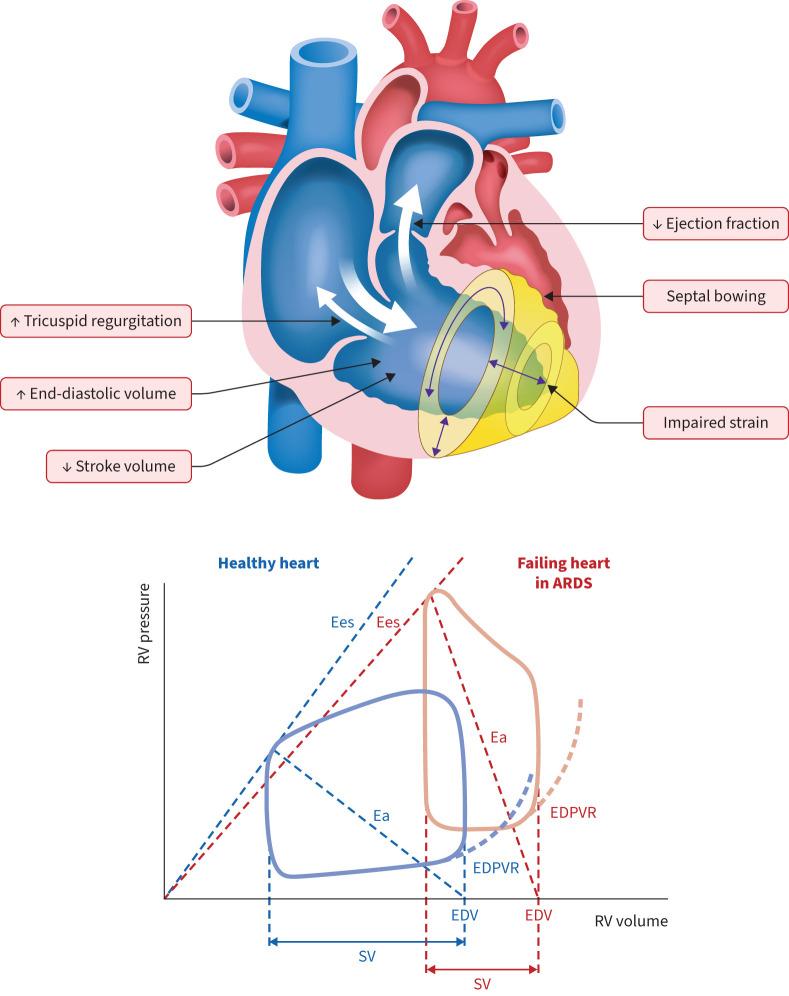
Right-sided heart dysfunction (RHD) has emerged as a critical yet often underappreciated aspect of acute respiratory distress syndrome (ARDS). This review describes the role of RHD in ARDS, providing an updated overview of its pathophysiology, diagnosis and potential treatments. Several mechanisms contribute to increased right ventricular (RV) afterload in ARDS, including hypoxic vasoconstriction, hypercapnia, acidosis, thrombosis and an imbalance between pulmonary vasoconstrictors and vasodilators. Mechanical ventilation, a cornerstone in ARDS management, can worsen haemodynamic instability due to impaired lung compliance. Systemic implications of RHD include renal dysfunction due to impaired organ perfusion and venous congestion. Volume overload further exacerbates RV strain, setting off a vicious cycle of deteriorating RV function, interventricular septal bowing, reduced left ventricular preload and ultimately circulatory failure. The diagnosis and management of RHD in ARDS require an integrated approach that combines invasive haemodynamic monitoring, imaging techniques and noninvasive assessments. Specific treatment options targeting RHD in ARDS remain limited. Titration of positive end-expiratory pressure plays a critical role in mitigating RHD. Prone positioning has shown inconsistent effects on RV function which require further investigation. Inhaled pulmonary vasodilators, such as nitric oxide and prostacyclins, are commonly used to modulate pulmonary vascular tone in ARDS. Small studies suggest that levosimendan and commonly used vasoactive drugs such as norepinephrine, epinephrine, vasopressin and milrinone may improve RV function in ARDS. However, no pharmacologic treatment is specifically approved for ARDS-associated RHD. Large-scale clinical trials are necessary to identify the most effective treatment strategies for specific patient populations.
右心功能不全(RHD)已成为急性呼吸窘迫综合征(ARDS)的一个关键但常被忽视的方面。本综述描述了RHD在ARDS中的作用,提供了其病理生理学、诊断和潜在治疗方法的最新概述。ARDS中导致右心室(RV)后负荷增加的机制有多种,包括缺氧性血管收缩、高碳酸血症、酸中毒、血栓形成以及肺血管收缩剂和血管扩张剂之间的失衡。机械通气是ARDS治疗的基石,但由于肺顺应性受损,可能会加重血流动力学不稳定。RHD的全身影响包括因器官灌注受损和静脉淤血导致的肾功能不全。容量超负荷会进一步加重RV应变,引发RV功能恶化、室间隔弯曲、左心室前负荷降低并最终导致循环衰竭的恶性循环。ARDS中RHD的诊断和管理需要综合方法,结合有创血流动力学监测、成像技术和无创评估。针对ARDS中RHD的具体治疗选择仍然有限。调整呼气末正压在减轻RHD方面起着关键作用。俯卧位对RV功能的影响不一致,需要进一步研究。吸入性肺血管扩张剂,如一氧化氮和前列环素,常用于调节ARDS中的肺血管张力。小型研究表明,左西孟旦以及常用的血管活性药物,如去甲肾上腺素、肾上腺素、血管加压素和米力农,可能改善ARDS中的RV功能。然而,尚无专门批准用于ARDS相关RHD的药物治疗。需要进行大规模临床试验,以确定针对特定患者群体的最有效治疗策略。



 Zotero 插件