
心血管疾病患者糖尿病酮症酸中毒住院后的结局
Outcomes following hospitalization for diabetic ketoacidosis in patients with cardiovascular disease.
作者信息
Huang Yanrui, Xu Zijun, Deng Honghua, Chen Junxin, Huang Rong, Li Hai, Liu Juan, Guan Hongyu
机构信息
Department of Endocrinology and Diabetes Center, The First Affiliated Hospital of Sun Yat-sen University, Guangzhou, China.
Department of Endocrinology, The First People's Hospital of Foshan, Foshan, China.
出版信息
Endocr Connect. 2025 Sep 5;14(9). doi: 10.1530/EC-25-0276. Print 2025 Sep 1.
INTRODUCTION
Diabetic ketoacidosis (DKA) is a serious complication in patients with diabetes. This study compares the outcomes of hospitalized DKA patients with and without cardiovascular disease (CVD). In addition, we assess outcomes between DKA and hyperosmolar hyperglycemic syndrome (HHS) in diabetes patients with CVD, and between those who developed DKA and those who did not.
METHODS
We employed a population-based, retrospective observational design utilizing data sourced from the National Inpatient Sample database for the years 2016-2022. The primary outcome assessed was in-hospital mortality. In addition, various secondary outcomes were examined, including the incidence of acute respiratory failure, acute kidney failure, septic shock, sepsis, acute neurological failure, pulmonary embolism, deep vein thrombosis, acute liver failure, mechanical ventilation, noninvasive ventilation, and the length of hospital stay (LOS) and total hospital charges.
RESULTS
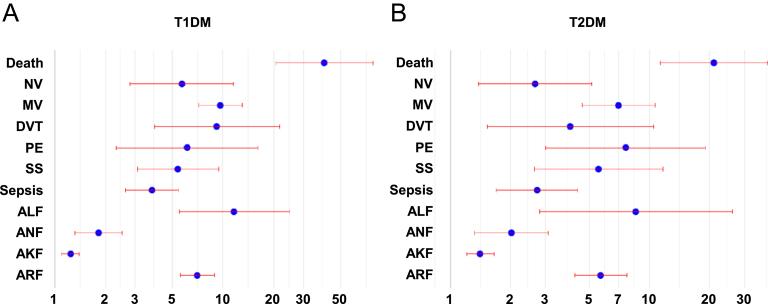
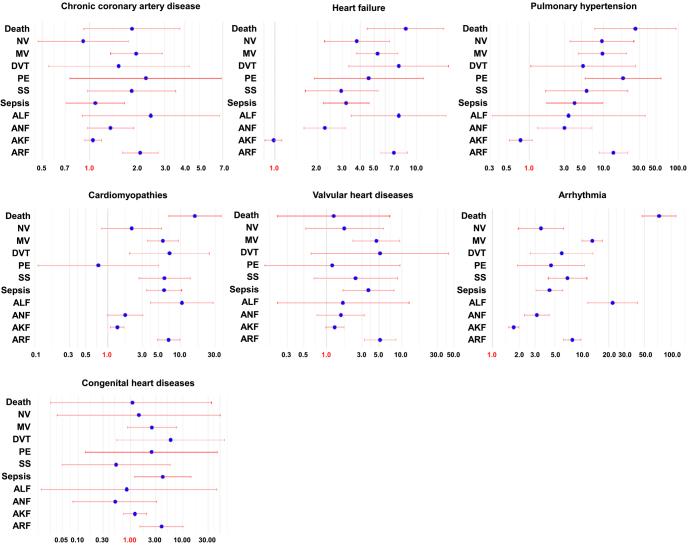
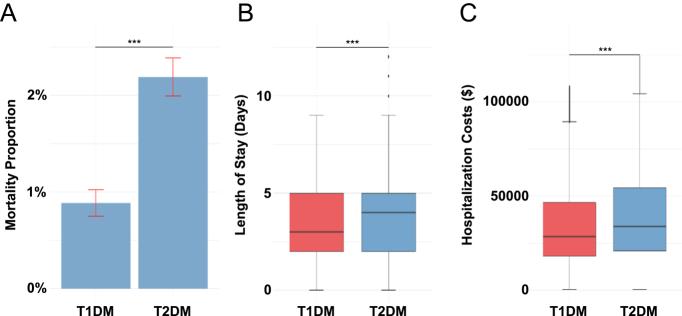
Multivariable regression analysis demonstrated that CVD independently increased mortality and complications, including acute respiratory failure and sepsis, in DKA patients, who also experienced longer LOS and higher medical costs compared to those without CVD. Similar findings were observed when comparing outcomes between DKA and HHS in diabetes patients with CVD, as well as between those who developed DKA and those who did not.
CONCLUSIONS
This study demonstrates that CVD significantly affects the outcomes of patients admitted for DKA. Moreover, similar negative outcomes were observed when comparing DKA patients with HHS and those who developed DKA versus those who did not. These findings highlight the need for careful management of DKA in patients with CVD to optimize clinical outcomes.
引言
糖尿病酮症酸中毒(DKA)是糖尿病患者的一种严重并发症。本研究比较了患有和未患有心血管疾病(CVD)的住院DKA患者的治疗结果。此外,我们评估了患有CVD的糖尿病患者中DKA与高渗高血糖综合征(HHS)之间的治疗结果,以及发生DKA的患者与未发生DKA的患者之间的治疗结果。
方法
我们采用基于人群的回顾性观察性设计,利用2016年至2022年国家住院样本数据库中的数据。评估的主要结局是住院死亡率。此外,还检查了各种次要结局,包括急性呼吸衰竭、急性肾衰竭、感染性休克、脓毒症、急性神经功能衰竭、肺栓塞、深静脉血栓形成、急性肝衰竭、机械通气、无创通气的发生率,以及住院时间(LOS)和总住院费用。
结果
多变量回归分析表明,CVD独立增加了DKA患者的死亡率和并发症,包括急性呼吸衰竭和脓毒症,与未患CVD的患者相比,这些患者的住院时间更长,医疗费用更高。在比较患有CVD的糖尿病患者中DKA与HHS之间的治疗结果,以及发生DKA的患者与未发生DKA的患者之间的治疗结果时,也观察到了类似的结果。
结论
本研究表明,CVD显著影响因DKA入院患者的治疗结果。此外,在比较DKA患者与HHS患者以及发生DKA的患者与未发生DKA的患者时,观察到了类似的负面结果。这些发现凸显了对患有CVD的DKA患者进行仔细管理以优化临床结局的必要性。

 Zotero 插件