
小鼠粪便微生物群移植通过改变矿物质质量改善骨材料特性。
Fecal microbiota transplantation in mice improves bone material properties through altered mineral quality.
作者信息
Wang Bowen, Stephen Samuel J, Cyphert Erika L, Liu Chongshan, Hernandez Christopher J, Vashishth Deepak
机构信息
Center for Engineering and Precision Medicine, Rensselaer-Icahn School of Medicine at Mount Sinai, New York, NY 10019, United States.
Department of Biomedical Engineering, Rensselaer Polytechnic Institute, Troy, NY 12180, United States.
出版信息
JBMR Plus. 2025 Jul 8;9(9):ziaf115. doi: 10.1093/jbmrpl/ziaf115. eCollection 2025 Sep.
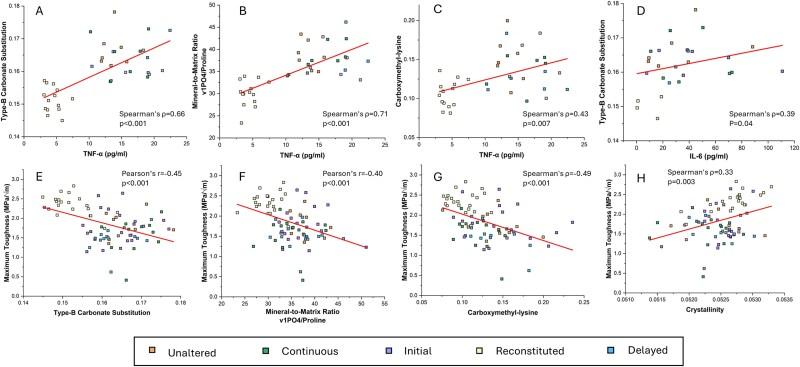
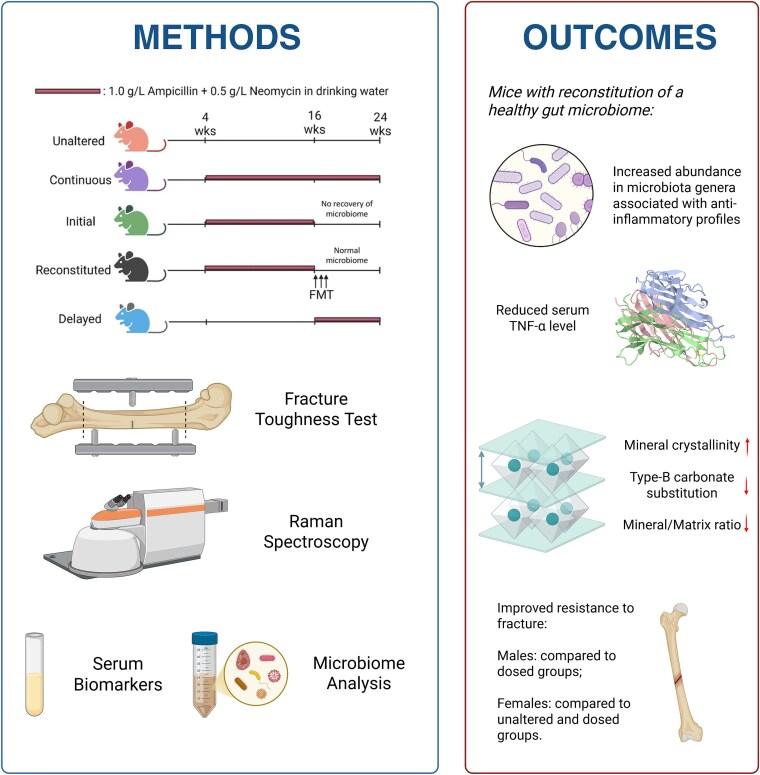
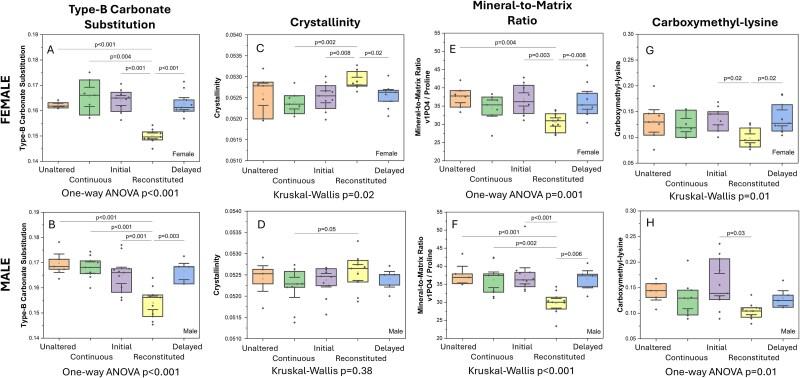
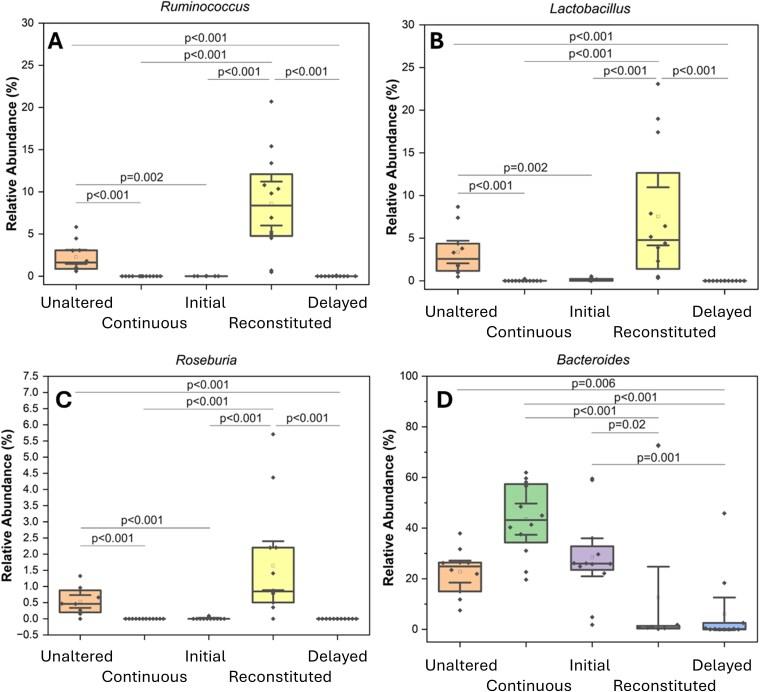
Disruptions of the composition of the gut microbiome are linked to impaired bone tissue strength. Fecal microbiota transplantation (FMT) is an established clinical therapy that can restore a healthy gut microbiome and reduce systemic inflammation. However, whether FMT from a healthy donor could rescue bone fragility is unknown. As induced inflammation causes mineralization defects, we hypothesize that manipulations of the gut microbiota alter bone fracture resilience through changes in mineral quality. Here, we altered the compositions of the gut microbiome in mice via antibiotics (ampicillin and neomycin) and FMT. Mice were allocated to 5 groups (M/F, = 13-18/group): Unaltered, Continuous (dosed 4-24 wk), Initial (dosed 4-16 wk), Reconstituted (dosed 4-16 wk with subsequent FMT from age- and sex-matched mice with unaltered gut microbiota), and Delayed (dosed 16-24 wk). Fracture toughness testing and Raman spectroscopy were conducted on the femora. The maximum toughness was greater in the Reconstituted group (for females, < .05 compared to Continuous, Unaltered, and Delayed groups; for males, < .05 compared to groups with antibiotic dosing). The Reconstituted group showed lower type-B carbonate substitution in the bone mineral (all < .01 for both sexes), and lower mineral-to-matrix ratio (all < .01 for males, for females, < .01 compared to Unaltered, Initial, and Delayed groups). In females, mineral crystallinity was higher in the Reconstituted group than those dosed with antibiotics (all < .05). Serum inflammation marker TNF-α was positively correlated with type-B carbonate substitutions (ρ = 0.66), mineral-to-matrix ratio (ρ = 0.71), and carboxymethyl-lysine (CML) in bone matrix (ρ = 0.43). Enhanced bone maximum fracture toughness was associated with reduced type-B carbonate substitution ( = -0.45), decreased mineral-to-matrix ratio ( = -0.40), increased mineral crystallinity ( = 0.33), and lower levels of bone CML ( = -0.49, all < .01). These results suggest that the introduction of more beneficial gut microbiota can increase fracture resistance by modifying mineral composition and quality, likely through the reduction of systemic inflammation.
肠道微生物群组成的破坏与骨组织强度受损有关。粪便微生物群移植(FMT)是一种成熟的临床治疗方法,可以恢复健康的肠道微生物群并减轻全身炎症。然而,来自健康供体的FMT是否能挽救骨脆性尚不清楚。由于诱导的炎症会导致矿化缺陷,我们假设肠道微生物群的操纵通过矿物质质量的变化来改变骨折恢复力。在这里,我们通过抗生素(氨苄青霉素和新霉素)和FMT改变了小鼠肠道微生物群的组成。将小鼠分为5组(M/F,每组13 - 18只):未改变组、持续给药组(给药4 - 24周)、初始给药组(给药4 - 16周)、重建组(给药4 - 16周,随后接受来自年龄和性别匹配的肠道微生物群未改变小鼠的FMT)和延迟给药组(给药16 - 24周)。对股骨进行骨折韧性测试和拉曼光谱分析。重建组的最大韧性更高(对于雌性,与持续给药组、未改变组和延迟给药组相比,P < 0.05;对于雄性,与抗生素给药组相比,P < 0.05)。重建组骨矿物质中的B型碳酸盐取代较低(两性均P < 0.01),矿物质与基质的比率较低(雄性均P < 0.01,雌性与未改变组、初始给药组和延迟给药组相比,P < 0.01)。在雌性中,重建组的矿物质结晶度高于抗生素给药组(均P < 0.05)。血清炎症标志物TNF-α与B型碳酸盐取代(ρ = 0.66)、矿物质与基质的比率(ρ = 0.71)以及骨基质中的羧甲基赖氨酸(CML)(ρ = 0.43)呈正相关。增强的骨最大骨折韧性与降低的B型碳酸盐取代(r = -0.45)、降低的矿物质与基质比率(r = -0.40)、增加的矿物质结晶度(r = 0.33)以及较低水平的骨CML(r = -0.49,均P < 0.01)有关。这些结果表明,引入更有益的肠道微生物群可以通过改变矿物质组成和质量来提高抗骨折能力,可能是通过减轻全身炎症来实现的。


 Zotero 插件