
多糖在细胞和斑马鱼模型中通过线粒体凋亡发挥的抗肿瘤活性
Antitumor Activity of Polysaccharides Through Mitochondrial Apoptosis in Cellular and Zebrafish Models.
作者信息
Liu Mengyue, Wang Weixia, Wang Haoran, Zhao Shuang, Yin Dongli, Zhang Haijun, Zou Chunze, Zou Shengcan, Yu Jia, Wei Yuxi
机构信息
College of Life Sciences, Qingdao University, Qingdao 266071, China.
Qingdao Yihai Industry Holdings Co., Ltd., Qingdao 266105, China.
出版信息
Mar Drugs. 2025 Jul 29;23(8):304. doi: 10.3390/md23080304.
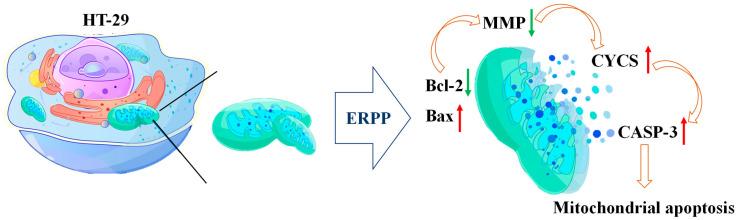
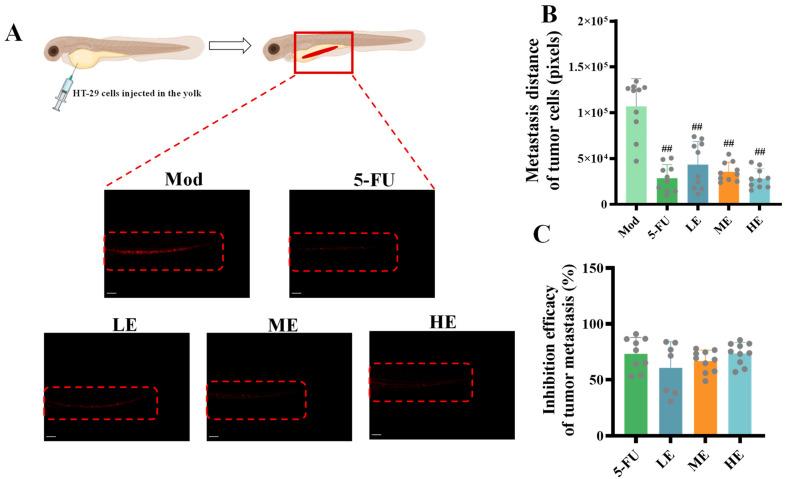
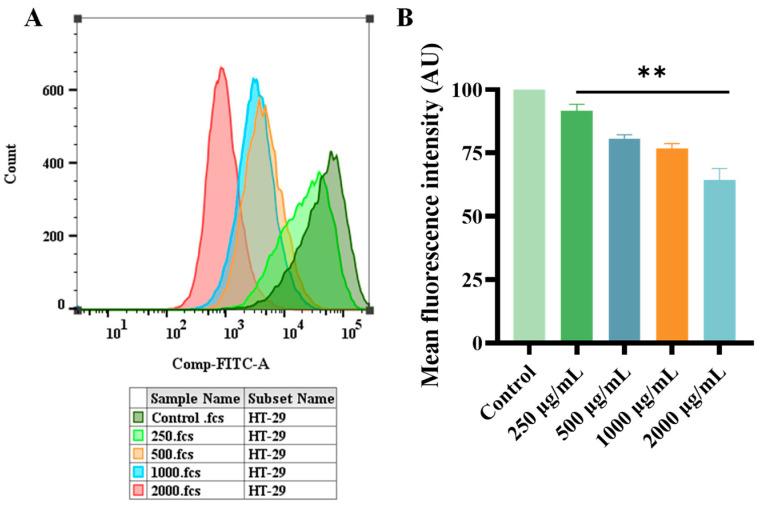
Colorectal cancer (CRC) remains a predominant cause of global cancer-related mortality, highlighting the pressing demand for innovative therapeutic strategies. Natural polysaccharides have emerged as promising candidates in cancer research due to their multifaceted anticancer mechanisms and tumor-suppressive potential across diverse malignancies. In this study, we enzymatically extracted a polysaccharide, named ERPP, from and comprehensively evaluated its anti-colorectal cancer activity. We conducted in vitro assays, including CCK-8 proliferation, clonogenic survival, scratch wound healing, and Annexin V-FITC/PI apoptosis staining, and the results demonstrated that ERPP significantly inhibited HT-29 cell proliferation, suppressed colony formation, impaired migratory capacity, and induced apoptosis. JC-1 fluorescence assays provided further evidence of mitochondrial membrane potential (MMP) depolarization, as manifested by a substantial reduction in the red/green fluorescence ratio (from 10.87 to 0.35). These antitumor effects were further validated in vivo using a zebrafish HT-29 xenograft model. Furthermore, ERPP treatment significantly attenuated tumor angiogenesis and downregulated the expression of the vascular endothelial growth factor A () gene in the zebrafish xenograft model. Mechanistic investigations revealed that ERPP primarily activated the mitochondrial apoptosis pathway. RT-qPCR analysis showed an upregulation of the pro-apoptotic gene and a downregulation of the anti-apoptotic gene , leading to cytochrome c () release and caspase-3 () activation. Additionally, ERPP exhibited potent antioxidant capacity, achieving an 80.2% hydroxyl radical scavenging rate at 4 mg/mL. ERPP also decreased reactive oxygen species (ROS) levels within the tumor cells, thereby augmenting anticancer efficacy through its antioxidant activity. Collectively, these findings provide mechanistic insights into the properties of ERPP, underscoring its potential as a functional food component or adjuvant therapy for colorectal cancer management.
结直肠癌(CRC)仍然是全球癌症相关死亡的主要原因,这凸显了对创新治疗策略的迫切需求。天然多糖因其多方面的抗癌机制和对多种恶性肿瘤的肿瘤抑制潜力,已成为癌症研究中很有前景的候选物质。在本研究中,我们通过酶法从[具体来源未给出]中提取了一种名为ERPP的多糖,并全面评估了其抗结直肠癌活性。我们进行了体外实验,包括CCK - 8增殖、克隆形成存活、划痕伤口愈合和Annexin V - FITC/PI凋亡染色,结果表明ERPP显著抑制HT - 29细胞增殖、抑制集落形成、损害迁移能力并诱导凋亡。JC - 1荧光测定进一步提供了线粒体膜电位(MMP)去极化的证据,表现为红/绿荧光比率大幅降低(从10.87降至0.35)。这些抗肿瘤作用在体内使用斑马鱼HT - 29异种移植模型进一步得到验证。此外,在斑马鱼异种移植模型中,ERPP治疗显著减弱肿瘤血管生成并下调血管内皮生长因子A([具体基因未完整给出])基因的表达。机制研究表明,ERPP主要激活线粒体凋亡途径。RT - qPCR分析显示促凋亡基因[具体基因未完整给出]上调,抗凋亡基因[具体基因未完整给出]下调,导致细胞色素c([具体基因未完整给出])释放和半胱天冬酶 - 3([具体基因未完整给出])激活。此外,ERPP表现出强大的抗氧化能力,在4 mg/mL时羟基自由基清除率达到80.2%。ERPP还降低了肿瘤细胞内的活性氧(ROS)水平,从而通过其抗氧化活性增强抗癌效果。总的来说,这些发现为ERPP的特性提供了机制性见解,强调了其作为功能性食品成分或结直肠癌管理辅助治疗的潜力。




 Zotero 插件