
电子束辐照用于水溶液中抗生素的高效降解
Electron Beam Irradiation for Efficient Antibiotic Degradation in Aqueous Solutions.
作者信息
Oprunenko Anastasia, Bliznyuk Ulyana, Ipatova Victoria, Nikitchenko Alexander, Gloriozov Igor, Braun Arcady, Bolotnik Timofey, Borshchegovskaya Polina, Kozlova Elena, Ananieva Irina, Rodin Igor
机构信息
Department of Chemistry, Lomonosov Moscow State University, GSP-1, 1-3 Leninskiye Gory, 119991 Moscow, Russia.
Department of Physics, Lomonosov Moscow State University, GSP-1, 1-2 Leninskiye Gory, 119991 Moscow, Russia.
出版信息
Antibiotics (Basel). 2025 Aug 15;14(8):833. doi: 10.3390/antibiotics14080833.
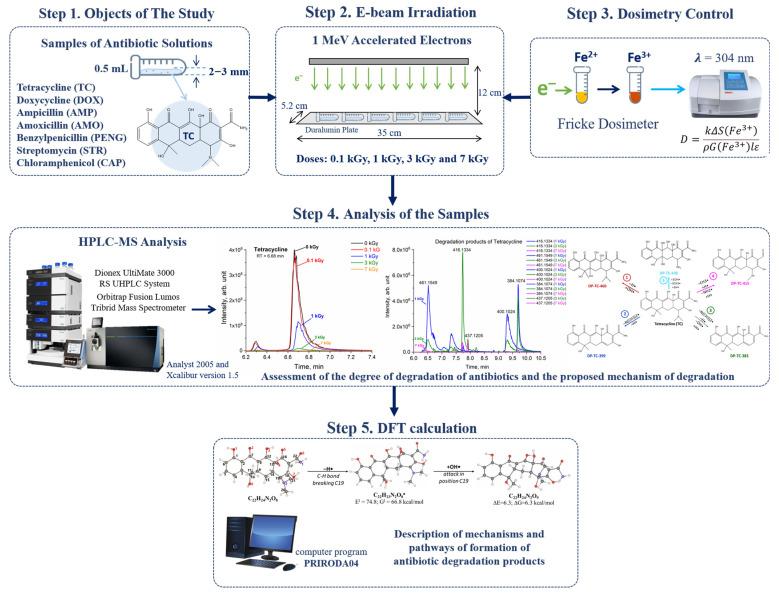
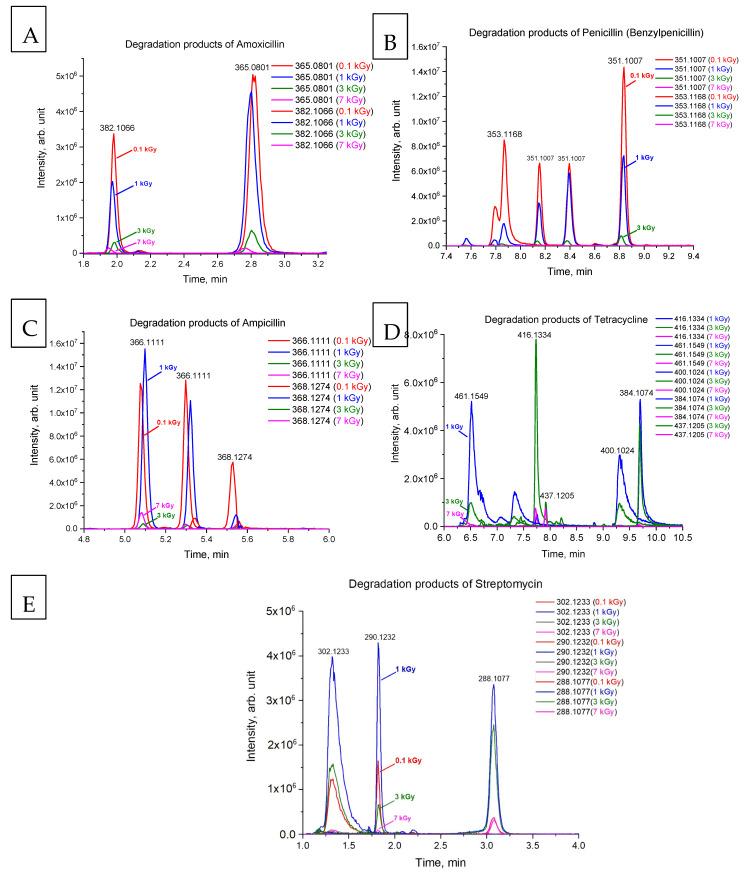
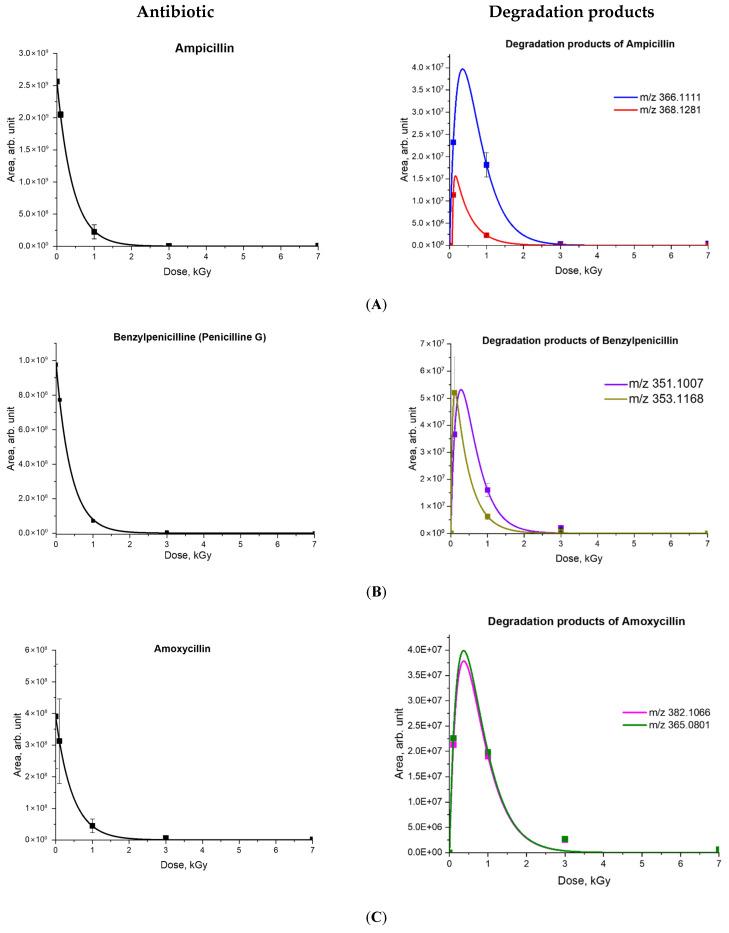
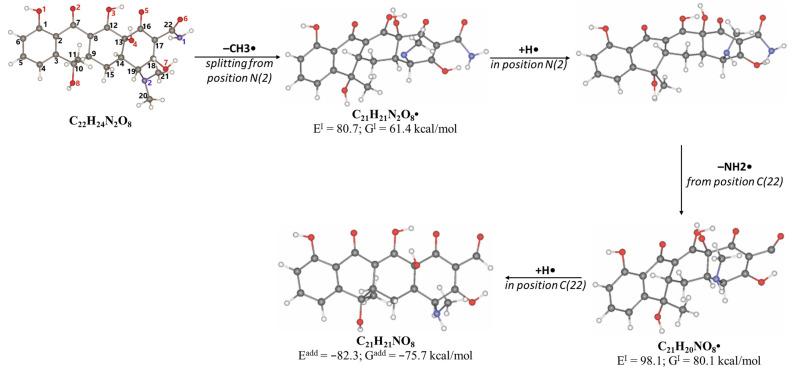
Recently, extensive use of antibiotics has increased the amount of antibiotic residues in the natural water environment. This study presents an experimental investigation into the degradation of penicillins, tetracyclines, streptomycin and chloramphenicol in aqueous solutions when exposed to 1 MeV accelerated electrons with doses of 0.1, 1, 3 and 7 kGy using HPLC-HRMS analysis. It was found that electron beam irradiation with a dose of 7 kGy ensures 98-99% removal of antibiotics, with the initial concentrations ranging from 15 mg/L to 30 mg/L depending on the class of antibiotic. The mathematical model proposed in the study, which estimates the dose dependencies of the relative concentrations of antibiotics and their degradation products in aqueous solutions, reveals different decomposition rates of antibiotics of different classes due to the different radiosensitivities of antibiotics. It has been found that tetracycline has a considerably higher radiation-chemical yield compared to the other antibiotics when exposed to accelerated electrons. Using density functional theory in combination with the mathematical model, we have developed a novel approach to establishing a quantitative irradiation marker of antibiotic degradation as a result of irradiation, which involves finding the degradation product whose formation requires a minimum number of ionization events. Using such an approach, it is possible to establish the extent of antibiotic degradation in water after irradiation with different doses and find the optimal irradiation doses for industrial water treatment.
近年来,抗生素的广泛使用增加了天然水环境中抗生素残留的量。本研究利用高效液相色谱-高分辨质谱分析,对青霉素、四环素、链霉素和氯霉素在水溶液中暴露于剂量为0.1、1、3和7千戈瑞的1兆电子伏特加速电子时的降解情况进行了实验研究。结果发现,7千戈瑞的电子束辐照可确保98%-99%的抗生素被去除,初始浓度根据抗生素类别在15毫克/升至30毫克/升之间。该研究中提出的数学模型可估计水溶液中抗生素及其降解产物相对浓度的剂量依赖性,由于抗生素的放射敏感性不同,该模型揭示了不同类别的抗生素具有不同的分解速率。研究发现,与其他抗生素相比,四环素在暴露于加速电子时具有相当高的辐射化学产率。结合密度泛函理论和数学模型,我们开发了一种新方法来建立抗生素辐照降解定量辐照标志物,即寻找形成所需电离事件最少的降解产物。使用这种方法,可以确定不同剂量辐照后水中抗生素的降解程度,并找到工业水处理的最佳辐照剂量。







 Zotero 插件