
衰弱检测中的生物标志物与临床评估
Biomarkers and Clinical Evaluation in the Detection of Frailty.
作者信息
Devitt Catherine, Patel Devon, Mahboubi Ardakani Rustin, Poovathoor Shaji, Jin Zhaosheng, Moller Daryn
机构信息
Department of Anesthesiology, Stony Brook University Hospital, Health Sciences Center, Level 4, Room 060, Stony Brook, NY 11794, USA.
Renaissance School of Medicine, Stony Brook University, Stony Brook, NY 11794, USA.
出版信息
Int J Mol Sci. 2025 Aug 15;26(16):7888. doi: 10.3390/ijms26167888.
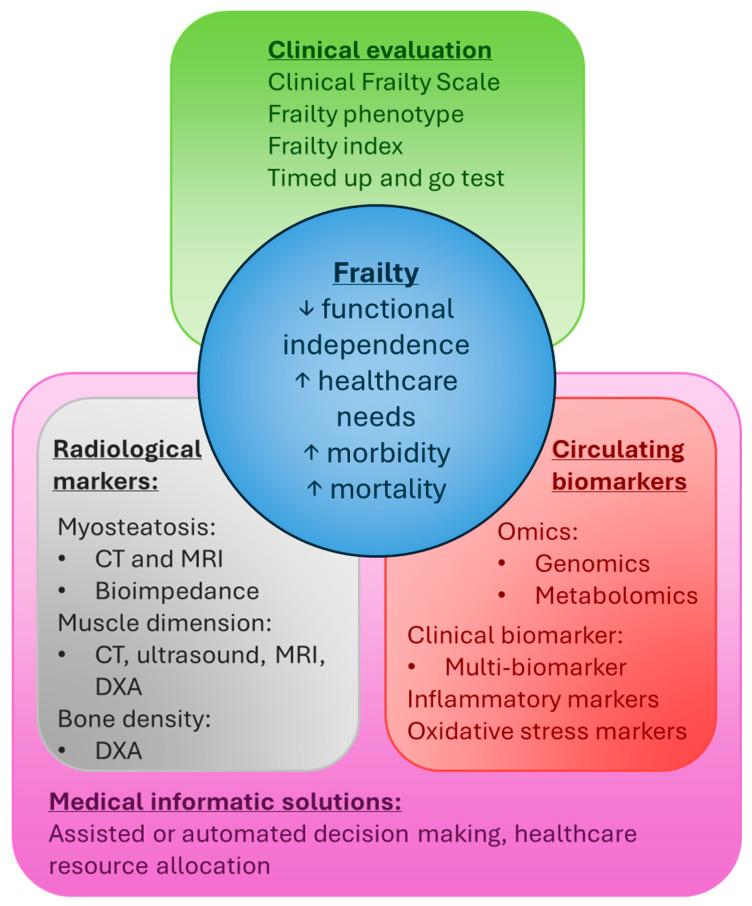
Frailty is a complex biological process that is associated with adverse outcomes in community-dwelling and hospitalized patients. While clinical evaluation is the current gold standard for screening and diagnosis, such an approach is not without its limitations (such as personnel and resource requirement). In this review, we will discuss prospective biomarkers for frailty. Opportunistic and deliberate radiological testing could provide important information that complements clinical frailty evaluation. Novel biochemical panels may yield additional methods for frailty screening in the future. It is known that early frailty intervention could lead to better outcomes for patients. Integration of electronic medical records, laboratory and radiological results, as well as clinical informatics infrastructure could result in augmented clinical decision-making and more optimized healthcare resources utilization.
衰弱是一个复杂的生物学过程,与社区居住和住院患者的不良结局相关。虽然临床评估是目前筛查和诊断的金标准,但这种方法并非没有局限性(如人员和资源需求)。在本综述中,我们将讨论衰弱的前瞻性生物标志物。机会性和针对性的放射学检查可以提供补充临床衰弱评估的重要信息。新型生化指标未来可能会产生用于衰弱筛查的额外方法。众所周知,早期衰弱干预可以为患者带来更好的结局。整合电子病历、实验室和放射学结果以及临床信息学基础设施可以增强临床决策并更优化地利用医疗资源。
 Zotero 插件