
负载氧化锌和生物玻璃的静电纺丝聚乙烯醇/海藻酸钠纳米复合敷料:表征、抗菌活性和细胞相容性
Electrospun Polyvinyl Alcohol/Sodium Alginate Nanocomposite Dressings Loaded with ZnO and Bioglass: Characterization, Antibacterial Activity, and Cytocompatibility.
作者信息
Ortiz J Andrés, Sepúlveda Francesca Antonella, Flores Siomara, Saavedra Marcela, Sáez-Silva Suhelen, Jiménez Thomas, Murgas Paola, Troncoso Scarlett, Sanhueza Camila, Ulloa María T, Porte Torre Lorena, Ahumada Manuel, Corrales Teresa, Palza Humberto, Zapata Paula A
机构信息
Laboratorio Química de Biomateriales, Departamento de Ciencias del Ambiente, Facultad de Química y Biología, Universidad de Santiago de Chile (USACH), Santiago 9170022, Chile.
Departamento de Ingeniería Química, Biotecnología y Materiales, Facultad de Ciencias Físicas y Matemáticas, Universidad de Chile, Avenida Beaucheff 851, Santiago 8370456, Chile.
出版信息
Polymers (Basel). 2025 Aug 9;17(16):2185. doi: 10.3390/polym17162185.
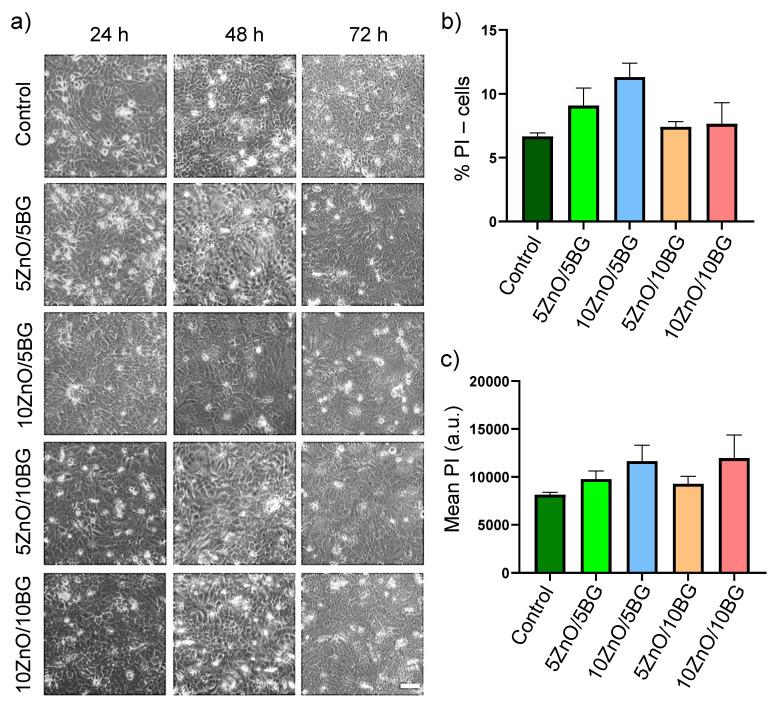
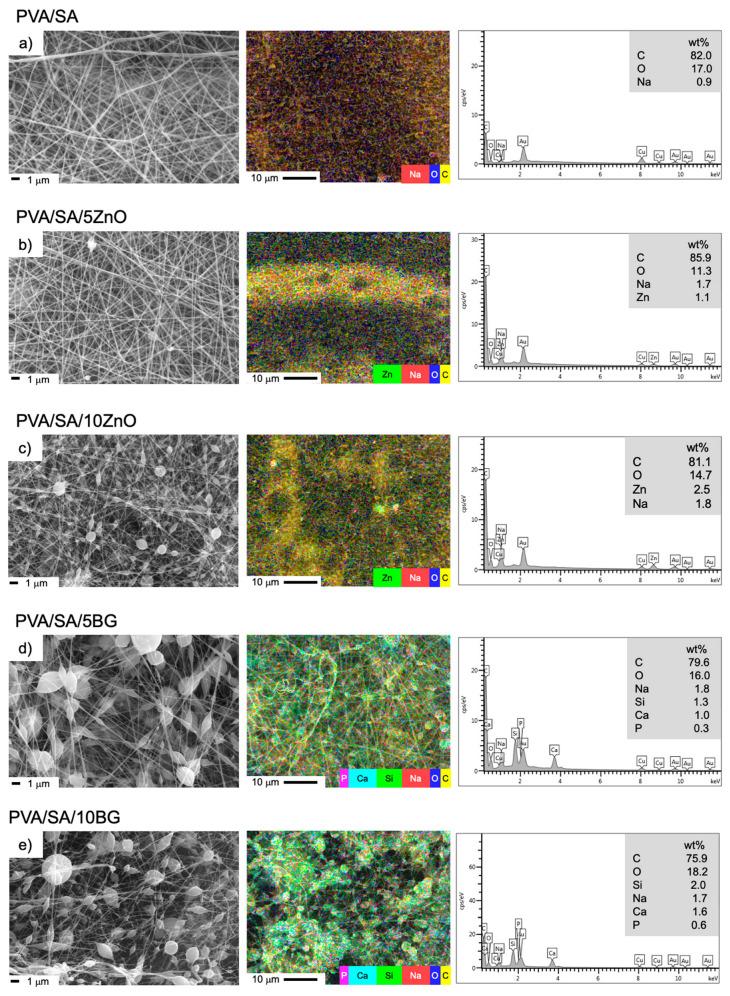
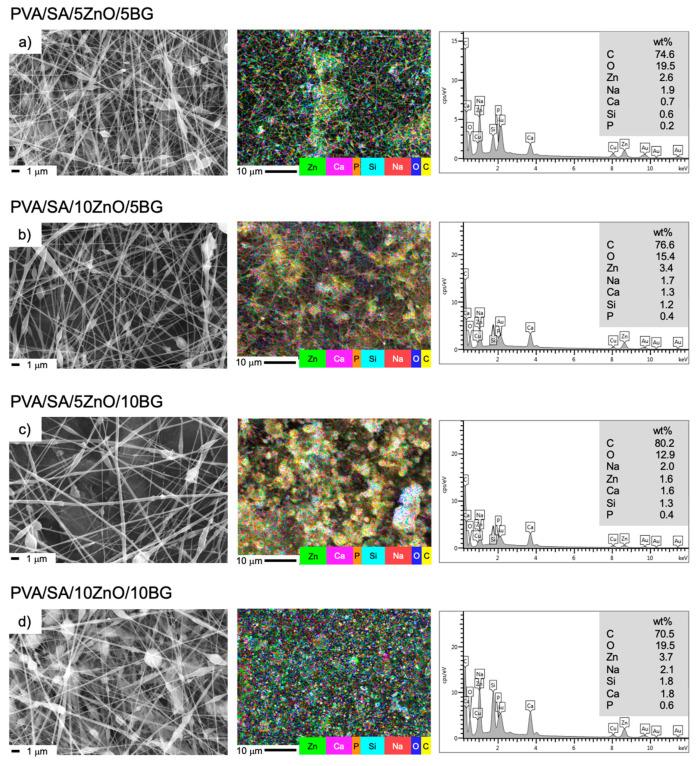
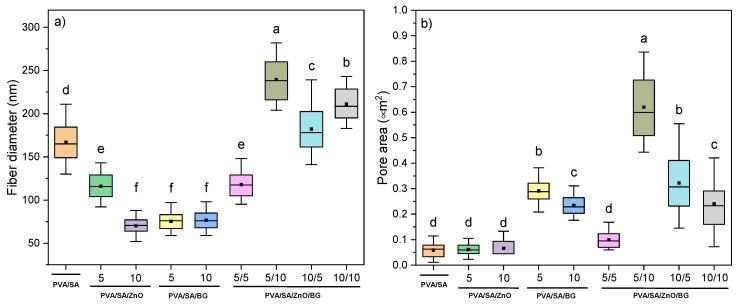
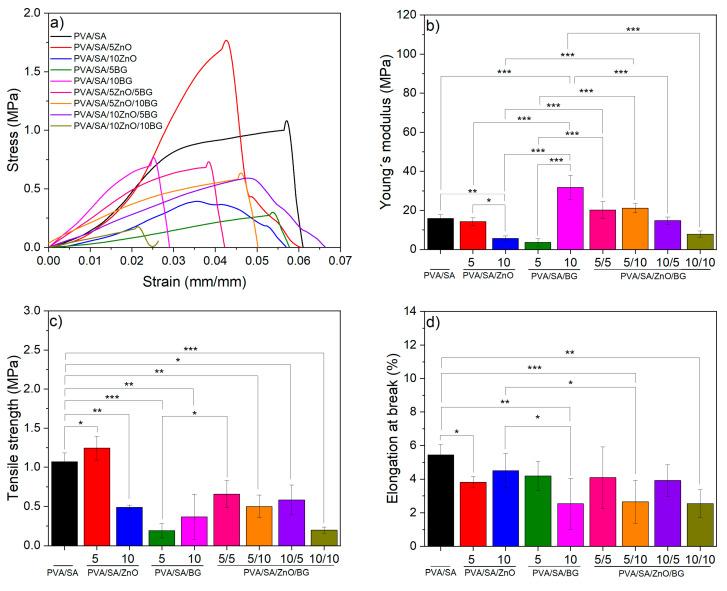
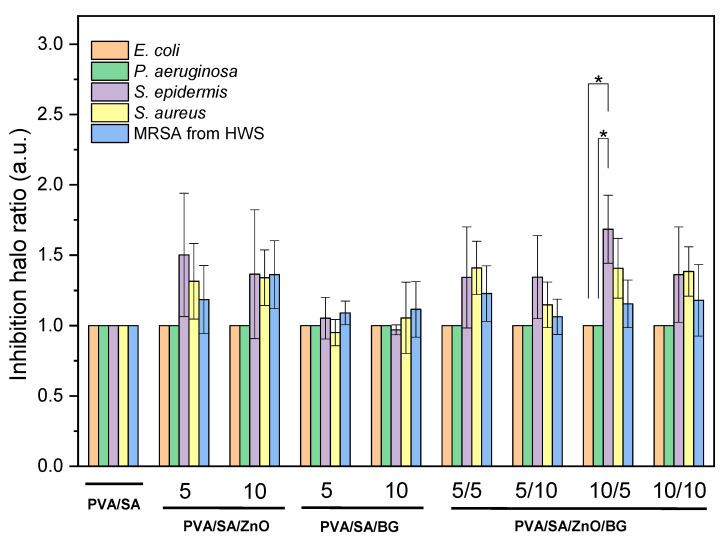
Chronic wounds pose a great challenge due to their slow healing and susceptibility to infections, hence the need for innovative alternatives to conventional antibiotics, as increasing bacterial resistance limits the efficacy of current treatments. This paper addresses the development of novel electrospun membranes based on polyvinyl alcohol (PVA) and sodium alginate, incorporating therapeutic ZnO and bioglass (54SiO:40CaO:6PO) nanoparticles. While nanocomposites presented smaller fiber diameters than pure polymers, ternary nanocomposites displayed higher values, e.g., in porous areas, values were in the ca. 80-240 nm range and 0.06-0.60 μm, respectively. The Young's modulus of the PVA/SA membrane, initially 15.9 ± 2.0 MPa, decreased by 65% with 10 wt.% ZnO NPs, whereas 10 wt.% BG NPs increased it by 100%. The membranes demonstrated efficacy against Gram-positive bacteria, including methicillin-resistant (MRSA) isolated from a human wound secretion, as well as two ATCC strains: and . A cell viability assay conducted with HaCaT cells demonstrated nearly complete survival following 72 h of membrane exposure. Their combined Gram-positive antibacterial activity and cytocompatibility support their potential application as biofunctional dressings for the management of chronic and hospital-acquired topical infections, while also contributing to the global effort to combat antibiotic resistance.
慢性伤口因其愈合缓慢且易感染而构成巨大挑战,因此需要创新的替代传统抗生素的方法,因为细菌耐药性不断增加限制了当前治疗的效果。本文阐述了基于聚乙烯醇(PVA)和海藻酸钠开发新型电纺膜的过程,其中包含治疗性氧化锌(ZnO)和生物玻璃(54SiO:40CaO:6PO)纳米颗粒。虽然纳米复合材料的纤维直径比纯聚合物小,但三元纳米复合材料的值更高,例如在多孔区域,值分别在约80 - 240纳米范围和0.06 - 0.60微米。PVA/SA膜的杨氏模量最初为15.9±2.0兆帕,添加10重量%的ZnO纳米颗粒后降低了65%,而添加10重量%的BG纳米颗粒则使其增加了100%。这些膜对革兰氏阳性菌具有疗效,包括从人类伤口分泌物中分离出的耐甲氧西林金黄色葡萄球菌(MRSA)以及两种美国典型培养物保藏中心(ATCC)菌株: 和 。用HaCaT细胞进行的细胞活力测定表明,在膜暴露72小时后细胞几乎完全存活。它们兼具的革兰氏阳性抗菌活性和细胞相容性支持其作为生物功能敷料用于治疗慢性和医院获得性局部感染的潜在应用,同时也为全球对抗抗生素耐药性的努力做出贡献。

 Zotero 插件