
高海拔牧区系统中的基因组适应、环境挑战与牦牛可持续养殖
Genomic Adaptation, Environmental Challenges, and Sustainable Yak Husbandry in High-Altitude Pastoral Systems.
作者信息
Naz Saima, Chatha Ahmad Manan Mustafa, Ullah Qudrat, Farooq Muhammad, Jamil Tariq, Muner Raja Danish, Kiran Azka
机构信息
Department of Zoology, Government Sadiq College Women University, Bahawalpur 63100, Pakistan.
Department of Entomology, Faculty of Agriculture and Environment, The Islamia University of Bahawalpur, Bahawalpur 63100, Pakistan.
出版信息
Vet Sci. 2025 Jul 29;12(8):714. doi: 10.3390/vetsci12080714.
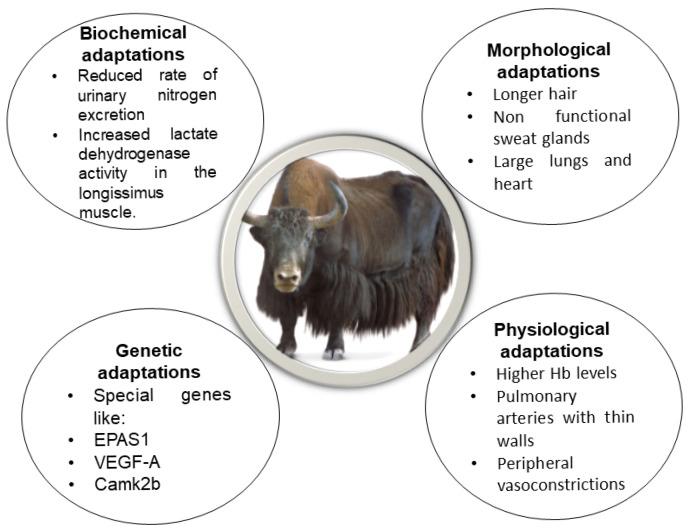
The yak () is a key species in high-altitude rangelands of Asia. Despite their ecological and economic importance, yak production faces persistent challenges, including low milk yields, vulnerability to climate changes, emerging diseases, and a lack of systematic breeding programs. This review presents the genomic, physiological, and environmental dimensions of yak biology and husbandry. Genes such as , which encodes hypoxia-inducible transcription factors, underpin physiological adaptations, including enlarged cardiopulmonary structures, elevated erythrocyte concentrations, and specialized thermoregulatory mechanisms that enable their survival at elevations of 3000 m and above. Copy number variations (CNVs) and single nucleotide polymorphisms (SNPs) present promising markers for improving milk and meat production, disease resistance, and metabolic efficiency. F1 and F2 generations of yak-cattle hybrids show superior growth and milk yields, but reproductive barriers, such as natural mating or artificial insemination, and environmental factors limit the success of these hybrids beyond second generation. Infectious diseases, such as bovine viral diarrhea and antimicrobial-resistant and biofilm-forming and , pose risks to herd health and food safety. Rising ambient temperatures, declining forage biomass, and increased disease prevalence due to climate changes risk yak economic performance and welfare. Addressing these challenges by nutritional, environmental, and genetic interventions will safeguard yak pastoralism. This review describes the genes associated with different yak traits and provides an overview of the genetic adaptations of yaks () to environmental stresses at high altitudes and emphasizes the need for conservation and improvement strategies for sustainable husbandry of these yaks.
牦牛()是亚洲高海拔草原的关键物种。尽管牦牛具有生态和经济重要性,但其生产面临着持续的挑战,包括产奶量低、易受气候变化影响、新出现的疾病以及缺乏系统的育种计划。本综述介绍了牦牛生物学和养殖的基因组、生理和环境层面。诸如编码缺氧诱导转录因子的基因,支撑着生理适应,包括心肺结构增大、红细胞浓度升高以及特殊的体温调节机制,使其能够在海拔3000米及以上的高度生存。拷贝数变异(CNV)和单核苷酸多态性(SNP)为提高奶肉产量、抗病性和代谢效率提供了有前景的标记。牦牛与牛的杂交一代(F1)和二代(F2)表现出优异的生长性能和产奶量,但诸如自然交配或人工授精等繁殖障碍以及环境因素限制了这些杂交种在第二代之后的成功。诸如牛病毒性腹泻以及具有抗微生物耐药性和形成生物膜能力的和等传染病,对畜群健康和食品安全构成风险。环境温度上升、牧草生物量下降以及气候变化导致的疾病流行增加,危及牦牛的经济性能和福利。通过营养、环境和基因干预应对这些挑战将保障牦牛畜牧业的发展。本综述描述了与不同牦牛性状相关的基因,并概述了牦牛()对高海拔环境压力的遗传适应,强调了对这些牦牛进行可持续养殖的保护和改良策略的必要性。
 Zotero 插件