
N-甲基-D-天冬氨酸受体抑制剂预处理的间充质基质细胞衍生的细胞外囊泡通过靶向兴奋性毒性和神经元再生来增强中风后的恢复。
NMDAR inhibitor preconditioned mesenchymal stromal cell-derived extracellular vesicles enhance post-stroke recovery by targeting excitotoxicity and neuronal regeneration.
作者信息
Zhang XiaoLu, Tian HuanNa, Bo HaiMei, Zhong Li
机构信息
College of Life Sciences, Institute of Life Science and Green Development, Hebei University, Baoding, Hebei, China.
Department of Neurosurgery, The First Affiliated Hospital of Baotou Medical College, Baotou, China.
出版信息
Front Cell Neurosci. 2025 Aug 12;19:1608615. doi: 10.3389/fncel.2025.1608615. eCollection 2025.
BACKGROUND
Stroke is a leading global cause of disability and mortality, with ischemic stroke triggering NMDAR overactivation and excitotoxic neuronal injury. Extracellular vesicles (EVs) derived from stem cells under specific microenvironmental conditions show therapeutic potential for stroke recovery.
MATERIALS AND METHODS
Photothrombotic stroke was induced in male ICR mice, followed by intravenous administration of EVs from memantine-preconditioned human umbilical cord mesenchymal stem cells (HUC-MSCs; M-EV). Behavioral outcomes were assessed using modified neurological severity scores (mNSS) and Morris water maze tests. Tissue damage was evaluated via TTC staining, Evans blue extravasation, and immunofluorescence. PCR-array analysis identified neuronal regeneration pathways. In vitro, oxygen-glucose deprivation (OGD)-challenged HT22 hippocampal neurons were co-cultured with M-EV to assess viability, migration, and apoptosis.
RESULTS
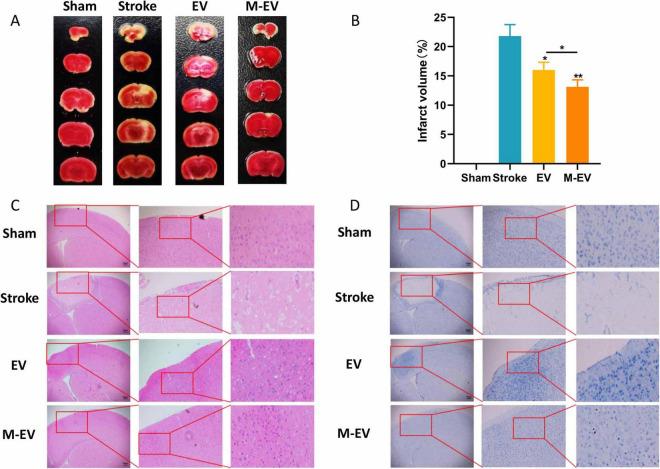
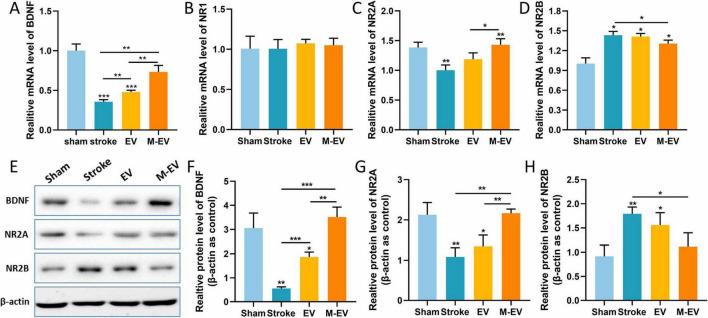
M-EV outperformed conventional EVs in functional recovery, with miR-139-5p and miR-133b identified as key miRNAs enriched in M-EV, mediating neuroprotective effects. M-EV treatment activated neuronal regeneration pathways and reduced infarct volume. In OGD models, M-EV enhanced HT22 neuron viability, promoted migration, and suppressed apoptosis.
CONCLUSION
Memantine-preconditioned EVs (M-EVs) exhibit superior neurorestorative capacity via miRNA-mediated mechanisms, offering a promising translational approach for stroke therapy. The study highlights the potential of microenvironment-tailored EVs in neural repair.
背景
中风是全球导致残疾和死亡的主要原因,缺血性中风会引发NMDAR过度激活和兴奋性毒性神经元损伤。在特定微环境条件下,源自干细胞的细胞外囊泡(EVs)对中风恢复具有治疗潜力。
材料与方法
对雄性ICR小鼠诱导光血栓性中风,随后静脉注射来自美金刚预处理的人脐带间充质干细胞(HUC-MSCs;M-EV)的细胞外囊泡。使用改良神经功能缺损评分(mNSS)和莫里斯水迷宫试验评估行为结果。通过TTC染色、伊文思蓝外渗和免疫荧光评估组织损伤。PCR阵列分析确定神经元再生途径。在体外,将氧糖剥夺(OGD)处理的HT22海马神经元与M-EV共培养,以评估细胞活力、迁移和凋亡情况。
结果
M-EV在功能恢复方面优于传统细胞外囊泡,miR-139-5p和miR-133b被确定为M-EV中富集的关键miRNA,介导神经保护作用。M-EV治疗激活了神经元再生途径并减少了梗死体积。在OGD模型中,M-EV增强了HT22神经元活力,促进了迁移并抑制了凋亡。
结论
美金刚预处理的细胞外囊泡(M-EVs)通过miRNA介导的机制表现出卓越的神经修复能力,为中风治疗提供了一种有前景的转化方法。该研究突出了微环境定制的细胞外囊泡在神经修复中的潜力。



 Zotero 插件