
电子健康运动对小儿化脓性肺部疾病的影响:一项系统评价和荟萃分析。
Effects of eHealth exercise on paediatric suppurative lung diseases: a systematic review and meta-analysis.
作者信息
Mavronasou Aspasia, Kortianou Eleni A, Sapouna Vaia, Douros Konstantinos, Spinou Arietta
机构信息
Clinical Exercise Physiology and Rehabilitation Research Laboratory, Physiotherapy Department, School of Health Sciences, University of Thessaly, Lamia, Greece.
Pediatric Allergy and Pulmonology Unit, 3rd Department of Pediatrics, National and Kapodistrian University of Athens, Athens, Greece.
出版信息
ERJ Open Res. 2025 Aug 26;11(4). doi: 10.1183/23120541.00977-2024. eCollection 2025 Jul.
BACKGROUND
Utilising information and communication technologies through eHealth in exercise programmes could support their delivery and improve clinical outcomes in children and adolescents with chronic suppurative lung diseases (CSLDs). This study aimed to systematically investigate the effects of eHealth exercise programmes on clinical outcomes for this population.
METHODS
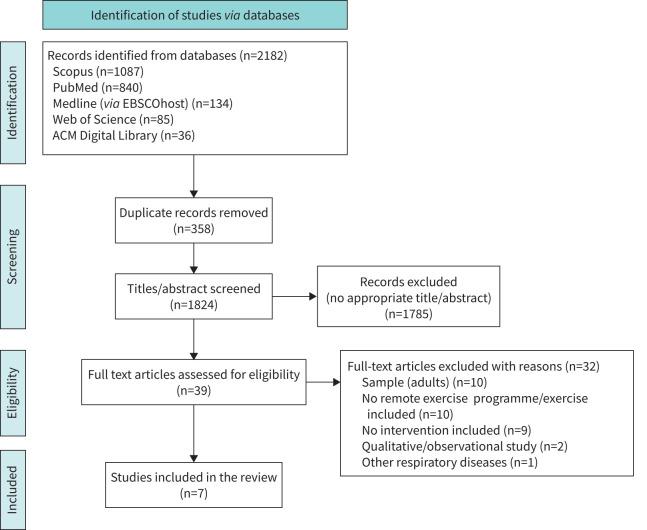
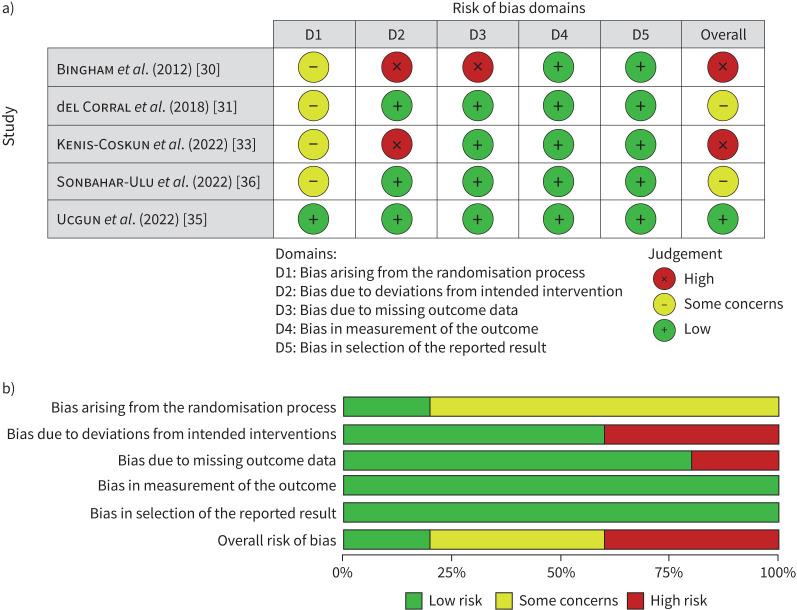
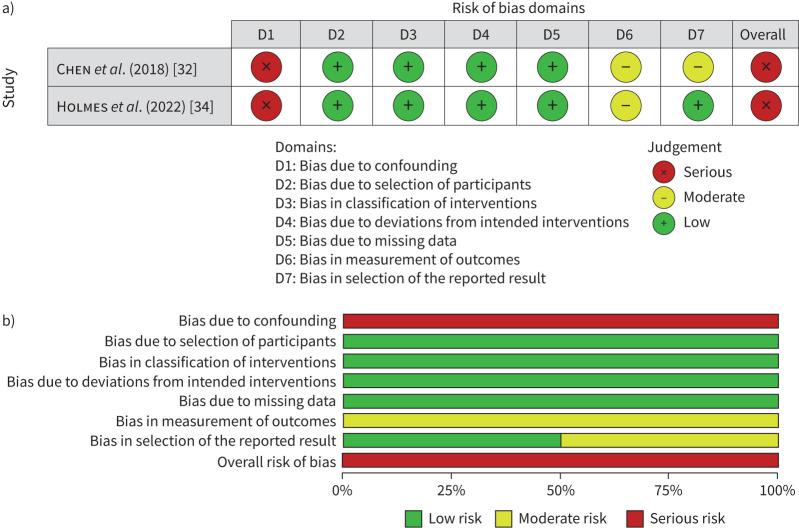
Five databases were searched from inception to 12 April 2024. Two researchers independently screened the retrieved results and rated the methodological quality of the included studies using the revised Cochrane Risk of Bias (RoB2) tool for randomised trials and the Risk Of Bias In Non-randomised Studies - of Interventions (ROBINS-I) tool. The quality of evidence was graded using the GRADE approach. A narrative synthesis of findings was performed, and a meta-analysis was conducted to evaluate the effects of eHealth exercise programmes on clinical outcomes that had data from at least two studies.
RESULTS
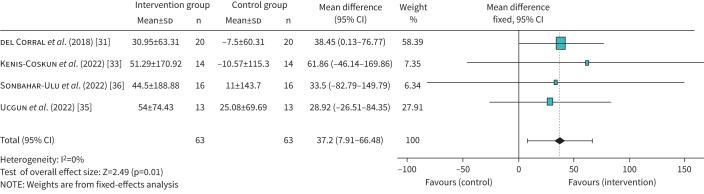
Seven studies used eHealth exercise programmes through active video games (n=3), videoconferencing (n=3) and a digital spirometer (n=1) lasting from 3 to 12 weeks. Five studies had participants with cystic fibrosis (CF). Results showed a greater improvement in the 6-min walk test following the intervention compared to the control group (pooled estimate mean difference 37.2 m, 95% CI 7.91-66.48 m; p=0.013). Pulmonary function, exercise capacity, balance, peripheral and respiratory muscle strength, and health-related quality of life were also improved. Still, most studies involved a considerable risk of bias.
CONCLUSIONS
eHealth exercise programmes can improve clinical outcomes in children and adolescents with CF. Further research is needed for other paediatric populations with CSLDs and also for comparisons with conventional exercise programmes.
背景
通过电子健康技术在运动计划中利用信息通信技术,可以支持慢性化脓性肺病(CSLD)儿童和青少年的运动计划实施,并改善临床结局。本研究旨在系统调查电子健康运动计划对该人群临床结局的影响。
方法
检索了从建库至2024年4月12日的五个数据库。两名研究人员独立筛选检索结果,并使用修订后的Cochrane偏倚风险(RoB2)工具对随机试验进行方法学质量评估,使用非随机干预性研究中的偏倚风险(ROBINS-I)工具对纳入研究进行评估。采用GRADE方法对证据质量进行分级。对研究结果进行叙述性综合分析,并进行荟萃分析,以评估电子健康运动计划对至少有两项研究数据的临床结局的影响。
结果
七项研究通过主动视频游戏(n = 3)、视频会议(n = 3)和数字肺活量计(n = 1)使用电子健康运动计划,持续时间为3至12周。五项研究的参与者患有囊性纤维化(CF)。结果显示,与对照组相比,干预后6分钟步行试验有更大改善(合并估计平均差37.2米,95%CI 7.91 - 66.48米;p = 0.013)。肺功能、运动能力、平衡能力、外周和呼吸肌力量以及健康相关生活质量也得到改善。然而,大多数研究存在相当大的偏倚风险。
结论
电子健康运动计划可改善CF儿童和青少年的临床结局。对于其他患有CSLD的儿科人群以及与传统运动计划的比较,还需要进一步研究。
 Zotero 插件