
轻度膝关节骨关节炎患者的三维步态生物力学
Three-Dimensional gait biomechanics in patients with mild knee osteoarthritis.
作者信息
Pan Jing, Xie Zhonghao, Shen Huifang, Luan Jun, Zhang Xiaohui, Liao Bagen
机构信息
Department of Sports Medicine, Guangzhou Sport University, Guangzhou, 510000, China.
School of Sports and Health, Guangzhou Sport University, Guangzhou, 510000, China.
出版信息
Sci Rep. 2025 Sep 1;15(1):32061. doi: 10.1038/s41598-025-17398-z.
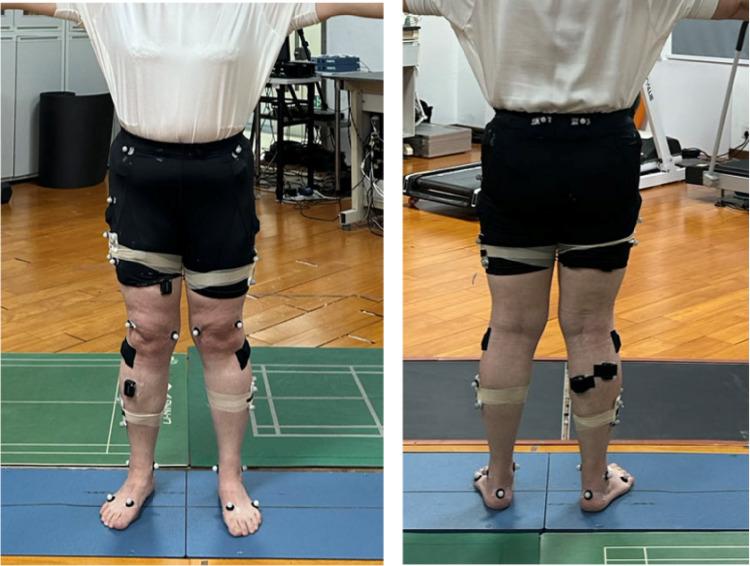
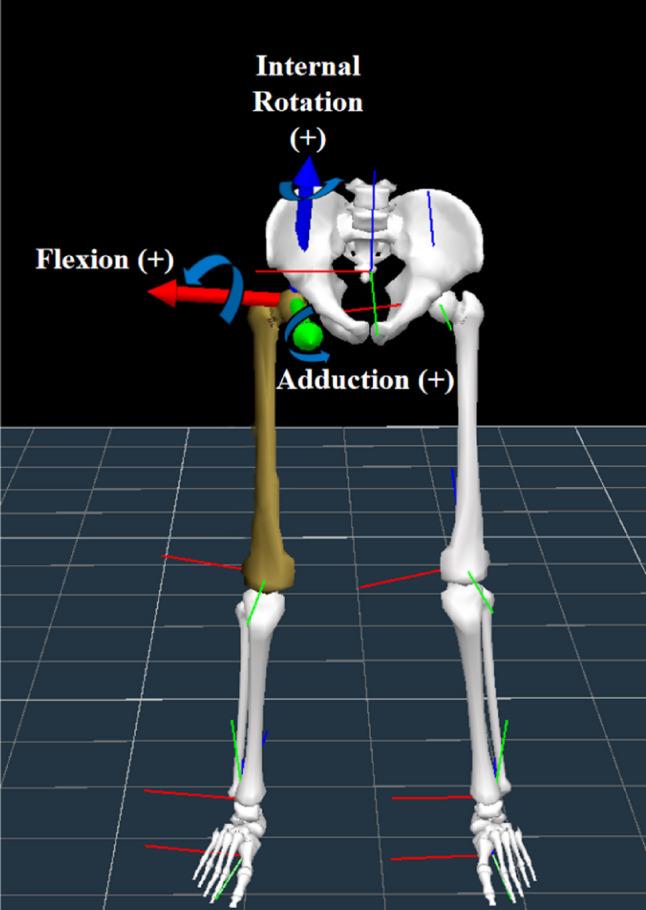
Knee osteoarthritis (KOA) is a common degenerative joint disease in older adults that causes pain and functional impairment. Gait biomechanics in early-stage KOA (Kellgren-Lawrence grades I-II) are understudied. This study aimed to examine differences in three-dimensional gait biomechanics and muscle activation in mild KOA to inform early detection and intervention. Twenty-four patients (aged 55-70 years) with unilateral mild KOA and twelve age- and sex-matched healthy older adults were recruited for evaluation. Participants were instructed to walk at a self-selected, comfortable speed along a 6-meter walkway, and at least five valid gait trials were collected for each individual. Three-dimensional gait analysis was conducted using a motion capture system synchronized with force plates to measure spatiotemporal parameters (gait cycle, step width, walking speed), joint kinematics (ROM, peak angular velocity), and joint kinetics (peak joint moments). Muscle activation levels (normalized to %MVIC) and muscle onset times were recorded using a 16-channel wireless surface electromyography system. Between-group differences were assessed using independent-samples t-tests (p < 0.05), with effect sizes calculated using Cohen's d. Mild KOA patients had a significantly longer gait cycle (1.12 ± 0.13 vs. 1.10 ± 0.07 s, p = 0.04, d = 0.18) and a wider step width (0.09 ± 0.03 vs. 0.07 ± 0.04 m, p < 0.01, d = 0.60) than healthy controls, while walking speed remained similar between groups. They exhibited reduced knee and ankle range of motion and lower peak angular velocities at the hip and knee joints compared to controls. For example, sagittal-plane knee flexion-extension ROM was 61.5°±5.1 vs. 65.1°±2.8 (KOA vs. control, p < 0.01, d = 0.85), and ankle plantarflexion-dorsiflexion ROM was 53.4°±8.1 vs. 59.1°±6.5 (p < 0.01, d = 0.77). Peak knee angular velocity was also lower in KOA patients (372 ± 58 vs. 399 ± 72 °/s, p = 0.01, d = 0.41). KOA patients also generated lower peak flexion and extension moments at the hip and knee joints compared to controls, along with a higher external rotation moment at the affected knee. Muscle activation patterns differed between the groups. The KOA group showed reduced activation of the gluteus medius and medial gastrocnemius (GMed: 27% ± 23 vs. 38% ± 19; MG: 41% ± 24 vs. 62% ± 16; both p < 0.01) but higher activation of the biceps femoris and tibialis anterior. Furthermore, the gluteus maximus on the affected side activated later in the gait cycle, whereas the semimembranosus and the contralateral gluteus maximus activated earlier than in controls. Even at a mild stage, KOA is associated with distinct gait and neuromuscular alterations. These findings underscore the importance of early gait assessment and targeted interventions to improve dynamic stability and potentially slow the progression of osteoarthritis.
膝骨关节炎(KOA)是一种常见于老年人的退行性关节疾病,会导致疼痛和功能障碍。早期KOA(凯尔格伦-劳伦斯分级I-II级)的步态生物力学研究较少。本研究旨在探讨轻度KOA患者三维步态生物力学和肌肉激活的差异,为早期检测和干预提供依据。招募了24例单侧轻度KOA患者(年龄55-70岁)和12例年龄及性别匹配的健康老年人进行评估。参与者被要求以自我选择的舒适速度沿6米长的步道行走,为每个个体至少收集5次有效的步态试验数据。使用与测力板同步的运动捕捉系统进行三维步态分析,以测量时空参数(步态周期、步宽、步行速度)、关节运动学(活动范围、峰值角速度)和关节动力学(峰值关节力矩)。使用16通道无线表面肌电图系统记录肌肉激活水平(标准化为%MVIC)和肌肉起始时间。采用独立样本t检验评估组间差异(p < 0.05),效应量使用科恩d值计算。与健康对照组相比,轻度KOA患者的步态周期显著更长(1.12±0.13秒对1.10±0.07秒,p = 0.04,d = 0.18),步宽更宽(0.09±0.03米对0.07±0.04米,p < 0.01,d = 0.60),而两组间步行速度相似。与对照组相比,他们的膝关节和踝关节活动范围减小,髋关节和膝关节的峰值角速度降低。例如,矢状面膝关节屈伸活动范围为61.5°±5.1对65.1°±2.8(KOA对对照组,p < 0.01,d = 0.85),踝关节跖屈-背屈活动范围为53.4°±8.1对59.1°±6.5(p < 0.01,d = 0.77)。KOA患者的膝关节峰值角速度也较低(372±58对
399±72°/秒,p = 0.01,d = 0.41)。与对照组相比,KOA患者在髋关节和膝关节处产生的峰值屈伸力矩也较低,而患侧膝关节的外旋力矩较高。两组间肌肉激活模式不同。KOA组臀中肌和腓肠肌内侧头的激活减少(臀中肌:27%±23对38%±19;腓肠肌内侧头:41%±24对62%±16;均p < 0.01),但股二头肌和胫骨前肌的激活增加。此外,患侧臀大肌在步态周期中激活较晚,而半膜肌和对侧臀大肌的激活比对照组更早。即使在轻度阶段,KOA也与明显的步态和神经肌肉改变有关。这些发现强调了早期步态评估和针对性干预对于改善动态稳定性以及可能减缓骨关节炎进展的重要性。


 Zotero 插件