
网络药理学、实验验证探索卡卡利德改善内皮细胞功能障碍和炎症反应。
Network Pharmacology, Experimental Validation Explored Kakkalide to Ameliorate Endothelial Cell Dysfunction and Inflammatory Response.
作者信息
Li Jiafu, Yang Shuai, Pan Jiahui, Qin Yuting, Ye Huiyun, Liao Shuanglin, Shao Zixuan, Rong Guangli, Xia Zhengyuan, Sun Jianbo, Shao Yiming
机构信息
Dongguan Key Laboratory of Sepsis Translational Medicine, The Intensive Care Unit, The First Dongguan Affiliated Hospital, Guangdong Medical University, Dongguan, Guangdong, People's Republic of China.
The First Dongguan Affiliated Hospital, Guangdong Medical University, Dongguan, Guangdong, People's Republic of China.
出版信息
J Inflamm Res. 2025 Aug 28;18:11737-11753. doi: 10.2147/JIR.S519660. eCollection 2025.
BACKGROUND
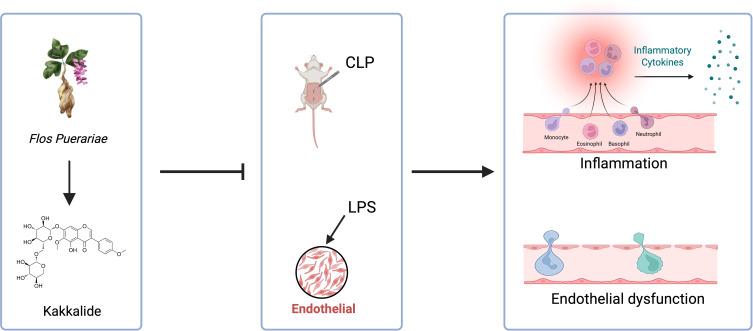
Sepsis continues to represent a significant challenge due to its detrimental effects and high mortality rate. The protection of endothelial function and the attenuation of the excessive inflammatory response are pivotal in the reduction of mortality risk. is the flower of var. (Willd). was recorded as ameliorating loathing of cold with high fever and clearing heat and purging the lung from "Minnan Materia Medica". Recent findings showed its potential efficacy of inflammatory diseases. However, the precise underlying mechanisms are produced remain to be elucidated.
PURPOSE
This study aimed to identify the key active compound in for sepsis treatment and its pharmacological targets.
METHODS
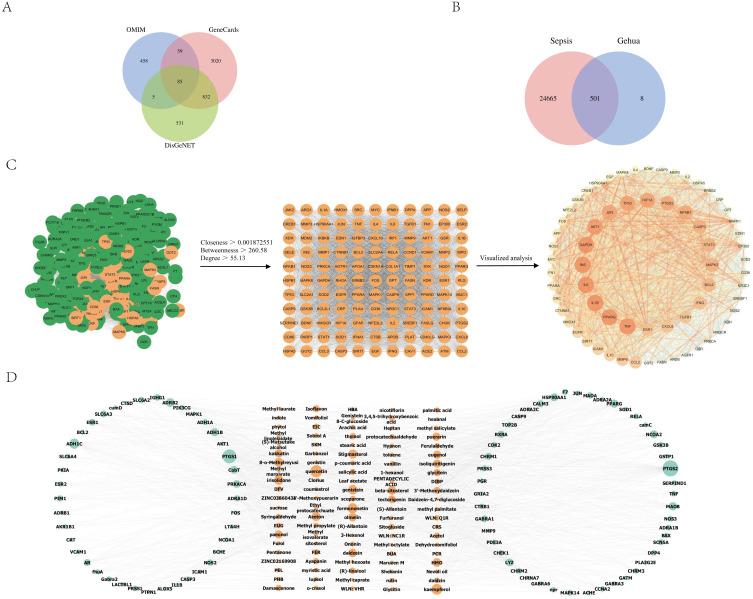
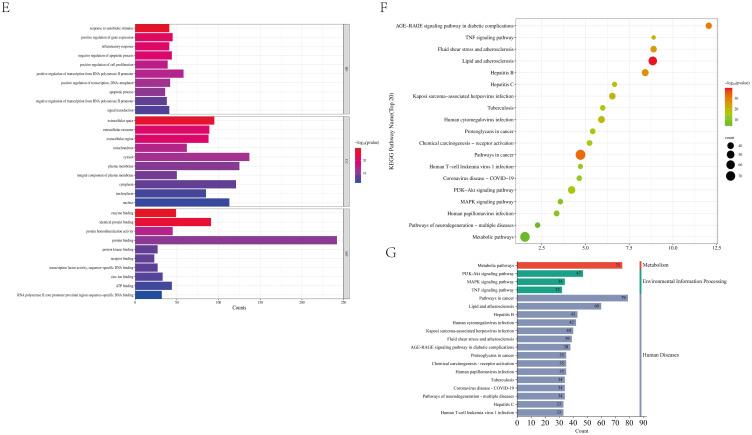
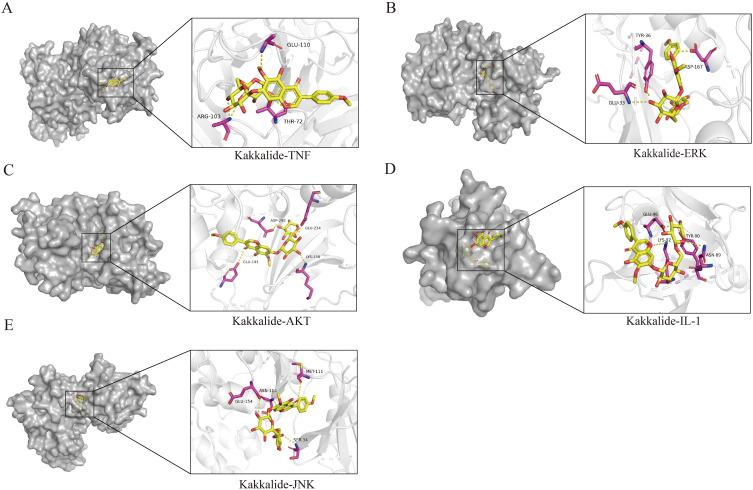
Network pharmacology analysis identified potential targets of against sepsis. Cecal ligation and puncture (CLP) mouse models assessed survival, inflammation, and tissue damage via ELISA and H&E staining. Transwell assays, immunofluorescence (IF), and flow cytometry evaluated human umbilical vein endothelial cell (HUVEC) protection. Molecular docking and Western blot (WB) confirmed key signaling pathway targets.
RESULTS
At a dose of 20 mg/kg, the -derived compound Kakkalide notably reduced mortality and serum inflammatory factor levels while protecting lung and renal tissues. In vitro experiments further showed that treatment with 5 μM Kakkalide in HUVEC decreased inflammatory factors, reactive oxygen species, and apoptosis, while promoting cell migration and proliferation. The aforementioned effects were associated with alterations in the phosphorylation levels of Tumor Necrosis Factor (TNF), extracellular regulated protein kinases (ERK), and protein kinase B (AKT).
CONCLUSION
Our study demonstrated that Kakkalide as the primary ingredient of enhanced the survival of CLP mice and protected lipopolysaccharides (LPS)-stimulated HUVEC function. This study offers a novel perspective on the effects and molecular mechanisms of Kakkalide in sepsis.
背景
由于脓毒症具有有害影响且死亡率高,它仍然是一个重大挑战。保护内皮功能和减轻过度的炎症反应对于降低死亡风险至关重要。[此处原文缺失植物名称]是[此处原文缺失植物变种名称](Willd.)的花。据《闽南本草》记载,**[此处原文缺失植物名称]**可缓解恶寒高热,清热泻肺。最近的研究发现其对炎症性疾病具有潜在疗效。然而,其确切的潜在作用机制仍有待阐明。
目的
本研究旨在确定**[此处原文缺失植物名称]**用于治疗脓毒症的关键活性化合物及其药理靶点。
方法
网络药理学分析确定了**[此处原文缺失植物名称]**抗脓毒症的潜在靶点。通过盲肠结扎和穿刺(CLP)小鼠模型,采用酶联免疫吸附测定(ELISA)和苏木精 - 伊红(H&E)染色评估生存率、炎症和组织损伤。Transwell实验、免疫荧光(IF)和流式细胞术评估人脐静脉内皮细胞(HUVEC)的保护情况。分子对接和蛋白质免疫印迹(WB)证实关键信号通路靶点。
结果
在剂量为20 mg/kg时,源自**[此处原文缺失植物名称]**的化合物刺槐苷显著降低死亡率和血清炎症因子水平,同时保护肺和肾组织。体外实验进一步表明,用5 μM刺槐苷处理HUVEC可降低炎症因子、活性氧和细胞凋亡,同时促进细胞迁移和增殖。上述作用与肿瘤坏死因子(TNF)、细胞外调节蛋白激酶(ERK)和蛋白激酶B(AKT)的磷酸化水平改变有关。
结论
我们的研究表明,刺槐苷作为**[此处原文缺失植物名称]**的主要成分,可提高CLP小鼠的生存率,并保护脂多糖(LPS)刺激的HUVEC功能。本研究为刺槐苷在脓毒症中的作用及分子机制提供了新的视角。



 Zotero 插件