
腹膜透析相关性纤维化:新出现的机制与治疗机会
Peritoneal Dialysis -Associated Fibrosis: Emerging Mechanisms and Therapeutic Opportunities.
作者信息
Prasad Narayan, Chaturvedi Saurabh, Singh Harshit, Udumula Mary Priyanka, Rawat Atul, Jeyakumar Meyyappan, Jaiswal Akhilesh, Kumar Sachin, Agarwal Vikas
机构信息
Department of Nephrology, Sanjay Gandhi Post Graduate Institute of Medical Sciences, Lucknow, Uttar Pradesh, India.
Department of Medical Laboratory Technology and Sciences, School of Allied Health Sciences, Delhi Pharmaceutical Sciences and Research University, New Delhi, India.
出版信息
Front Pharmacol. 2025 Aug 22;16:1635624. doi: 10.3389/fphar.2025.1635624. eCollection 2025.
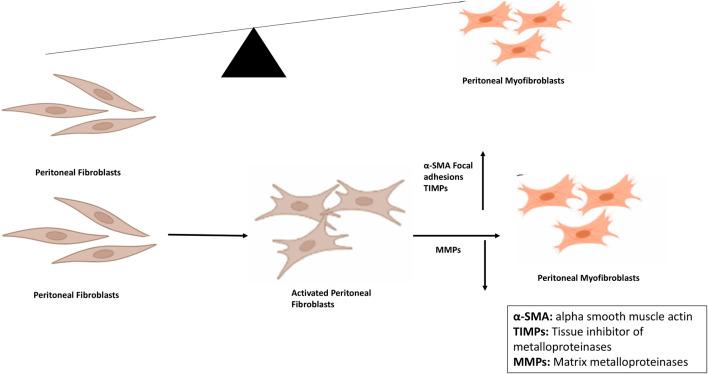
Peritoneal Dialysis (PD) requires a healthy and functional peritoneal membrane for adequate ultrafiltration and fluid balance, making it a vital treatment for patients with end-stage renal disease (ESRD). The spectrum of PD-associated peritoneal fibrosis encompasses a diverse range of collective mechanisms: peritoneal fibrogenesis, epithelial to mesenchymal transition (EMT), peritonitis, angiogenesis, sub-mesothelial immune cells infiltration, and collagen deposition in the sub-mesothelial compact zone of the membrane that accompany deteriorating membrane function. In this narrative review, we summarize the repertoire of current knowledge about the structure, function, and pathophysiology of the peritoneal membrane, focusing on biomolecular mechanisms and signalling pathways that potentiate the development and progression of peritoneal fibrosis. The article suggests future directions that could enhance our comprehension of the relationship between peritoneal membrane dysfunction and its fibrosis to elucidate the promising targets for therapeutic interventions. A thorough understanding of early events in pathophysiology closely associated with the inflammatory events in peritoneal fibrosis is the logical starting point for identifying new targets rather than concentrating on more downstream effects. Biomarkers are essential for monitoring the progression of peritoneal fibrosis and evaluating the effectiveness of therapeutic interventions. Biomarkers are evolving in concert with new targets and novel agents, and biomarker outcomes offer a means of monitoring the peritoneal membrane's health. Recent approaches to reducing the etiologies of peritoneal membrane dysfunction, the impact of fibroblast switch, and peritoneal membrane events perturbing fibroblast function are explored and suggest using unique, effective therapeutic strategies to target peritoneal fibrosis and associated complications.
腹膜透析(PD)需要健康且功能正常的腹膜来实现充分的超滤和液体平衡,这使其成为终末期肾病(ESRD)患者的重要治疗方法。与PD相关的腹膜纤维化涉及多种共同机制:腹膜纤维生成、上皮-间充质转化(EMT)、腹膜炎、血管生成、间皮下免疫细胞浸润以及随着膜功能恶化而在膜的间皮下致密区出现的胶原沉积。在这篇叙述性综述中,我们总结了目前关于腹膜结构、功能和病理生理学的知识,重点关注促进腹膜纤维化发展和进展的生物分子机制和信号通路。本文提出了未来的研究方向,这可能会增强我们对腹膜功能障碍与其纤维化之间关系的理解,以阐明有前景的治疗干预靶点。深入了解与腹膜纤维化炎症事件密切相关的病理生理学早期事件,是识别新靶点的合理起点,而不是专注于更多的下游效应。生物标志物对于监测腹膜纤维化的进展和评估治疗干预的有效性至关重要。生物标志物正随着新靶点和新型药物的出现而不断发展,生物标志物的结果提供了一种监测腹膜健康状况的方法。探讨了近期减少腹膜功能障碍病因、成纤维细胞转变的影响以及扰乱成纤维细胞功能的腹膜事件的方法,并建议采用独特、有效的治疗策略来针对腹膜纤维化及相关并发症。



 Zotero 插件