
EpCAM靶向核医学探针的新兴应用:当前研究与未来展望
Emerging Applications of EpCAM-Targeted Nuclear Medicine Probes: Current Research and Future Perspectives.
作者信息
Huang Zhidie, Li Yiwen, Li Min, Liu Xiang, Duan Xiaoyan, Li Jianbo
机构信息
Inner Mongolia Medical University, Hohhot, People's Republic of China.
Department of Nuclear Medicine, The Affiliated Hospital of Inner Mongolia Medical University, Hohhot, People's Republic of China.
出版信息
Int J Nanomedicine. 2025 Sep 4;20:10815-10830. doi: 10.2147/IJN.S539010. eCollection 2025.
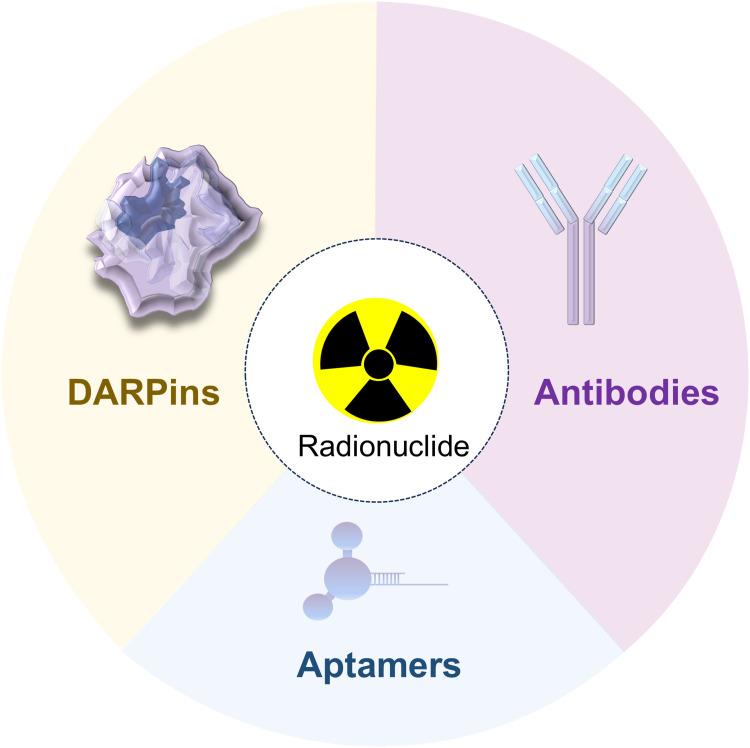
Molecular imaging in nuclear medicine has been employed extensively in recent years for tumor-targeted diagnosis and treatment that is attributed to its non-invasive property, which enables visualized functional localization. This functionality relies on the development of radionuclide molecular probes designed with the objective of identifying specific targets on the surface of tumors. Epithelial cell adhesion molecules (EpCAM) are considered to be a promising target as an antigenic marker for its widely present and integral to the processes associated with tumor occurrence and progression. This paper provides a comprehensive review of recent advancements in EpCAM-targeted radionuclide probes, focusing specifically on a range of primary ligands, including DARPins (Designed Ankyrin Repeat Proteins), antibodies, and aptamers, and evaluates the benefits and challenges, potential future directions of these radioactive probes.
近年来,核医学中的分子成像因其无创性而被广泛应用于肿瘤靶向诊断和治疗,这种无创性能够实现可视化的功能定位。这种功能依赖于放射性核素分子探针的开发,其目的是识别肿瘤表面的特定靶点。上皮细胞粘附分子(EpCAM)因其广泛存在且与肿瘤发生和进展相关过程不可或缺,被认为是一种很有前景的抗原标志物靶点。本文全面综述了EpCAM靶向放射性核素探针的最新进展,特别关注一系列主要配体,包括设计锚蛋白重复蛋白(DARPins)、抗体和适体,并评估了这些放射性探针的优势与挑战以及潜在的未来发展方向。


 Zotero 插件