
探索mTOR信号通路在衰老及与年龄相关疾病中的作用。
Exploring the role of mTOR pathway in aging and age-related disorders.
作者信息
Raghuvanshi Komal, Raghuvanshi Disha, Kumar Dinesh, Nepovimova Eugenie, Valko Marian, Kuca Kamil, Verma Rachna
机构信息
School of Biological and Environmental Sciences, Shoolini University of Biotechnology and Management Sciences, Solan 173229, Himachal Pradesh, India.
School of Bioengineering and Food Technology, Shoolini University of Biotechnology and Management Sciences, Solan 173229, Himachal Pradesh, India.
出版信息
EXCLI J. 2025 Aug 4;24:992-1015. doi: 10.17179/excli2025-8384. eCollection 2025.
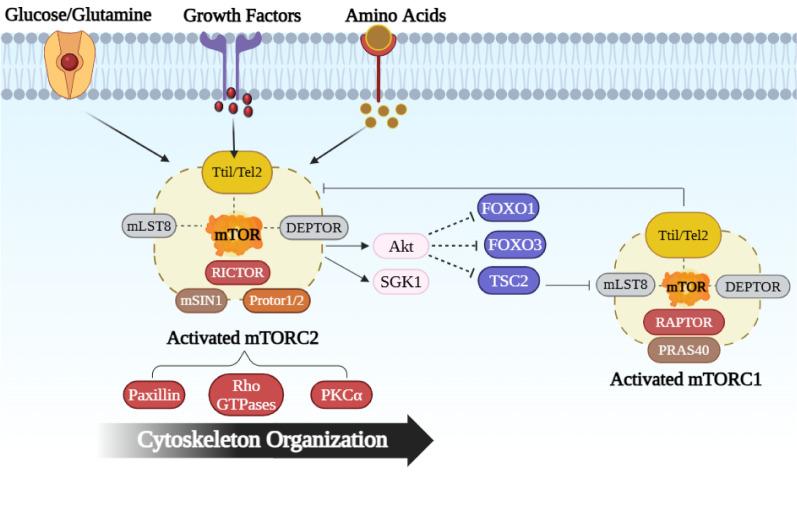
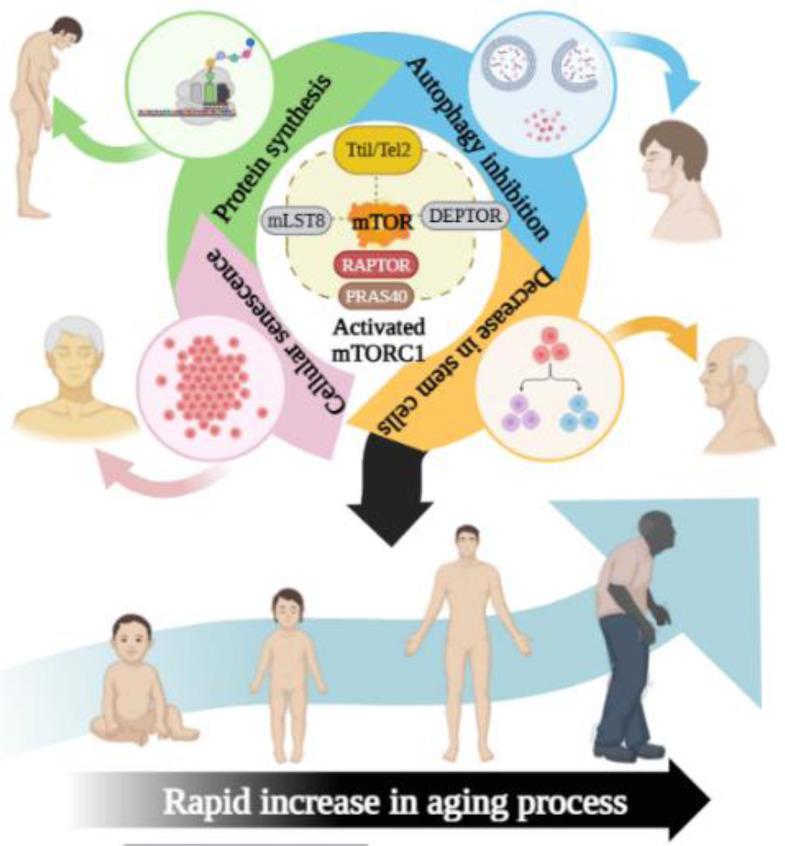
Aging is a highly intricate biochemical process. There is strong evidence suggesting that organismal aging, age-dependent diseases, and cellular senescence are related to the mammalian target of rapamycin (mTOR) signaling pathway. The signaling pathway of mTOR has become a prominent regulatory hub, managing crucial cellular activities that significantly affect lifespan and longevity. The mTOR is involved in controlling cell growth and metabolism in response to both internal and external energy signals as well as growth factors. The interaction between mTOR and cellular homeostasis is crucial in the aging process. This extensive review summarizes the most recent findings on mTOR inhibitors in the context of aging, highlighting their complex interactions with cellular systems, effect on longevity, and potential as therapeutic approaches for age-related diseases. Rapamycin and rapalogs (analogs of rapamycin), which have been proven to be effective mTOR inhibitors, have the ability to reduce the aging process in several model species while also enhancing metabolic health and stress responses. Despite cellular factors, mTOR inhibitors have revealed a potential path for therapeutics in age-related illnesses. These results suggest mTOR inhibitors as potential therapies to address the complex aspects of age-related diseases. However, obstacles stand in the way of clinical translation. Further research is required to improve dosing protocols, reduce potential side effects, and target mTOR inhibitors precisely at specific tissues. In summary, the mTOR signaling pathway is an important node in the intricate web of aging and its associated disorders.
衰老 是一个高度复杂的生化过程。有强有力的证据表明,机体衰老、年龄相关疾病和细胞衰老与雷帕霉素靶蛋白(mTOR)信号通路有关。mTOR信号通路已成为一个重要的调控枢纽,管理着对寿命和长寿有显著影响的关键细胞活动。mTOR参与响应内部和外部能量信号以及生长因子来控制细胞生长和代谢。mTOR与细胞稳态之间的相互作用在衰老过程中至关重要。这篇全面的综述总结了在衰老背景下关于mTOR抑制剂的最新研究发现,突出了它们与细胞系统的复杂相互作用、对寿命的影响以及作为年龄相关疾病治疗方法的潜力。雷帕霉素及其类似物(雷帕霉素的类似物)已被证明是有效的mTOR抑制剂,它们能够在几种模式生物中减缓衰老过程,同时还能改善代谢健康和应激反应。尽管存在细胞因素,mTOR抑制剂为年龄相关疾病的治疗揭示了一条潜在途径。这些结果表明mTOR抑制剂有望成为解决年龄相关疾病复杂问题的治疗方法。然而,临床转化面临障碍。需要进一步研究来改进给药方案、减少潜在副作用,并使mTOR抑制剂精准作用于特定组织。总之,mTOR信号通路是衰老及其相关疾病复杂网络中的一个重要节点。


 Zotero 插件