
皮肤癣菌对人类宿主的适应性以……为例证 。 (原句不完整,翻译可能不太准确,你可补充完整原文以便更精准翻译)
Dermatophytes adaptation to the human host exemplified by .
作者信息
Zhou Xin, Belmonte Ricardo, Tang Chao, Vicente Vania Aparecida, de Hoog Sybren, Feng Peiying
机构信息
Department of Dermatology & Allergy, Third Affiliated Hospital, Sun Yat-Sen University, Guangzhou, China.
Department of Medical Microbiology, Center of Expertise in Mycology of Radboud University Medical Center / Canisius Wilhelmina Hospital, Nijmegen, The Netherlands.
出版信息
Mycology. 2025 Feb 16;16(3):1357-1372. doi: 10.1080/21501203.2025.2461720. eCollection 2025.
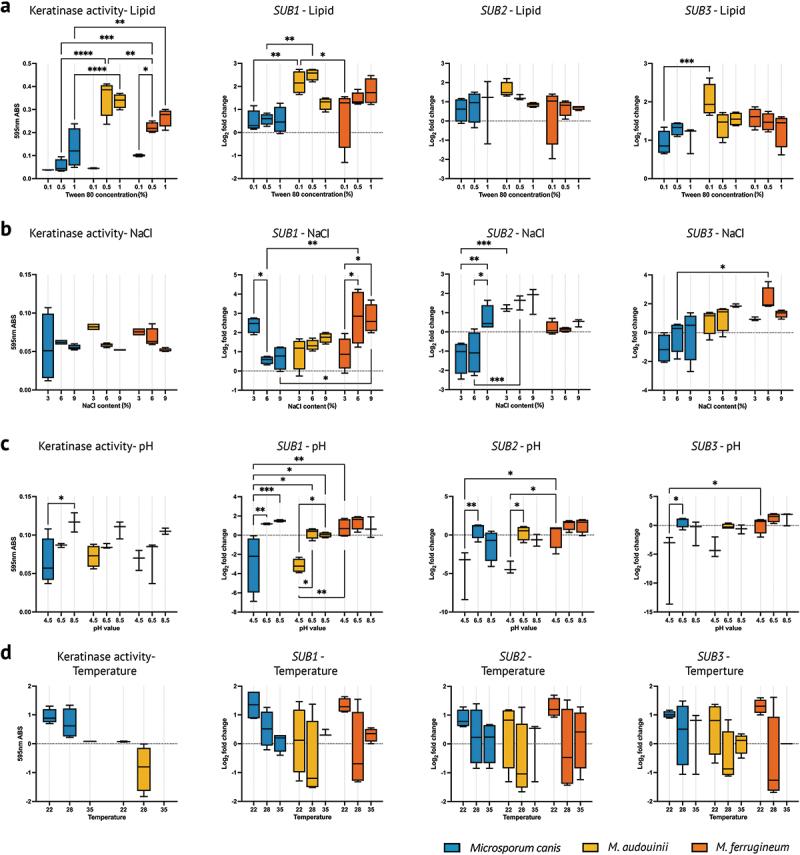
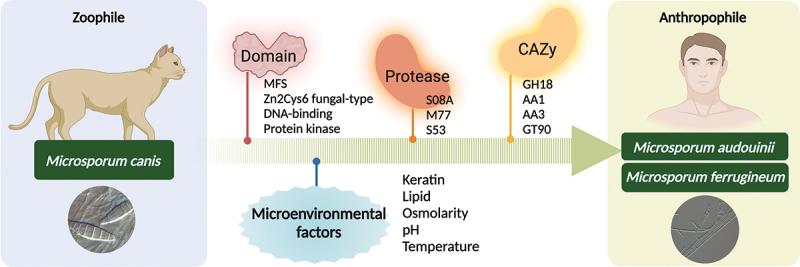
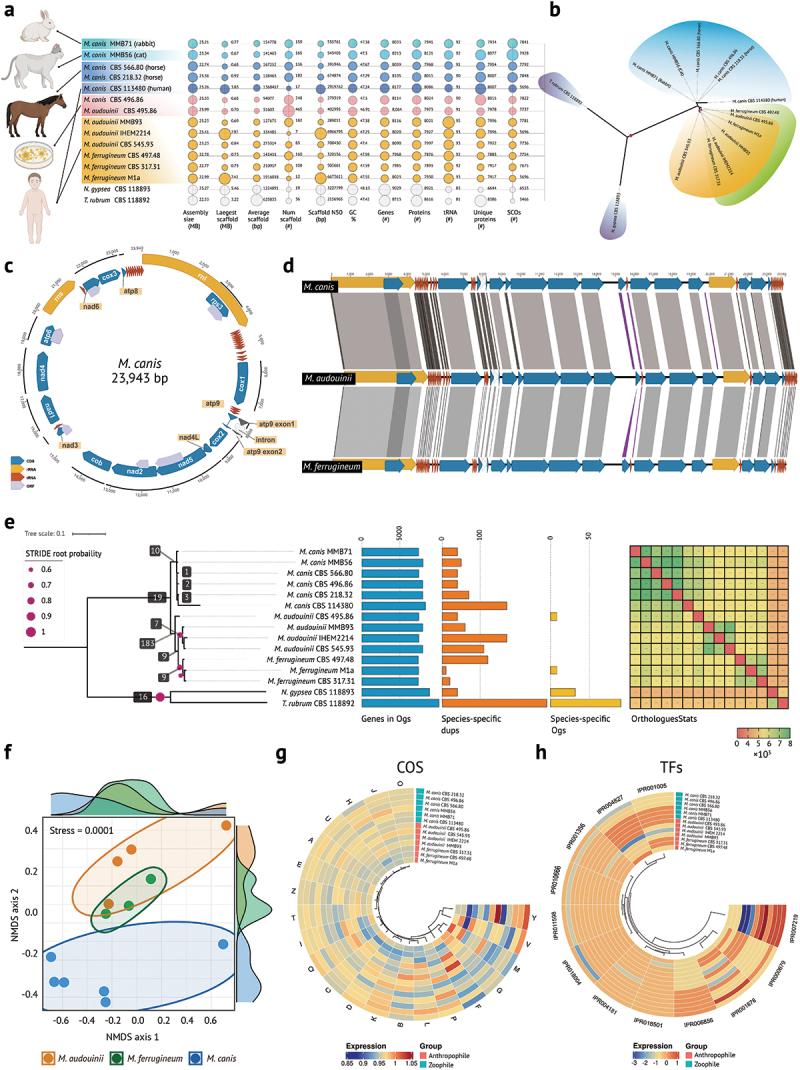
Dermatophytes are a taxonomic group of keratinophilic fungi that engender cutaneous infections across human and animal populations. The zoophilic species , which exhibits a widespread distribution, predominantly affects domesticated felines and canines and has recently been associated with an increased risk of human adaptation. This study conducted a comparative genome analysis, validating the adaptive expression of 12 relevant genes through neutrality tests and selection pressure analyses, with a particular focus on the evolutionary mechanisms underlying the transition from zoophilic to anthropophilic . The results demonstrated a high degree of consistency in the nuclear and mitochondrial genomes among the three species, while significant differences were observed in protein domains. Notably, the anthropophilic species and exhibited more gene duplication events and expansions in domains such as MFS and Zn2Cys6 transcription factors. Among the 138 identified genes, specific protease subfamilies (e.g. S08A, M77, S53) and CAZy subfamilies (e.g. GH18, AA1, AA3) showed strong ecological correlations with either zoophilic or anthropophilic lifestyles. The key functions of these genes from these subfamilies focus on modulating sporulation, endoproteases, lipolysis, pH regulatory adaptability, chitinase, and conidial pigment biosynthesis. Microenvironmental factors such as pH, lipid concentration, and osmolarity significantly influenced the expression of these key genes. Anthropophilic strains demonstrated higher tolerance to acidic pH and enhanced keratinase activity in lipid-rich environments, with exhibiting the strongest osmotic tolerance. These findings highlight the inherent evolutionary dynamics and adaptive mechanisms of dermatophytes, providing valuable insights into the pathogenicity of .
皮肤癣菌是一类嗜角蛋白真菌,可在人类和动物群体中引发皮肤感染。亲动物性物种分布广泛,主要感染家养猫科动物和犬科动物,最近还与人类适应性增加的风险相关。本研究进行了比较基因组分析,通过中性检验和选择压力分析验证了12个相关基因的适应性表达,特别关注从亲动物性向亲人性转变的进化机制。结果表明,这三个物种的核基因组和线粒体基因组具有高度一致性,而蛋白质结构域存在显著差异。值得注意的是,亲人性物种在MFS和Zn2Cys6转录因子等结构域表现出更多的基因复制事件和扩增。在138个已鉴定的基因中,特定的蛋白酶亚家族(如S08A、M77、S53)和碳水化合物活性酶亚家族(如GH18、AA1、AA3)与亲动物性或亲人性生活方式表现出强烈的生态相关性。这些亚家族中这些基因的关键功能集中在调节孢子形成、内切蛋白酶、脂解、pH调节适应性、几丁质酶和分生孢子色素生物合成。pH、脂质浓度和渗透压等微环境因素显著影响这些关键基因的表达。亲人性菌株对酸性pH表现出更高的耐受性,在富含脂质的环境中角质酶活性增强,其中[具体物种]表现出最强的渗透压耐受性。这些发现突出了皮肤癣菌固有的进化动态和适应性机制,为[具体物种]的致病性提供了有价值的见解。


 Zotero 插件