
利用转录组和翻译组鉴定水稻长链非编码RNA及其在水稻抗稻瘟病网络中的作用
Identification of Rice LncRNAs and Their Roles in the Rice Blast Resistance Network Using Transcriptome and Translatome.
作者信息
Shan Xiaoliang, Xia Shengge, Peng Long, Tang Cheng, Tao Shentong, Baig Ayesha, Zhao Hongwei
机构信息
State Key Laboratory of Agricultural and Forestry Biosecurity, College of Plant Protection, Nanjing Agricultural University, Nanjing 210095, China.
Ministry of Education Key Laboratory of Cell Activities and Stress Adaptations, School of Life Sciences, Lanzhou University, Lanzhou 730000, China.
出版信息
Plants (Basel). 2025 Sep 3;14(17):2752. doi: 10.3390/plants14172752.
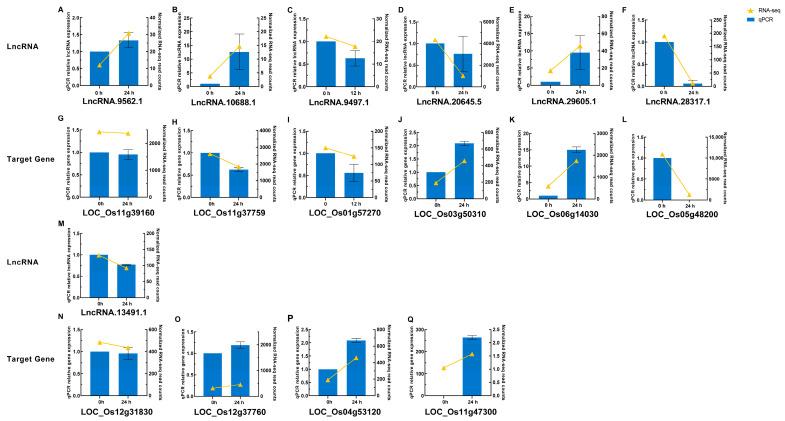
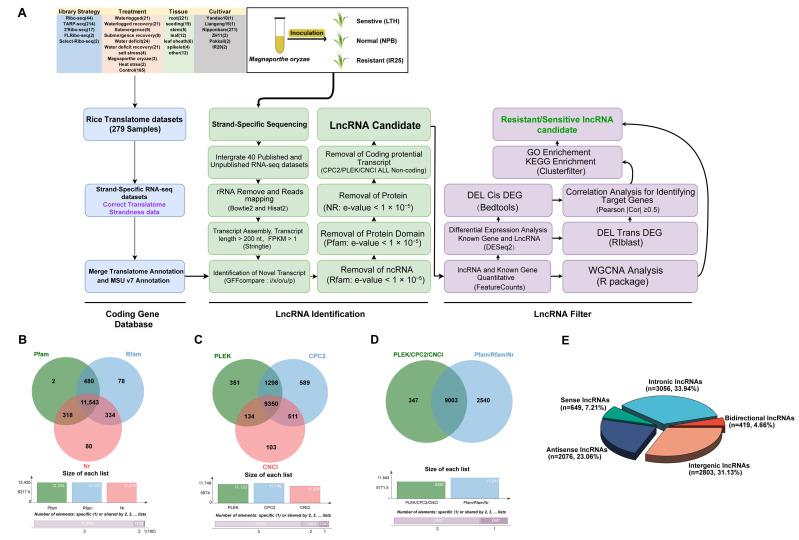
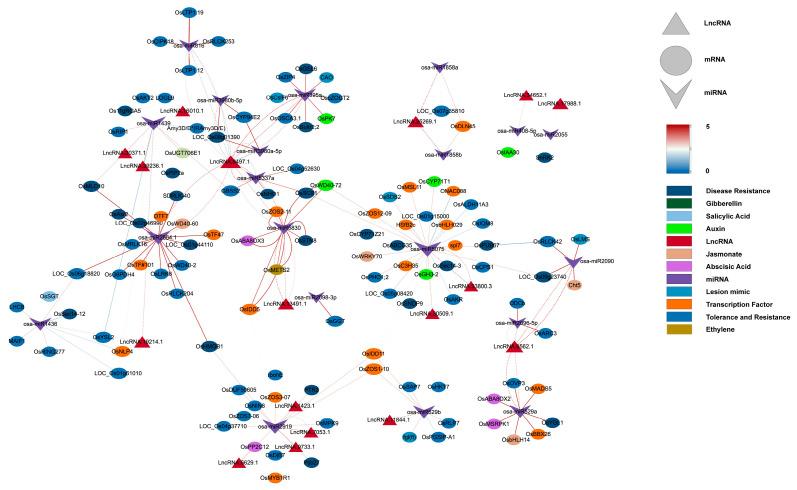
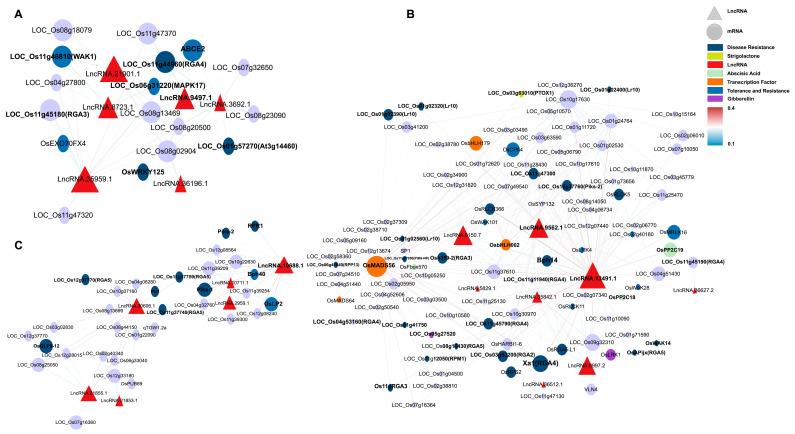
Long non-coding RNAs (lncRNAs) have emerged as pivotal regulators in plant immune responses, yet their roles in rice resistance against () remain inadequately explored. In this study, we integrated translatome data with conventional genome annotations to construct an optimized protein-coding dataset. Subsequently, we developed a robust pipeline ("RiceLncRNA") for the accurate identification of rice lncRNAs. Using strand-specific RNA-sequencing (ssRNA-seq) data from the resistant (IR25), susceptible (LTH), and Nipponbare (NPB) varieties under infection, we identified 9003 high-confidence lncRNAs, significantly improving identification accuracy over traditional methods. Among the differentially expressed lncRNAs (DELs), those unique to IR25 were enriched in the biosynthetic pathways of phenylalanine, tyrosine, and tryptophan, which suggests that they are associated with the production of salicylic acid (SA) and auxin (IAA) precursors, which may be involved in defense responses. Conversely, DELs specific to LTH primarily clustered within carbon metabolism pathways, indicating a metabolic reprogramming mechanism. Notably, 21 DELs responded concurrently in both IR25 and LTH at 12 h and 24 h post-inoculation, indicating a synergistic regulation of jasmonic acid (JA) and ethylene (ET) signaling while partially suppressing IAA pathways. Weighted gene co-expression network analysis (WGCNA) and competing endogenous RNA (ceRNA) network analysis revealed that key lncRNAs (e.g., LncRNA.9497.1) may function as miRNA "sponges", potentially influencing the expression of receptor-like kinases (RLKs), resistance (R) proteins, and hormone signaling pathways. The reliability of these findings was confirmed through qRT-PCR and cloning experiments. In summary, our study provides an optimized rice lncRNA annotation framework and reveals the mechanism by which lncRNAs enhance rice blast resistance through the regulation of hormone signaling pathways. These findings offer an important molecular basis for rice disease-resistant breeding.
长链非编码RNA(lncRNAs)已成为植物免疫反应中的关键调节因子,但其在水稻抗()方面的作用仍未得到充分研究。在本研究中,我们将翻译组数据与传统基因组注释相结合,构建了一个优化的蛋白质编码数据集。随后,我们开发了一个强大的流程(“RiceLncRNA”)用于准确鉴定水稻lncRNAs。利用抗稻瘟病品种(IR25)、感病品种(LTH)和日本晴(NPB)在稻瘟病菌感染下的链特异性RNA测序(ssRNA-seq)数据,我们鉴定出9003个高可信度的lncRNAs,与传统方法相比,显著提高了鉴定准确性。在差异表达的lncRNAs(DELs)中,IR25特有的DELs在苯丙氨酸、酪氨酸和色氨酸的生物合成途径中富集,这表明它们与水杨酸(SA)和生长素(IAA)前体的产生有关,可能参与防御反应。相反,LTH特有的DELs主要聚集在碳代谢途径中,表明存在代谢重编程机制。值得注意的是,21个DELs在接种后12小时和24小时在IR25和LTH中同时响应,表明茉莉酸(JA)和乙烯(ET)信号存在协同调节,同时部分抑制IAA途径。加权基因共表达网络分析(WGCNA)和竞争性内源RNA(ceRNA)网络分析表明,关键lncRNAs(如LncRNA.9497.1)可能作为miRNA的“海绵”,潜在地影响类受体激酶(RLKs)、抗性(R)蛋白和激素信号通路的表达。通过qRT-PCR和克隆实验证实了这些发现的可靠性。总之,我们的研究提供了一个优化的水稻lncRNA注释框架,并揭示了lncRNAs通过调节激素信号通路增强水稻抗稻瘟病能力的机制。这些发现为水稻抗病育种提供了重要的分子基础。




 Zotero 插件