
热带地区自然感染蠕虫寄生虫个体的呼出一氧化氮分数(FeNO)水平和2型生物标志物
Levels of Exhaled Fraction of Nitric Oxide (FeNO) and Type 2 Biomarkers in Individuals Naturally Exposed to Helminth Parasites in a Tropical Region.
作者信息
De Vivero Maria M, Reina Randy, Ramírez Jonathan, Zakzuk Josefina, Escamilla Gil Jose Miguel, Zelaya Bayron, Florez de Arco Lucila Teresa, Potaczek Daniel P, Caraballo Luis, Acevedo Nathalie
机构信息
Institute for Immunological Research, University of Cartagena, Cartagena 130014, Colombia.
Clinica Respiratoria y de Alergias, Cartagena 130014, Colombia.
出版信息
Int J Mol Sci. 2025 Aug 28;26(17):8344. doi: 10.3390/ijms26178344.
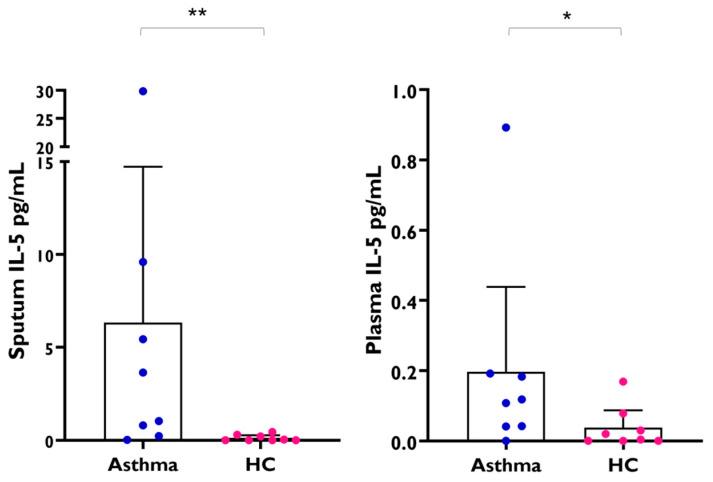
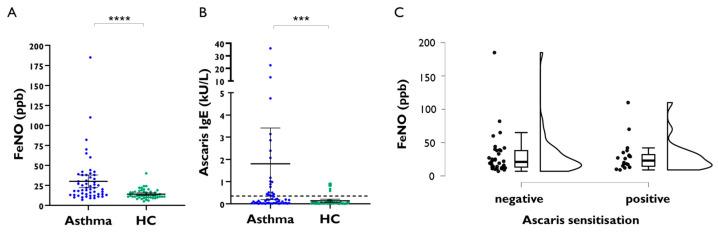
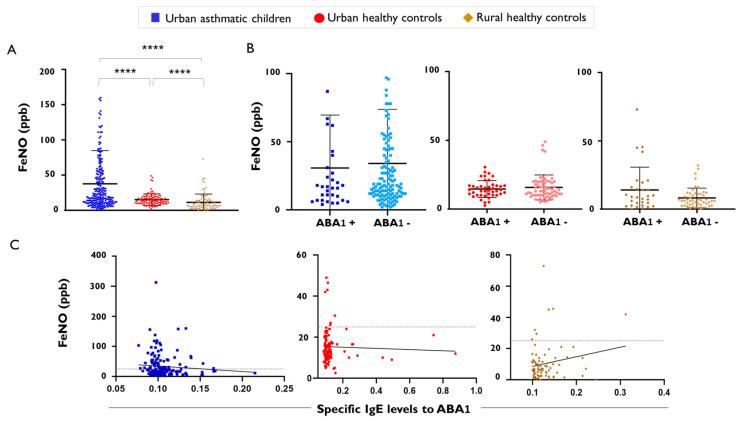
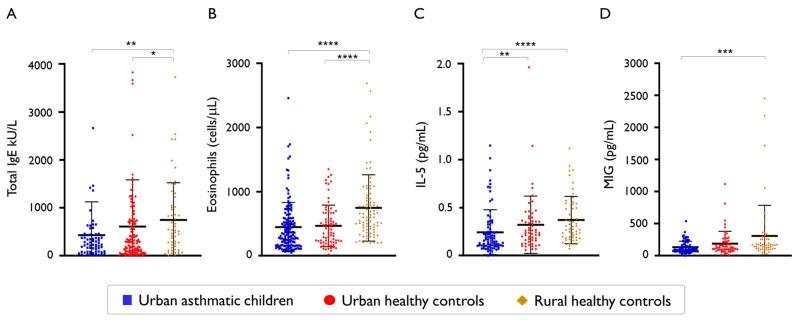
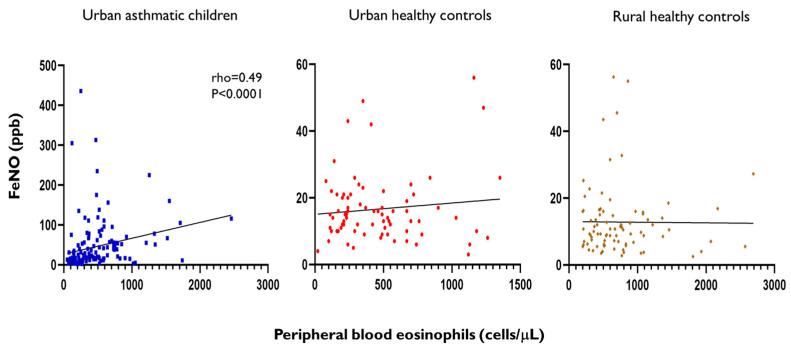
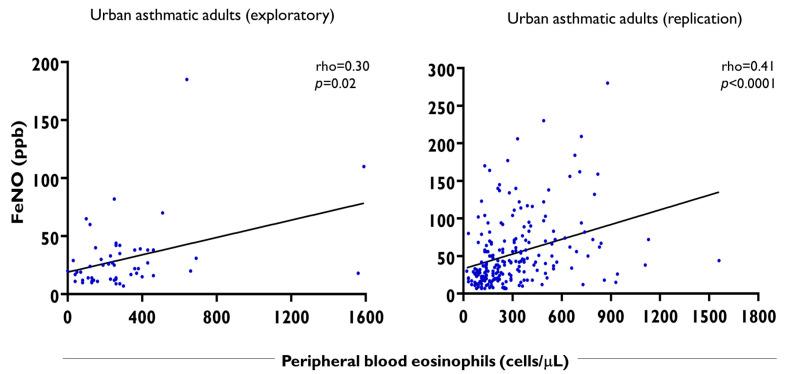
The exhaled fraction of nitric oxide (FeNO) is a biomarker of type 2 inflammation, reflecting the activity of inducible nitric oxide synthase (iNOS) in the bronchial epithelium in response to IL-4 and IL-13. Elevated FeNO levels support asthma diagnosis; however, it is unclear whether active helminth infections and rural environments influence this biomarker. The aim of this study was to compare FeNO levels among subjects naturally infected with helminth parasites and to evaluate their correlation with eosinophil counts and other inflammatory mediators. A total of 275 adult asthmatic patients and 161 healthy controls were involved; also, 223 asthmatic children and 114 healthy controls from the urban area of Cartagena were compared to 90 healthy children from a rural area. We found significant differences in FeNO levels between asthmatic patients and healthy controls in both adult and children's cohorts ( < 0.0001). There was no difference in FeNO levels between Ascaris-positive and Ascaris-negative adults nor between subjects with active helminth infection and the non-infected. However, FeNO levels were significantly lower in rural healthy children (median 7.50 ppb, [IQR 4-14 ppb]) compared to urban healthy children (median 13.5 ppb, [IQR 10-18.5 ppb], < 0.0001) and asthmatic children (median 20 ppb, [IQR 11-51 ppb], < 0.0001). Rural healthy children had the highest total IgE levels (median 508 kU/L, [IQR 168-1020 kU/L]), high eosinophil counts (median 550 eos/μL, [IQR 360-800 eos/μL]) and plasma IL-5 levels (median 0.276 pg/mL, [IQR 0.19-0.53 pg/mL]). In conclusion, FeNO levels are not influenced by either natural exposure to helminth parasites or active infection, which supports its usefulness as a robust asthma biomarker in the tropics. Rural children have the lowest FeNO levels together with the highest total IgE levels, IL-5, and eosinophil counts, suggesting that lung-specific mechanisms are in place controlling iNOS expression during type 2 responses in healthy children.
呼出一氧化氮分数(FeNO)是2型炎症的生物标志物,反映支气管上皮中诱导型一氧化氮合酶(iNOS)对白细胞介素-4(IL-4)和白细胞介素-13(IL-13)的反应活性。FeNO水平升高支持哮喘的诊断;然而,尚不清楚活跃的蠕虫感染和农村环境是否会影响这一生物标志物。本研究的目的是比较自然感染蠕虫寄生虫的受试者的FeNO水平,并评估其与嗜酸性粒细胞计数及其他炎症介质的相关性。共纳入了275名成年哮喘患者和161名健康对照;此外,还将来自卡塔赫纳市区的223名哮喘儿童和114名健康对照与来自农村地区的90名健康儿童进行了比较。我们发现,在成人和儿童队列中,哮喘患者与健康对照之间的FeNO水平存在显著差异(<0.0001)。蛔虫阳性和蛔虫阴性的成年人之间,以及活跃蠕虫感染的受试者与未感染的受试者之间,FeNO水平没有差异。然而,与城市健康儿童(中位数13.5 ppb,[四分位间距10 - 18.5 ppb],<0.0001)和哮喘儿童(中位数20 ppb,[四分位间距11 - 51 ppb],<0.0001)相比,农村健康儿童的FeNO水平显著较低(中位数7.50 ppb,[四分位间距4 - 14 ppb])。农村健康儿童的总IgE水平最高(中位数508 kU/L,[四分位间距168 - 1020 kU/L]),嗜酸性粒细胞计数较高(中位数550个嗜酸性粒细胞/μL,[四分位间距360 - 800个嗜酸性粒细胞/μL]),血浆IL-5水平(中位数为 pg/mL,[四分位间距0.19 - 0.53 pg/mL])。总之,FeNO水平不受自然接触蠕虫寄生虫或活跃感染的影响,这支持了其作为热带地区可靠哮喘生物标志物的实用性。农村儿童的FeNO水平最低,同时总IgE水平、IL-5和嗜酸性粒细胞计数最高,这表明在健康儿童的2型反应过程中,存在肺部特异性机制控制iNOS的表达。


 Zotero 插件