
姜黄素的神经保护作用:从分子途径到临床转化——一篇叙述性综述
The Neuroprotective Role of Curcumin: From Molecular Pathways to Clinical Translation-A Narrative Review.
作者信息
Lehoczki Andrea, Fekete Mónika, Jarecsny Tamás, Zábó Virág, Szappanos Ágnes, Csípő Tamás, Lipécz Ágnes, Major Dávid, Fazekas-Pongor Vince, Varga Péter, Varga János Tamás
机构信息
Institute of Preventive Medicine and Public Health, Semmelweis University, 1085 Budapest, Hungary.
Fodor Center for Prevention and Healthy Aging, Semmelweis University, 1085 Budapest, Hungary.
出版信息
Nutrients. 2025 Sep 6;17(17):2884. doi: 10.3390/nu17172884.
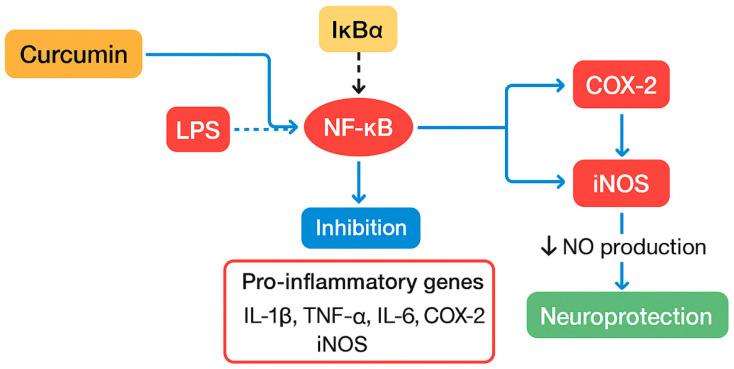
Neurodegenerative disorders, including Alzheimer's disease (AD), Parkinson's disease (PD), and post-stroke cognitive impairment (PSCI), represent an escalating global health and economic challenge. In the quest for disease-modifying interventions, natural polyphenols-most notably curcumin, the principal bioactive compound of Curcuma longa-have attracted considerable interest due to their pleiotropic neuroprotective effects. This narrative review critically synthesizes findings from a selection of peer-reviewed articles published between 2000 and 2025, chosen for their relevance to curcumin's molecular mechanisms and translational potential. Curcumin's complex chemical structure confers antioxidant, anti-inflammatory, and epigenetic modulatory properties; however, its clinical application is limited by poor oral bioavailability. Mechanistically, curcumin attenuates oxidative stress and suppresses key inflammatory mediators, including nuclear factor kappa B (NF-κB), cyclooxygenase-2 (COX-2), and inducible nitric oxide synthase (iNOS). Additionally, it modulates apoptosis, inhibits amyloid-beta aggregation, and enhances cellular quality control processes such as autophagy and mitophagy, while upregulating neurotrophic factors such as brain-derived neurotrophic factor (BDNF). Preclinical studies employing rodent models of AD, PD, and ischemic stroke have demonstrated curcumin's dose-dependent neuroprotective efficacy, with improved outcomes observed using nanoparticle-based delivery systems. Early-phase clinical trials further support curcumin's favorable safety profile and potential cognitive benefits, although challenges remain regarding pharmacokinetics, formulation standardization, and therapeutic reproducibility. Future directions include the development of advanced drug delivery platforms, combinatory therapeutic regimens, and personalized medicine approaches integrating curcumin within multifaceted neurotherapeutic strategies. Collectively, this narrative review highlights curcumin as a promising multi-targeted candidate for combating neurodegenerative diseases, while emphasizing the need for further translational and clinical validation.
神经退行性疾病,包括阿尔茨海默病(AD)、帕金森病(PD)和中风后认知障碍(PSCI),是全球日益严峻的健康和经济挑战。在寻求疾病修饰干预措施的过程中,天然多酚类物质——尤其是姜黄素,姜黄的主要生物活性化合物——因其多效性神经保护作用而备受关注。本叙述性综述批判性地综合了2000年至2025年间发表的一系列同行评议文章的研究结果,这些文章因其与姜黄素的分子机制和转化潜力的相关性而被选中。姜黄素复杂的化学结构赋予了其抗氧化、抗炎和表观遗传调节特性;然而,其临床应用受到口服生物利用度差的限制。从机制上讲,姜黄素可减轻氧化应激并抑制关键的炎症介质,包括核因子κB(NF-κB)、环氧化酶-2(COX-2)和诱导型一氧化氮合酶(iNOS)。此外,它还可调节细胞凋亡,抑制淀粉样β蛋白聚集,并增强细胞质量控制过程,如自噬和线粒体自噬,同时上调神经营养因子,如脑源性神经营养因子(BDNF)。使用AD、PD和缺血性中风啮齿动物模型的临床前研究已经证明了姜黄素剂量依赖性的神经保护功效,使用基于纳米颗粒的递送系统可观察到更好的结果。早期临床试验进一步支持了姜黄素良好的安全性和潜在的认知益处,尽管在药代动力学、制剂标准化和治疗可重复性方面仍存在挑战。未来的方向包括开发先进的药物递送平台、联合治疗方案以及将姜黄素纳入多方面神经治疗策略的个性化医疗方法。总体而言,本叙述性综述强调了姜黄素作为对抗神经退行性疾病的有前景的多靶点候选药物,同时强调了进一步转化和临床验证的必要性。

 Zotero 插件