
牛-人界面产肠毒素耐甲氧西林金黄色葡萄球菌的流行情况及抗菌谱分析
Prevalence and antibiogram profiling of enterotoxigenic methicillin-resistant at bovine-human interface.
作者信息
Ijaz M, Javed M U, Ahmed A, Rasheed H, Sabir M J, Jabir A A, Batool M
机构信息
Department of Veterinary Medicine, University of Veterinary and Animal Sciences, Lahore, Pakistan.
Ph.D. Student in Veterinary Medicine, Department of Veterinary Medicine, University of Veterinary and Animal Sciences, Lahore, Pakistan.
出版信息
Iran J Vet Res. 2025;26(1):8-16. doi: 10.22099/ijvr.2024.50719.7502.
BACKGROUND
, a ubiquitous pathogen due to its key involvement in dairy animal mastitis, is the leading cause of food-borne diseases in humans by producing various enterotoxins. The present study reported the prevalence of significantly increased enterotoxigenic MRSA pathogens among bovines and dairy occupational workers, along with antibiotic-resistant patterns, using the technique.
METHODS
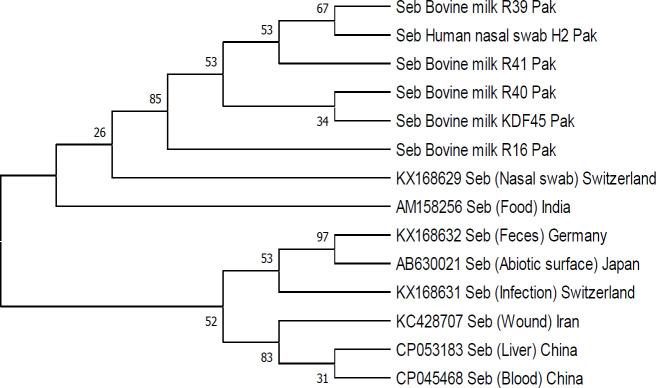
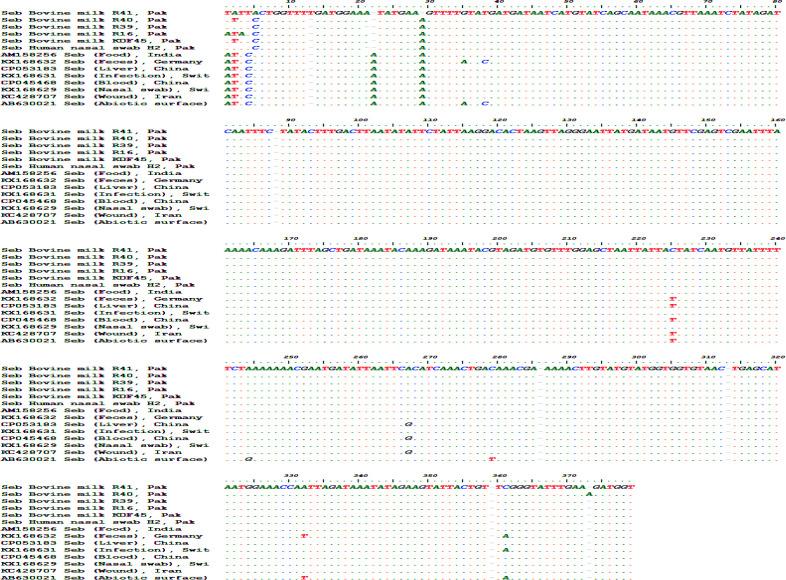
A total of 384 bovine (n=192 cattle, n=192 buffalo) milk samples and 100 human nasal or skin swab samples were collected to find out the prevalence of , MRSA, , and enterotoxin genes (, ) by PCR. Also, a phylogenetic analysis was conducted to compare and analyze the prevalent enterotoxin gene sequences from bovines, workers, and other sources.
RESULTS
The present study revealed that out of 484 total samples, 49.79% of isolates were positive for while 29.46% and 66.80% of isolates were positive for MRSA, and genes among bovine and human samples collectively. The prevalence of enterotoxigenic was found to be 16.18% in bovine and human staphylococcal isolates. Additionally, the enterotoxigenic strains exhibited resistance to commonly used antibiotics.
CONCLUSION
The present study shows that enterotoxigenic MRSA is prevalent in bovines and dairy occupational workers of study districts, Pakistan, and study isolates revealed a varying level of resistance to different antibiotics. The various virulence factors along with the antibiotic resistance makes MRSA a potential threat at animal-human interface, highlighting the need for further research.
背景
由于其在奶牛乳腺炎中起关键作用,是一种普遍存在的病原体,通过产生多种肠毒素成为人类食源性疾病的主要原因。本研究报告了使用该技术在牛和乳业从业人员中显著增加的产肠毒素耐甲氧西林金黄色葡萄球菌(MRSA)病原体的流行情况以及抗生素耐药模式。
方法
共收集384份牛(n = 192头牛,n = 192头水牛)奶样和100份人类鼻腔或皮肤拭子样本,通过聚合酶链反应(PCR)检测金黄色葡萄球菌、MRSA、凝固酶基因(coagulase)和肠毒素基因(enterotoxin genes,sea、seb、sec、sed、see、seg、seh、sei、sel、sem、sen、seo、sep、seq、ser、ses、set、seu、sev、sew、sex、sey、sez)的流行情况。此外,进行了系统发育分析,以比较和分析来自牛、从业人员和其他来源的流行肠毒素基因序列。
结果
本研究表明,在总共484份样本中,分离株中有49.79%对金黄色葡萄球菌呈阳性,而在牛和人类样本中,分别有29.46%和66.80%的金黄色葡萄球菌分离株对MRSA和凝固酶基因呈阳性。在牛和人类葡萄球菌分离株中,产肠毒素金黄色葡萄球菌的流行率为16.18%。此外,产肠毒素菌株对常用抗生素表现出耐药性。
结论
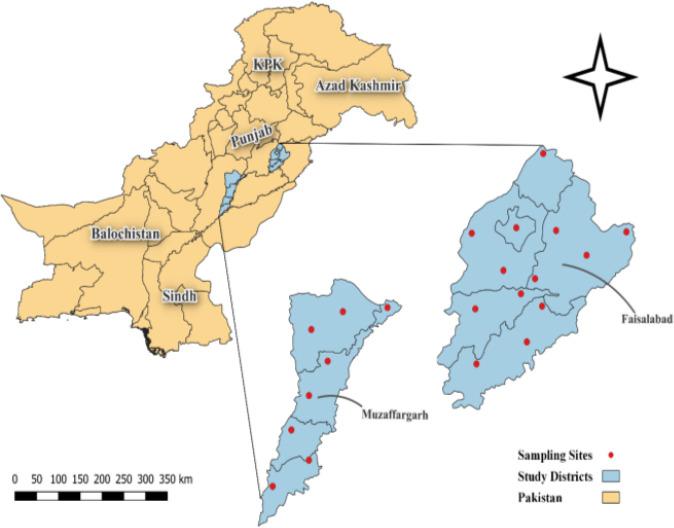
本研究表明,产肠毒素MRSA在巴基斯坦研究地区的牛和乳业从业人员中普遍存在,研究分离株对不同抗生素表现出不同程度的耐药性。各种毒力因子以及抗生素耐药性使MRSA在动物 - 人类界面构成潜在威胁,突出了进一步研究的必要性。
 Zotero 插件