
Mad3和Mad4:新型Max相互作用转录抑制因子,可抑制c-myc依赖性转化,并在神经和表皮分化过程中表达。
Mad3 and Mad4: novel Max-interacting transcriptional repressors that suppress c-myc dependent transformation and are expressed during neural and epidermal differentiation.
作者信息
Hurlin P J, Quéva C, Koskinen P J, Steingrímsson E, Ayer D E, Copeland N G, Jenkins N A, Eisenman R N
机构信息
Division of Basic Sciences, Fred Hutchinson Cancer Research Center, Seattle, WA 98104, USA.
出版信息
EMBO J. 1995 Nov 15;14(22):5646-59. doi: 10.1002/j.1460-2075.1995.tb00252.x.
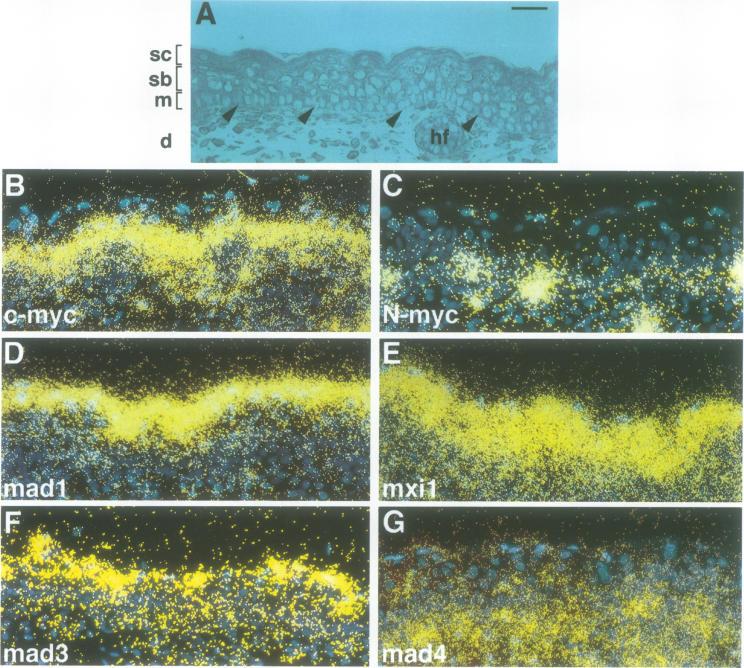
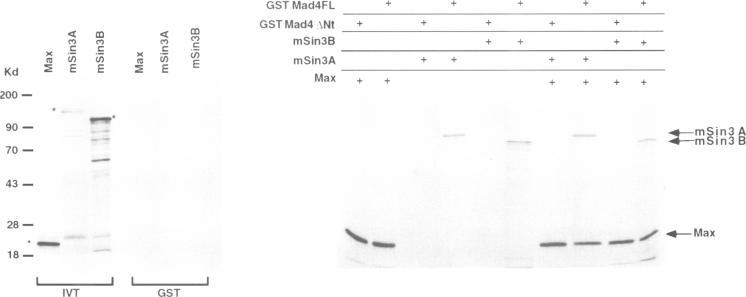
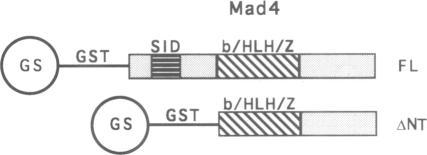
The basic helix-loop-helix-leucine zipper (bHLHZip) protein Max associates with members of the Myc family, as well as with the related proteins Mad (Mad1) and Mxi1. Whereas both Myc:Max and Mad:Max heterodimers bind related E-box sequences, Myc:Max activates transcription and promotes proliferation while Mad:Max represses transcription and suppresses Myc dependent transformation. Here we report the identification and characterization of two novel Mad1- and Mxi1-related proteins, Mad3 and Mad4. Mad3 and Mad4 interact with both Max and mSin3 and repress transcription from a promoter containing CACGTG binding sites. Using a rat embryo fibroblast transformation assay, we show that both Mad3 and Mad4 inhibit c-Myc dependent cell transformation. An examination of the expression patterns of all mad genes during murine embryogenesis reveals that mad1, mad3 and mad4 are expressed primarily in growth-arrested differentiating cells. mxi1 is also expressed in differentiating cells, but is co-expressed with either c-myc, N-myc, or both in proliferating cells of the developing central nervous system and the epidermis. In the developing central nervous system and epidermis, downregulation of myc genes occurs concomitant with upregulation of mad family genes. These expression patterns, together with the demonstrated ability of Mad family proteins to interfere with the proliferation promoting activities of Myc, suggest that the regulated expression of Myc and Mad family proteins function in a concerted fashion to regulate cell growth in differentiating tissues.
基本螺旋-环-螺旋-亮氨酸拉链(bHLHZip)蛋白Max与Myc家族成员以及相关蛋白Mad(Mad1)和Mxi1相互作用。Myc:Max和Mad:Max异二聚体都能结合相关的E-box序列,但Myc:Max激活转录并促进增殖,而Mad:Max抑制转录并抑制Myc依赖的转化。在此,我们报告了两种新型的与Mad1和Mxi1相关的蛋白Mad3和Mad4的鉴定与特性。Mad3和Mad4与Max和mSin3都相互作用,并抑制含有CACGTG结合位点的启动子的转录。通过大鼠胚胎成纤维细胞转化试验,我们发现Mad3和Mad4都能抑制c-Myc依赖的细胞转化。对小鼠胚胎发育过程中所有mad基因表达模式的检查显示,mad1、mad3和mad4主要在生长停滞的分化细胞中表达。mxi1也在分化细胞中表达,但在发育中的中枢神经系统和表皮的增殖细胞中与c-myc、N-myc或两者共同表达。在发育中的中枢神经系统和表皮中,myc基因的下调与mad家族基因的上调同时发生。这些表达模式,连同Mad家族蛋白干扰Myc促进增殖活性的能力,表明Myc和Mad家族蛋白的调控表达以协同方式发挥作用,以调节分化组织中的细胞生长。



 Zotero 插件