
B细胞依赖性T细胞反应:引发接触性敏感需要IgM抗体。
B cell-dependent T cell responses: IgM antibodies are required to elicit contact sensitivity.
作者信息
Tsuji Ryohei F, Szczepanik Marian, Kawikova Ivana, Paliwal Vipin, Campos Regis A, Itakura Atsuko, Akahira-Azuma Moe, Baumgarth Nicole, Herzenberg Leonore A, Askenase Philip W
机构信息
Noda Institute for Scientific Research, Chiba-ken 278, Japan.
出版信息
J Exp Med. 2002 Nov 18;196(10):1277-90. doi: 10.1084/jem.20020649.
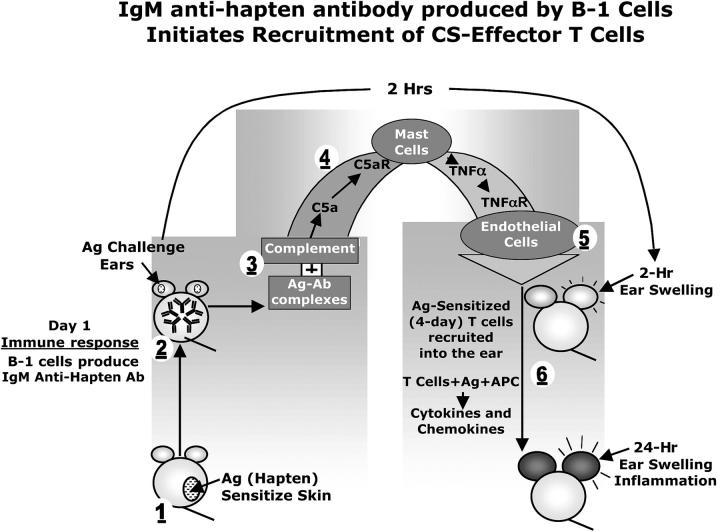
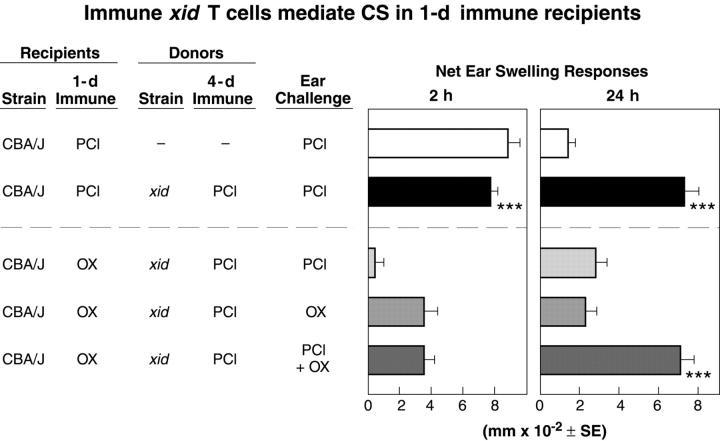
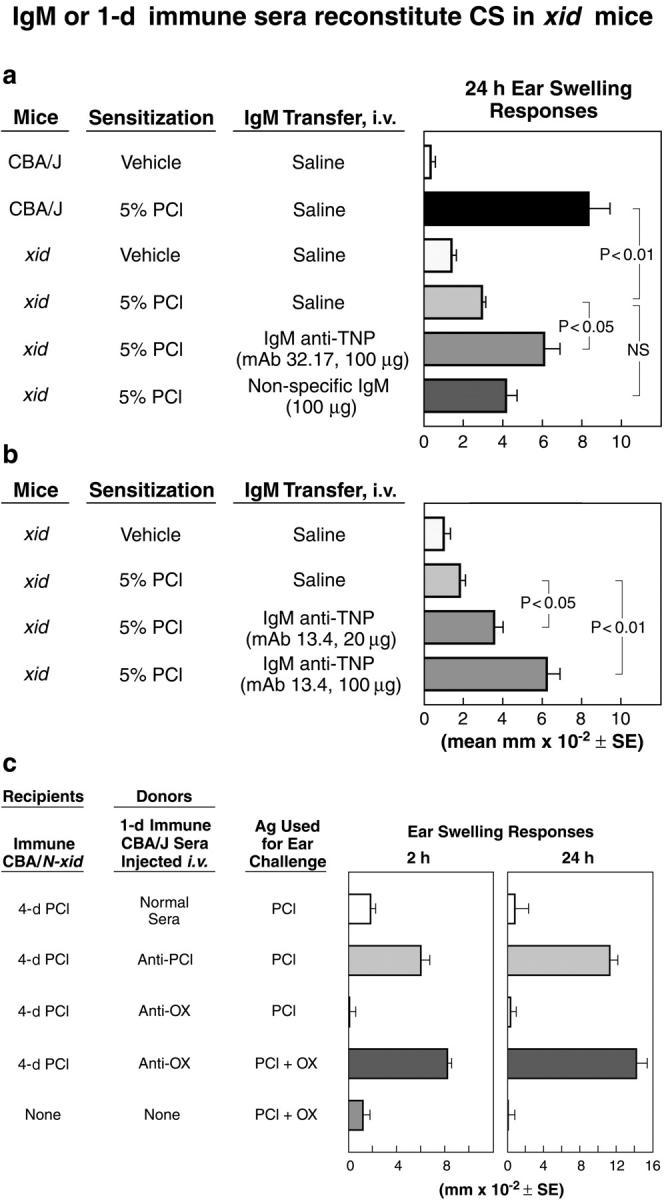
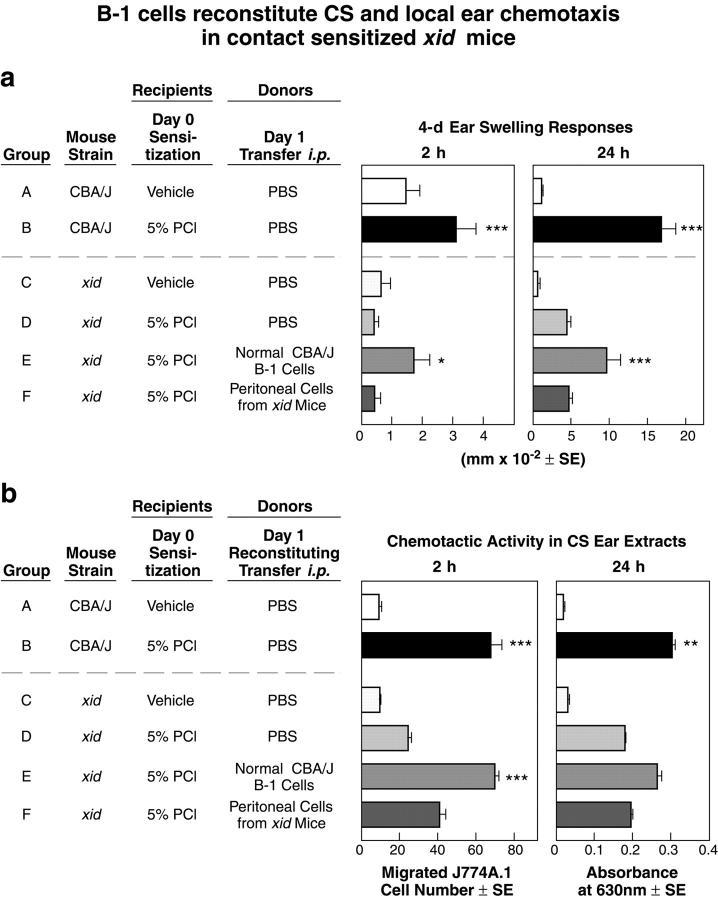
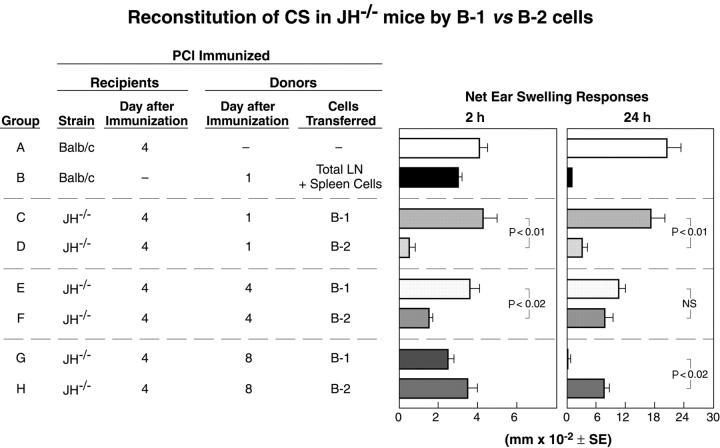
Contact sensitivity (CS) is a classic example of in vivo T cell immunity in which skin sensitization with reactive hapten leads to immunized T cells, which are then recruited locally to mediate antigen-specific inflammation after subsequent skin challenge. We have previously shown that T cell recruitment in CS is triggered by local activation of complement, which generates C5a that triggers C5a receptors most likely on mast cells. Here, we show that B-1 cell-derived antihapten IgM antibodies generated within 1 day (d) of immunization combine with local challenge antigen to activate complement to recruit the T cells. These findings overturn three widely accepted immune response paradigms by showing that (a) specific IgM antibodies are required to initiate CS, which is a classical model of T cell immunity thought exclusively due to T cells, (b) CS priming induces production of specific IgM antibodies within 1 d, although primary antibody responses typically begin by day 4, and (c) B-1 cells produce the 1-d IgM response to CS priming, although these cells generally are thought to be nonresponsive to antigenic stimulation. Coupled with previous evidence, our findings indicate that the elicitation of CS is initiated by rapidly formed IgM antibodies. The IgM and challenge antigen likely form local complexes that activate complement, generating C5a, leading to local vascular activation to recruit the antigen-primed effector T cells that mediate the CS response.
接触性超敏反应(CS)是体内T细胞免疫的经典例子,其中用反应性半抗原进行皮肤致敏会导致免疫T细胞产生,随后在再次进行皮肤激发后,这些T细胞会被募集到局部以介导抗原特异性炎症。我们之前已经表明,CS中T细胞的募集是由补体的局部激活触发的,补体激活会产生C5a,C5a很可能会触发肥大细胞上的C5a受体。在这里,我们表明免疫后1天内产生的B-1细胞衍生的抗半抗原IgM抗体与局部激发抗原结合,激活补体以募集T细胞。这些发现推翻了三个被广泛接受的免疫反应范式,即:(a)启动CS需要特异性IgM抗体,而CS是一个经典的T细胞免疫模型,通常认为完全由T细胞介导;(b)CS致敏在1天内诱导产生特异性IgM抗体,尽管初次抗体反应通常在第4天开始;(c)B-1细胞产生对CS致敏的1天IgM反应,尽管这些细胞通常被认为对抗原刺激无反应。结合先前的证据,我们的发现表明CS的激发是由快速形成的IgM抗体启动的。IgM和激发抗原可能形成局部复合物,激活补体,产生C5a,导致局部血管激活,募集介导CS反应的抗原致敏效应T细胞。


 Zotero 插件