
多囊卵巢综合征:一种具有心理、生殖和代谢表现的复杂病症,会影响整个生命周期的健康。
Polycystic ovary syndrome: a complex condition with psychological, reproductive and metabolic manifestations that impacts on health across the lifespan.
机构信息
Monash University, Clayton, Australia.
出版信息
BMC Med. 2010 Jun 30;8:41. doi: 10.1186/1741-7015-8-41.
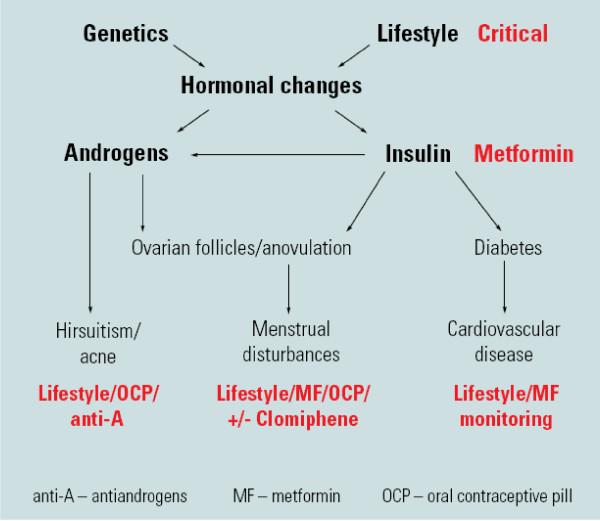
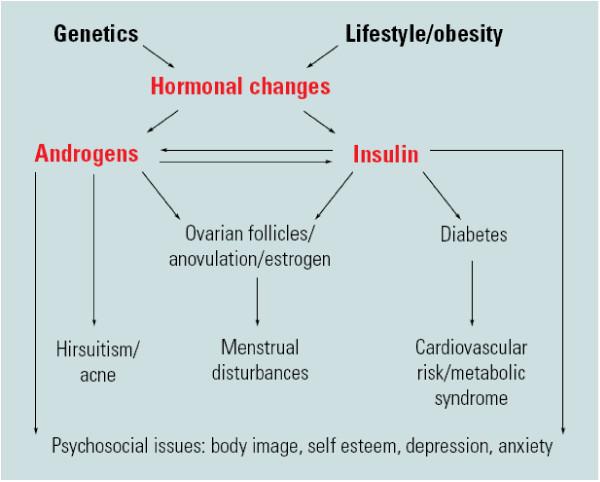
Polycystic ovary syndrome (PCOS) is of clinical and public health importance as it is very common, affecting up to one in five women of reproductive age. It has significant and diverse clinical implications including reproductive (infertility, hyperandrogenism, hirsutism), metabolic (insulin resistance, impaired glucose tolerance, type 2 diabetes mellitus, adverse cardiovascular risk profiles) and psychological features (increased anxiety, depression and worsened quality of life). Polycystic ovary syndrome is a heterogeneous condition and, as such, clinical and research agendas are broad and involve many disciplines. The phenotype varies widely depending on life stage, genotype, ethnicity and environmental factors including lifestyle and bodyweight. Importantly, PCOS has unique interactions with the ever increasing obesity prevalence worldwide as obesity-induced insulin resistance significantly exacerbates all the features of PCOS. Furthermore, it has clinical implications across the lifespan and is relevant to related family members with an increased risk for metabolic conditions reported in first-degree relatives. Therapy should focus on both the short and long-term reproductive, metabolic and psychological features. Given the aetiological role of insulin resistance and the impact of obesity on both hyperinsulinaemia and hyperandrogenism, multidisciplinary lifestyle improvement aimed at normalising insulin resistance, improving androgen status and aiding weight management is recognised as a crucial initial treatment strategy. Modest weight loss of 5% to 10% of initial body weight has been demonstrated to improve many of the features of PCOS. Management should focus on support, education, addressing psychological factors and strongly emphasising healthy lifestyle with targeted medical therapy as required. Monitoring and management of long-term metabolic complications is also an important part of routine clinical care. Comprehensive evidence-based guidelines are needed to aid early diagnosis, appropriate investigation, regular screening and treatment of this common condition. Whilst reproductive features of PCOS are well recognised and are covered here, this review focuses primarily on the less appreciated cardiometabolic and psychological features of PCOS.
多囊卵巢综合征(PCOS)具有重要的临床和公共卫生意义,因为它非常普遍,影响了多达五分之一的育龄妇女。它具有显著且多样化的临床意义,包括生殖(不孕、高雄激素血症、多毛症)、代谢(胰岛素抵抗、糖耐量受损、2 型糖尿病、不良心血管风险特征)和心理特征(焦虑增加、抑郁和生活质量恶化)。多囊卵巢综合征是一种异质性疾病,因此,临床和研究议程广泛,涉及多个学科。表型因生命阶段、基因型、种族和环境因素(包括生活方式和体重)而异。重要的是,PCOS 与全球不断增加的肥胖患病率有着独特的相互作用,因为肥胖引起的胰岛素抵抗显著加剧了 PCOS 的所有特征。此外,它在整个生命周期都有临床意义,并且与相关的家庭成员有关,一级亲属报告代谢状况的风险增加。治疗应侧重于短期和长期的生殖、代谢和心理特征。鉴于胰岛素抵抗的病因作用以及肥胖对高胰岛素血症和高雄激素血症的影响,旨在使胰岛素抵抗正常化、改善雄激素状态和帮助体重管理的多学科生活方式改善被认为是一种关键的初始治疗策略。已经证明,适度减轻初始体重的 5%至 10%可以改善 PCOS 的许多特征。管理应侧重于支持、教育、解决心理因素,并强烈强调健康的生活方式,必要时进行有针对性的医学治疗。长期代谢并发症的监测和管理也是常规临床护理的重要组成部分。需要有全面的循证指南来帮助早期诊断、适当的调查、定期筛查和治疗这种常见疾病。虽然 PCOS 的生殖特征得到了广泛的认可,并且在这里进行了讨论,但本综述主要侧重于不太被重视的 PCOS 的心血管代谢和心理特征。
 Zotero 插件