
遗传肥胖和饮食诱导瘦素抵抗小鼠对益生元的肠道微生物群和葡萄糖及脂质代谢的反应。
Responses of gut microbiota and glucose and lipid metabolism to prebiotics in genetic obese and diet-induced leptin-resistant mice.
机构信息
Metabolism and Nutrition Research Group, Louvain Drug Research Institute, Université Catholique de Louvain, Brussels, Belgium.
出版信息
Diabetes. 2011 Nov;60(11):2775-86. doi: 10.2337/db11-0227. Epub 2011 Sep 20.
OBJECTIVE
To investigate deep and comprehensive analysis of gut microbial communities and biological parameters after prebiotic administration in obese and diabetic mice.
RESEARCH DESIGN AND METHODS
Genetic (ob/ob) or diet-induced obese and diabetic mice were chronically fed with prebiotic-enriched diet or with a control diet. Extensive gut microbiota analyses, including quantitative PCR, pyrosequencing of the 16S rRNA, and phylogenetic microarrays, were performed in ob/ob mice. The impact of gut microbiota modulation on leptin sensitivity was investigated in diet-induced leptin-resistant mice. Metabolic parameters, gene expression, glucose homeostasis, and enteroendocrine-related L-cell function were documented in both models.
RESULTS
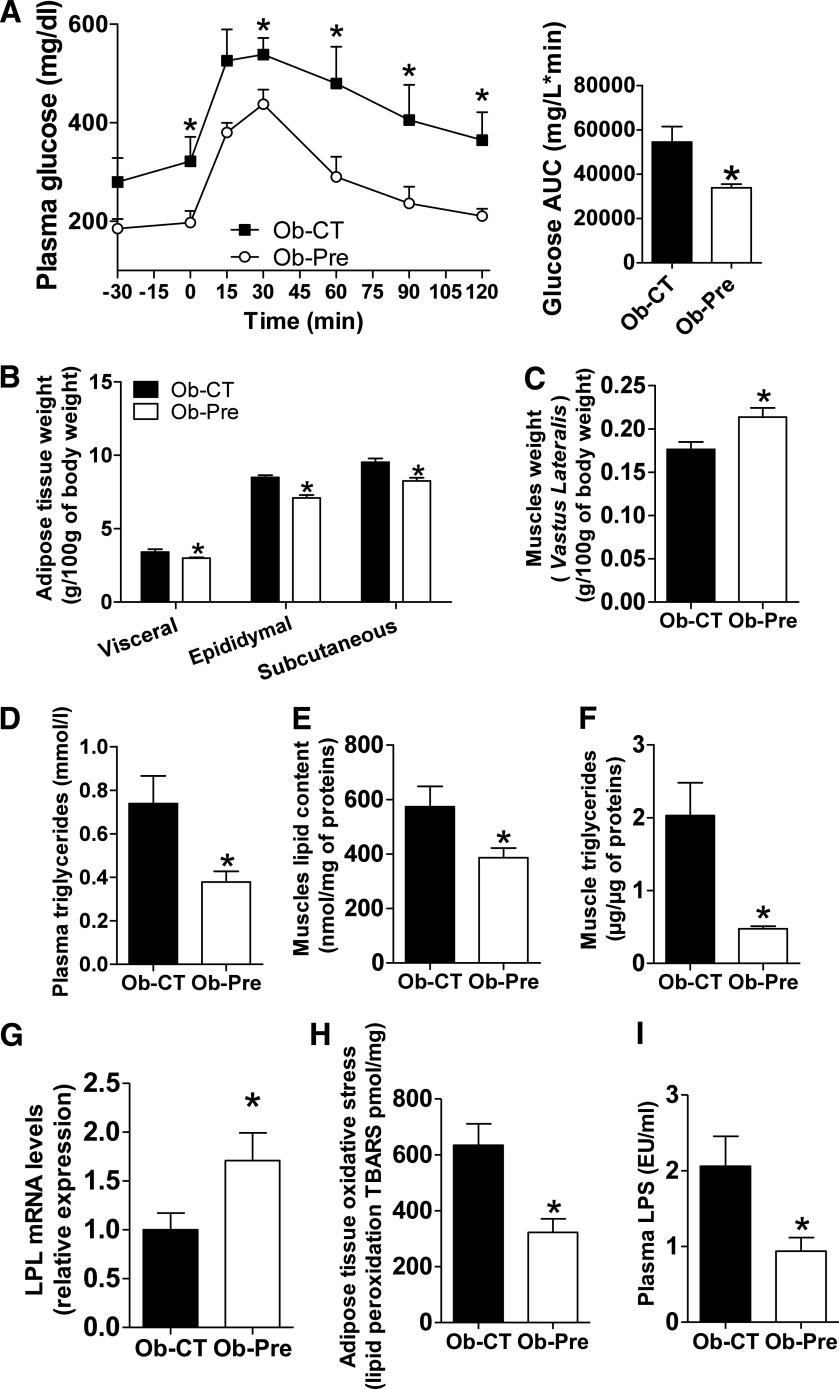
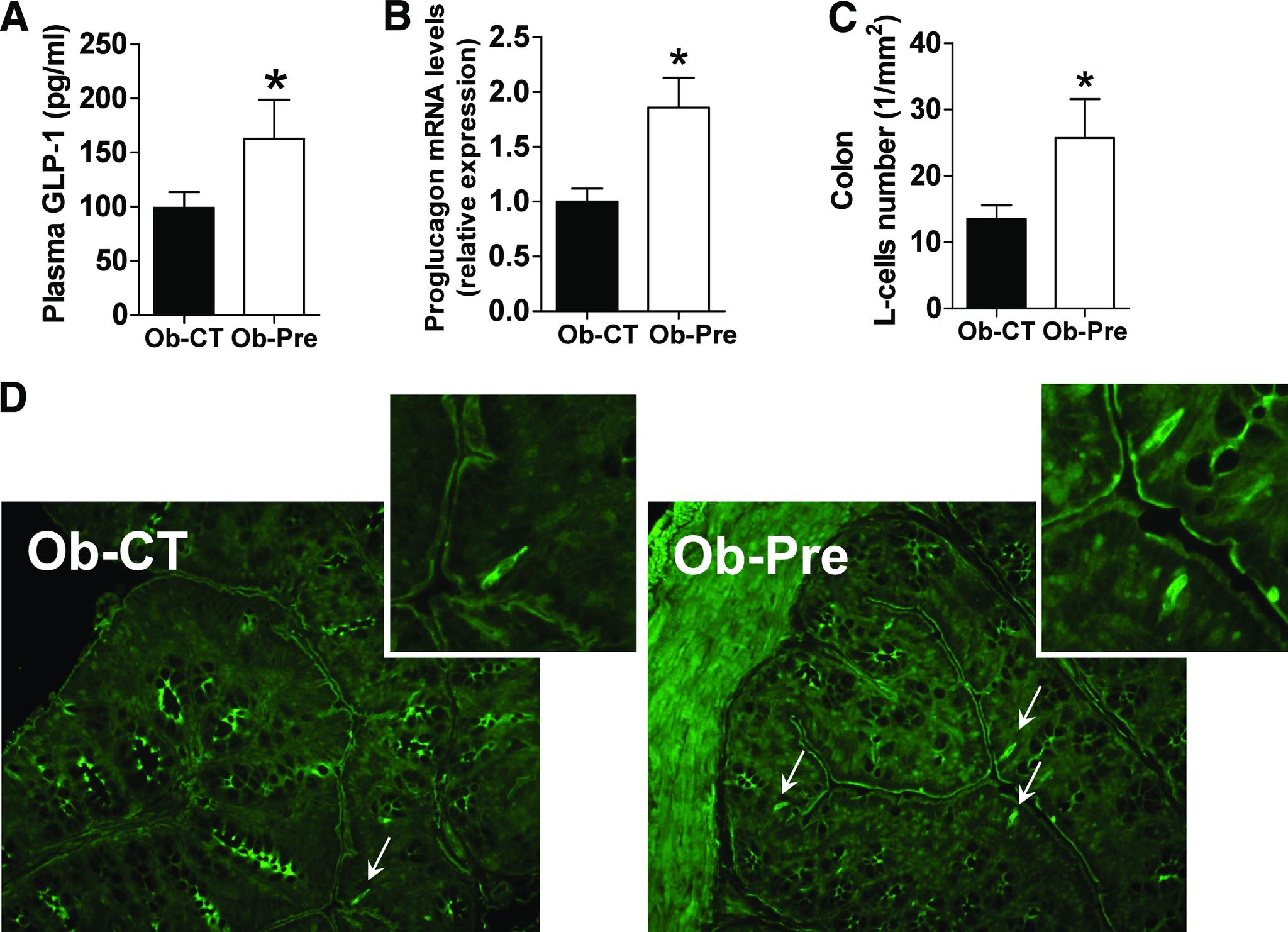
In ob/ob mice, prebiotic feeding decreased Firmicutes and increased Bacteroidetes phyla, but also changed 102 distinct taxa, 16 of which displayed a >10-fold change in abundance. In addition, prebiotics improved glucose tolerance, increased L-cell number and associated parameters (intestinal proglucagon mRNA expression and plasma glucagon-like peptide-1 levels), and reduced fat-mass development, oxidative stress, and low-grade inflammation. In high fat-fed mice, prebiotic treatment improved leptin sensitivity as well as metabolic parameters.
CONCLUSIONS
We conclude that specific gut microbiota modulation improves glucose homeostasis, leptin sensitivity, and target enteroendocrine cell activity in obese and diabetic mice. By profiling the gut microbiota, we identified a catalog of putative bacterial targets that may affect host metabolism in obesity and diabetes.
目的
研究肥胖和糖尿病小鼠给予益生元后肠道微生物群落和生物学参数的深度和全面分析。
研究设计和方法
遗传(ob/ob)或饮食诱导肥胖和糖尿病小鼠长期给予富含益生元的饮食或对照饮食。在 ob/ob 小鼠中进行广泛的肠道微生物群分析,包括定量 PCR、16S rRNA 焦磷酸测序和系统发生微阵列。研究肠道微生物群调节对饮食诱导的瘦素抵抗小鼠瘦素敏感性的影响。在两种模型中记录代谢参数、基因表达、葡萄糖稳态和肠内分泌相关 L 细胞功能。
结果
在 ob/ob 小鼠中,益生元喂养降低了厚壁菌门和增加了拟杆菌门,但也改变了 102 个独特的分类群,其中 16 个分类群的丰度增加了 10 倍以上。此外,益生元改善了葡萄糖耐量,增加了 L 细胞数量和相关参数(肠道胰高血糖素原 mRNA 表达和血浆胰高血糖素样肽-1 水平),并减少了脂肪量的发展、氧化应激和低度炎症。在高脂肪喂养的小鼠中,益生元治疗改善了瘦素敏感性以及代谢参数。
结论
我们得出结论,特定的肠道微生物群调节可改善肥胖和糖尿病小鼠的葡萄糖稳态、瘦素敏感性和靶肠内分泌细胞活性。通过对肠道微生物组进行分析,我们确定了一系列可能影响肥胖和糖尿病宿主代谢的潜在细菌靶标。


 Zotero 插件