
衰老在小鼠体内的代谢足迹。
The metabolic footprint of aging in mice.
机构信息
Laboratory for Integrative and Systems Physiology, Ecole Polytechnique Fe´de´rale de Lausanne (EPFL), 1015 Lausanne, Switzerland.
出版信息
Sci Rep. 2011;1:134. doi: 10.1038/srep00134. Epub 2011 Oct 31.
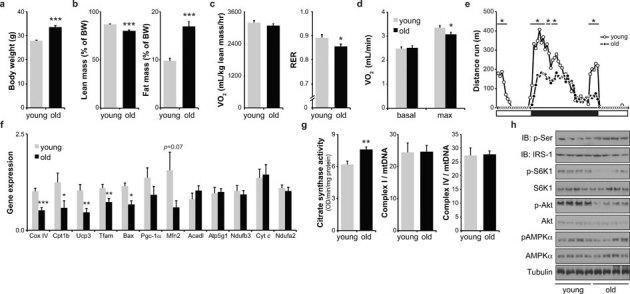
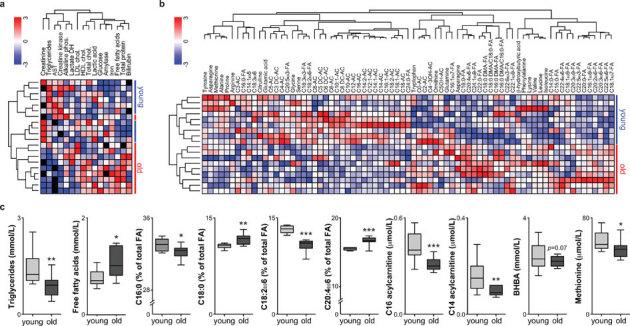
Aging is characterized by a general decline in cellular function, which ultimately will affect whole body homeostasis. Although DNA damage and oxidative stress all contribute to aging, metabolic dysfunction is a common hallmark of aging at least in invertebrates. Since a comprehensive overview of metabolic changes in otherwise healthy aging mammals is lacking, we here compared metabolic parameters of young and 2 year old mice. We systemically integrated in vivo phenotyping with gene expression, biochemical analysis, and metabolomics, thereby identifying a distinguishing metabolic footprint of aging. Among the affected pathways in both liver and muscle we found glucose and fatty acid metabolism, and redox homeostasis. These alterations translated in decreased long chain acylcarnitines and increased free fatty acid levels and a marked reduction in various amino acids in the plasma of aged mice. As such, these metabolites serve as biomarkers for aging and healthspan.
衰老是细胞功能普遍下降的特征,这最终将影响全身的动态平衡。尽管 DNA 损伤和氧化应激都有助于衰老,但代谢功能障碍至少在无脊椎动物中是衰老的共同标志。由于缺乏对健康衰老哺乳动物的代谢变化的全面概述,我们在这里比较了年轻和 2 岁小鼠的代谢参数。我们系统地将体内表型与基因表达、生化分析和代谢组学相结合,从而确定了衰老的独特代谢特征。在肝脏和肌肉中受影响的途径中,我们发现了葡萄糖和脂肪酸代谢以及氧化还原动态平衡。这些变化导致长链酰基辅酶 A 的减少和游离脂肪酸水平的增加,以及老年小鼠血浆中各种氨基酸的显著减少。因此,这些代谢物可作为衰老和健康寿命的生物标志物。



 Zotero 插件